September 11–12, 2026, 26-468 Op #46
Ill Hiker at Valentine Lake — Friday–Saturday, September 11–12, 2026, 26-468 Op #46
On Friday, September 11th, at 2104 hours, the Team was paged by the Mono County Sheriff’s Office (MCSO) for a report of an ill hiker at Valentine Lake. It was reported that the hiker may be unable to continue down the trail unassisted after experiencing AMS, or acute mountain sickness. Rescue Base was established at the Sherwin Lakes Trailhead.
Rescue Operations deployed a team of four, Team 1, in Ranger 2 to take the 4WD road adjacent to and southeast of the Valentine Lake Trail, travel high, and traverse over to the subject. Although the subject was instructed to remain in place, the subject and their partner began traveling down the Valentine Lake Trail at 2245 hours toward their vehicle at the trailhead.
Team 1 was notified at 2308 hours, and the decision was made to split the team, with two members returning to Ranger 2 and two, now designated Team 2, continuing to intercept the subjects on the trail. The hiking party was met at 2347 hours, where the subject was assessed and administered electrolytes. The subject was comfortable continuing down the trail with the assistance of SAR.
Operations requested @mcems Medic 3 to further assess the subject at the trailhead. The subject declined further medical treatment or transport, and the operation was terminated at 0130 hours on September 12th.
IC: Rhoads // Responders (6): Haugh (Ops), Huizingh, Knight, Salay (Ops), Wallace, Wojciechowski
Volunteer hours: 26.6
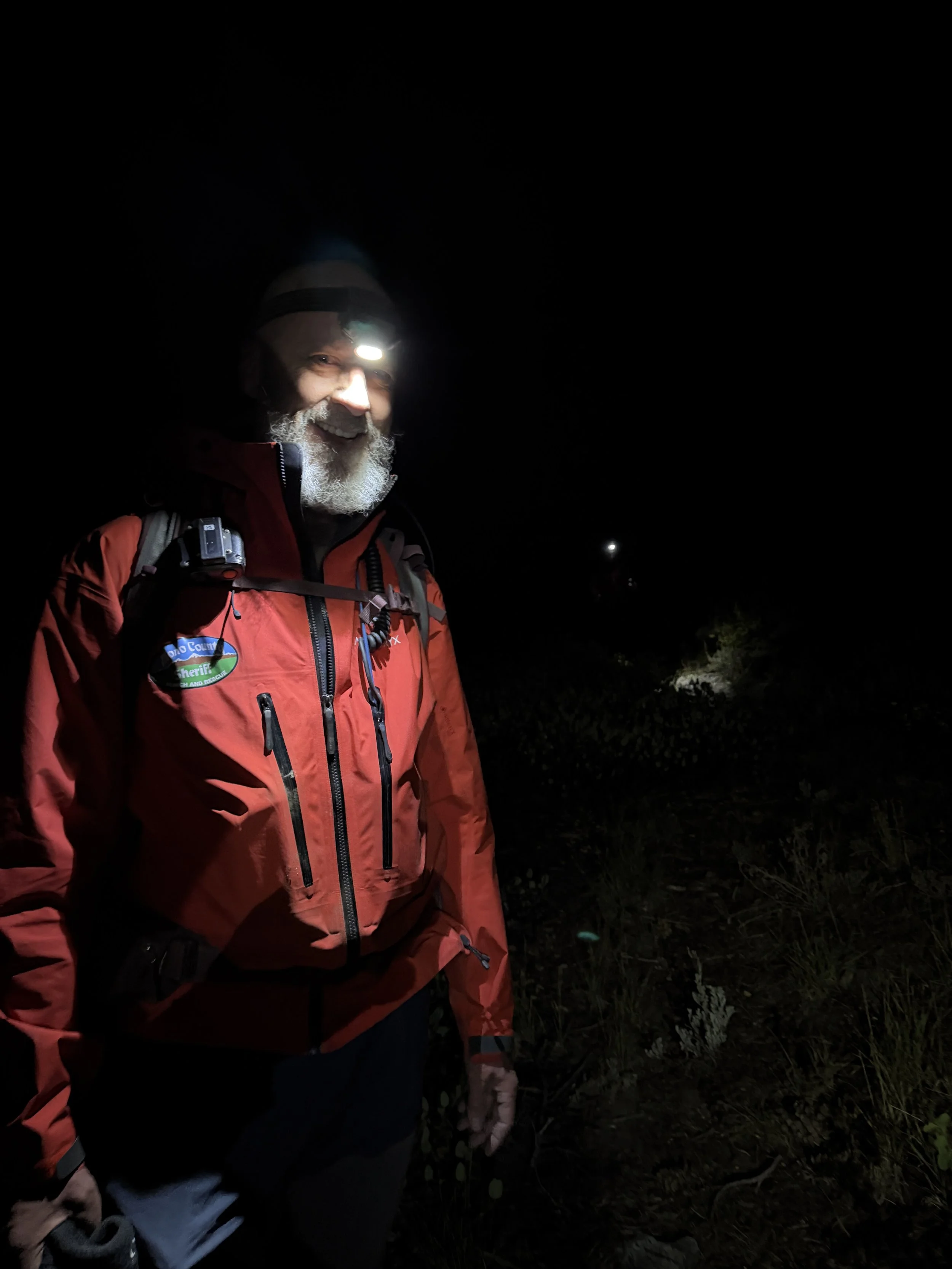
August 30, 2026 26-442 #45
Injured Hiker on the Duck Pass Trail
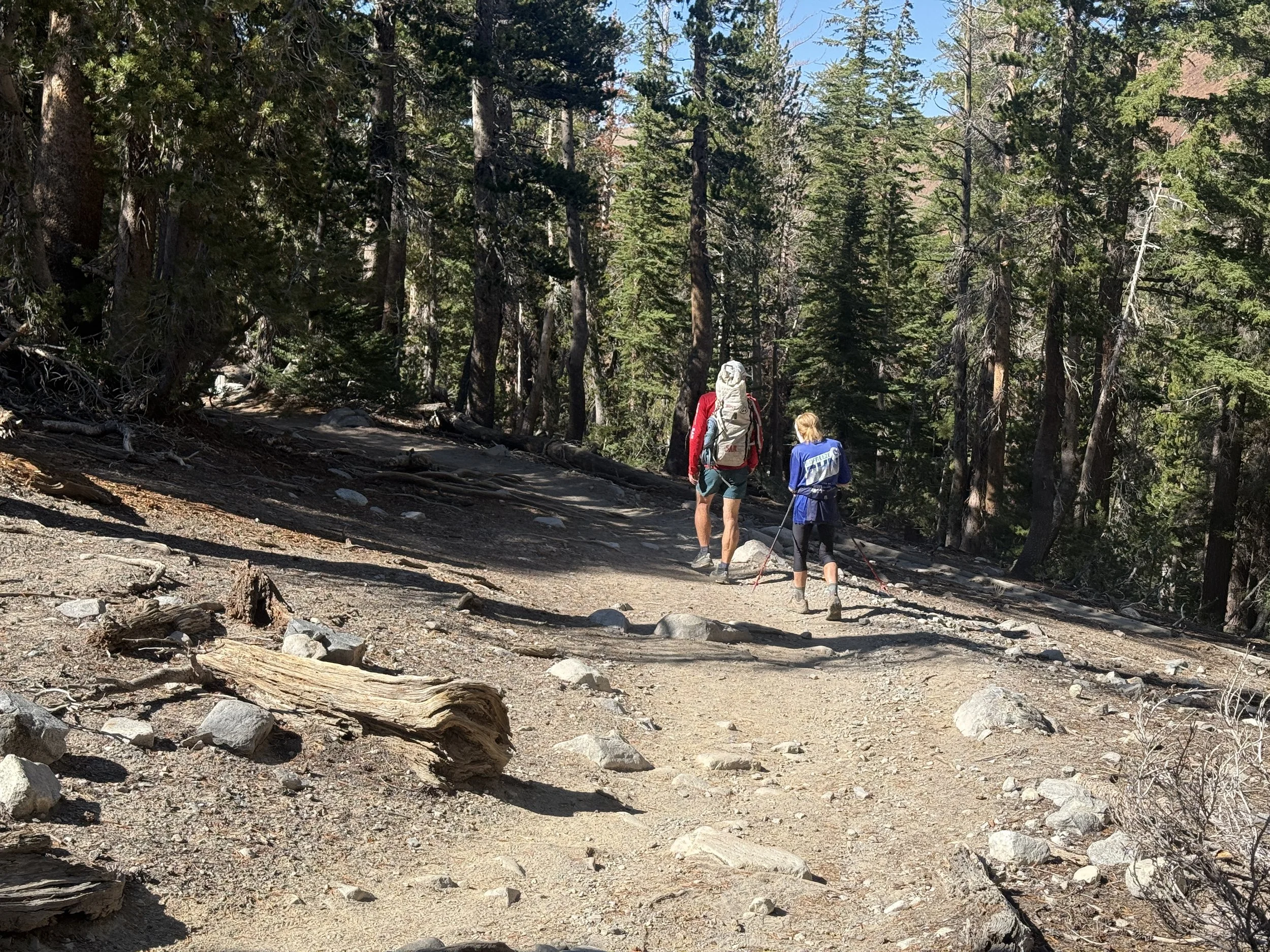
On Sunday, August 30th, at 1429 hours, the Team was paged by the Mono County Sheriff’s Office (MCSO) for a report of a 70-year-old female who had taken a fall above Barney Lake, striking her head on the rocky descent switchbacks before Duck Pass. It was reported that the fall may have occurred after the subject experienced symptoms of Acute Mountain Sickness. It was also reported that the subject was potentially continuing down the trail.
Rescue Base was established at the Duck Pass Trailhead, at the end of Coldwater Creek Campground. Rescue Operations deployed Team 1, a hasty medical team of two, including a wilderness EMT, with trauma and airway equipment, including bottled oxygen. A second team of five, Team 2, deployed shortly thereafter with the Team’s titanium rescue litter.
Three-quarters of a mile up the trail, Team 1 encountered a pair of hikers who conveyed that the subject was in distress and was still located “way up there” near the initial call location, approximately 3.5 miles up the trail. It was reported that she had sustained a potentially significant head injury. Team 1 requested air resources from Rescue Operations. Approximately 5 minutes after the request was made, Team 1 encountered the subject walking down under her own power, surrounded by a group of good Samaritans, and air resources were canceled.
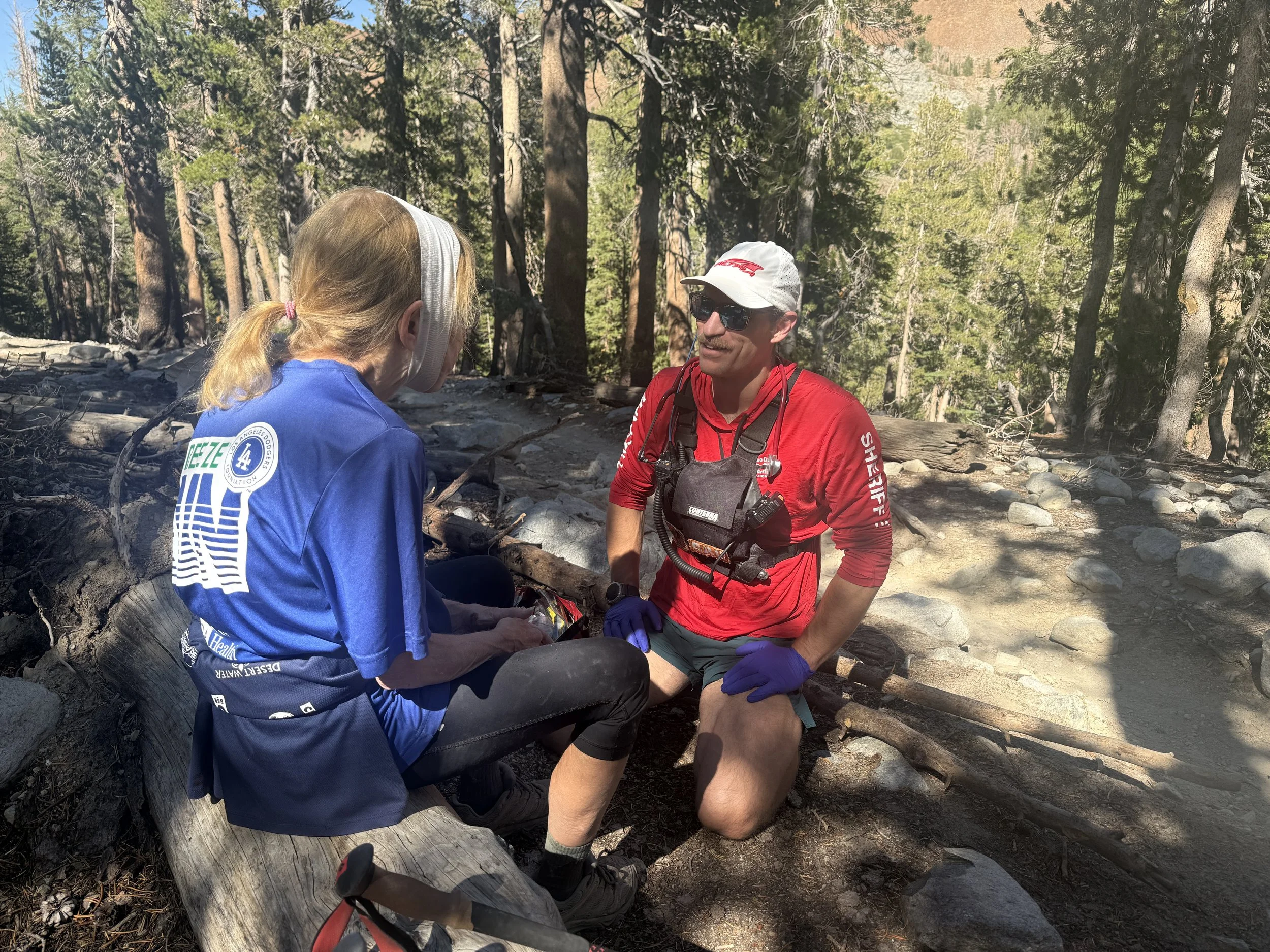
The subject was briefly assessed and, thanks to the help of the good Samaritans, already had her head wrapped. Team 1 and Team 2 joined together, and all personnel, including the subject, continued the walk back down to the trailhead. The subject elected to seek further care at Mammoth Hospital and was transported by a family member.
The operation was terminated at 1639 hours.
IC: Belcher // Responders (12): Anderson, Baron, Brownlee, Bush (Ops), Haugh, Huizingh, Lipman, Pavlovsky, Quiring, Salay (Ops), Tardy, Trianor
Volunteer hours: 26
August 29, 2026 26-441 #44
Knee Injury at Barney Lake
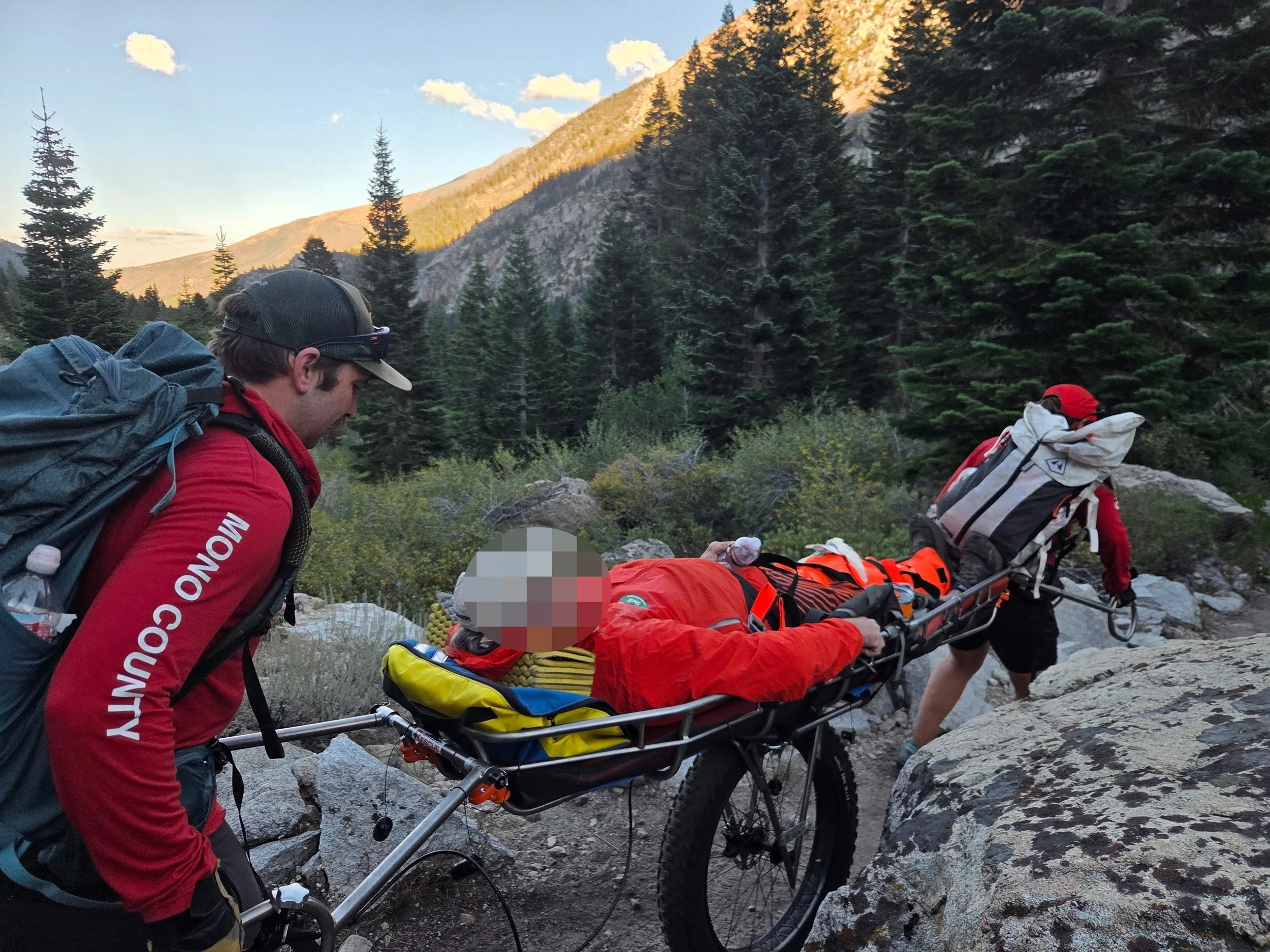
On Saturday, August 29th, at 1402 hours, the Team was paged by the Mono County Sheriff’s Office (MCSO) for a report of a 68-year-old male who sustained a knee injury descending half-a-mile from Barney Lake. Originally, it was reported that his knee may be dislocated.
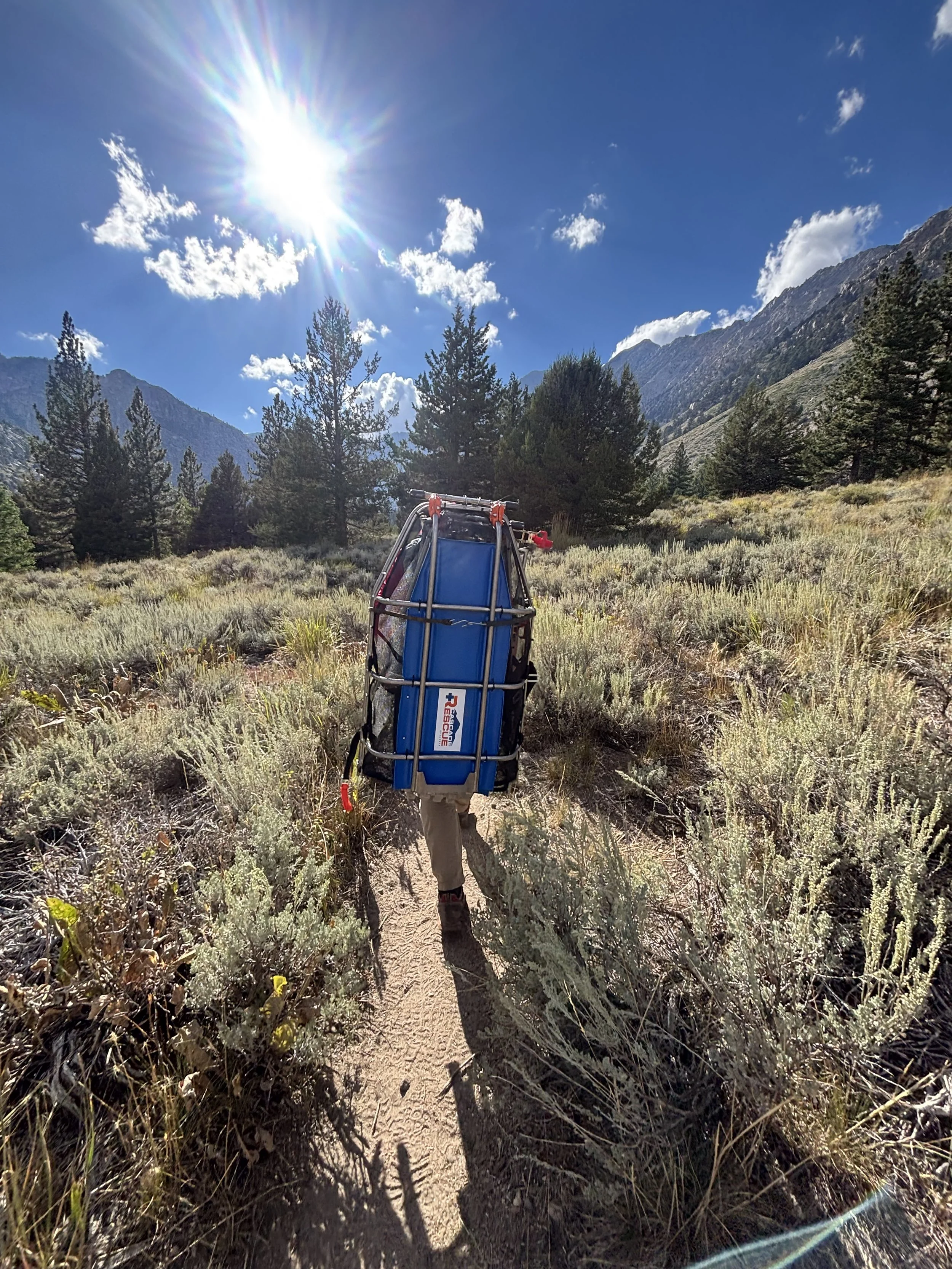
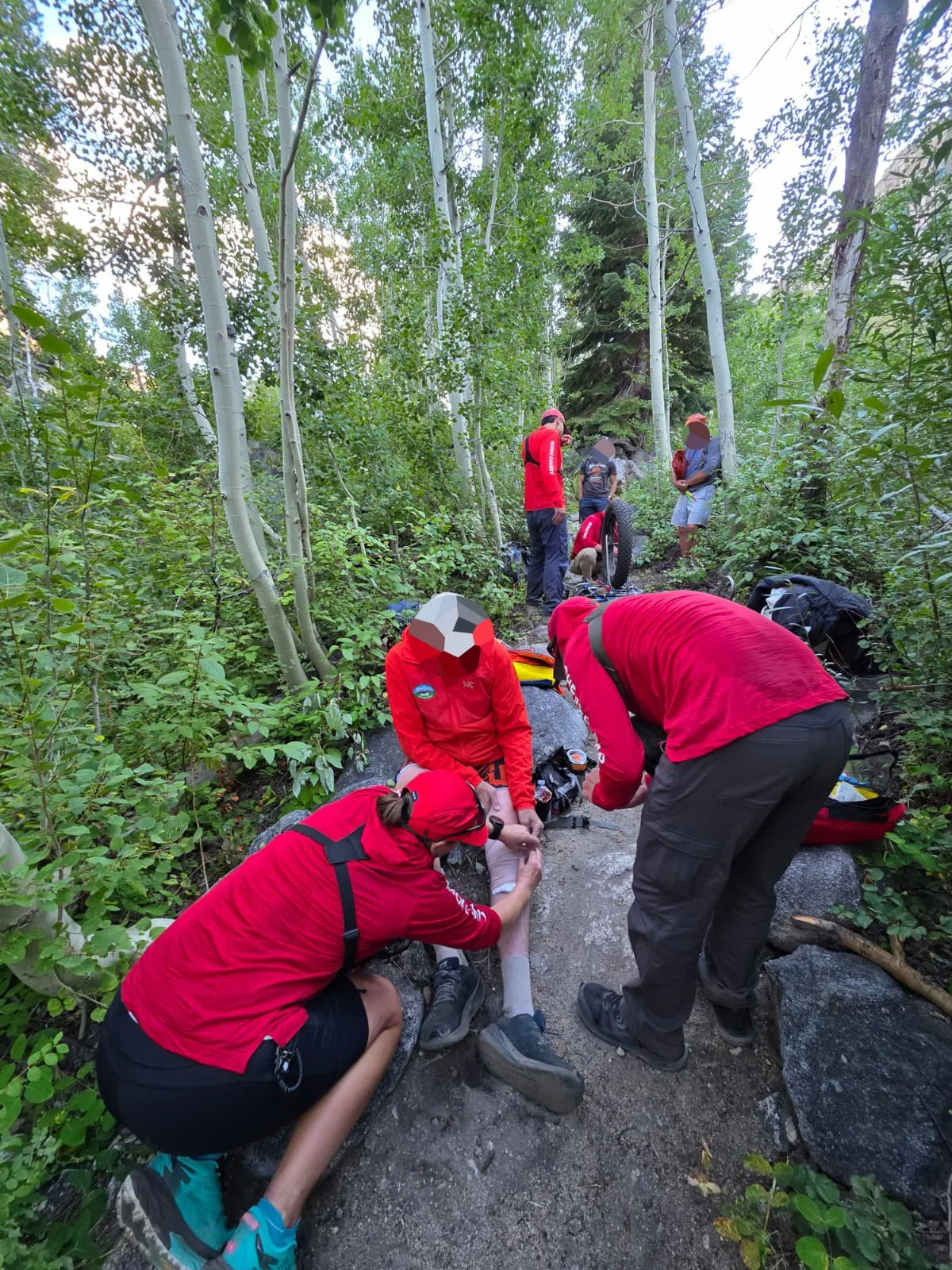
Rescue Base was established at the end of Annette’s Mono Village at the Robinson Creek Trailhead. After the long drive from Mammoth, Rescue Operations deployed several teams into the field carrying the rescue litter and medical equipment. At 1735 hours after roughly 3.5 miles up the trail, the subject was contacted, assessed, splinted and loaded into the litter.
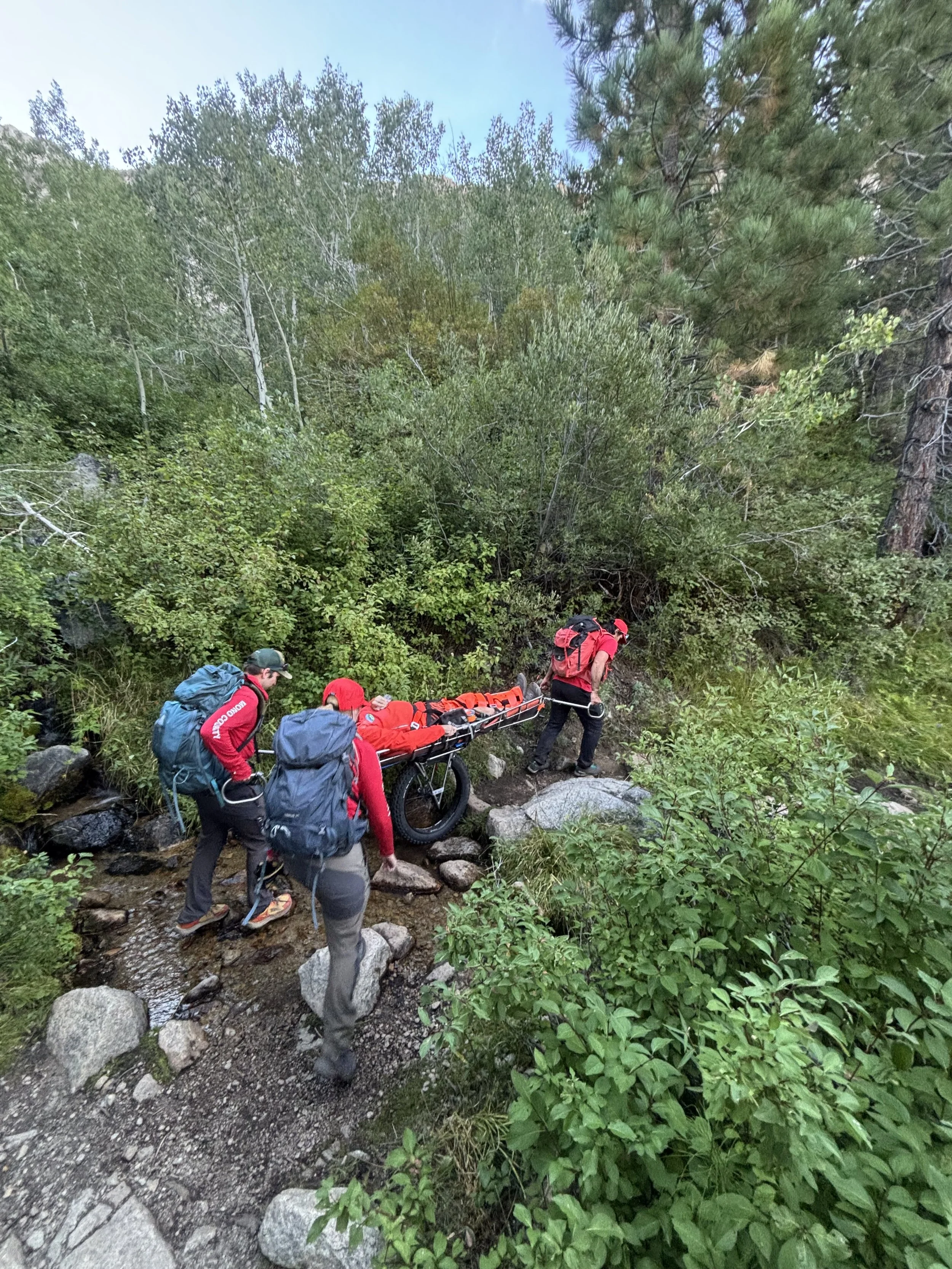
All teams worked together to litter the subject out and to an awaiting ambulance from Mono County Medic 7.
The operation was terminated at 1955 hours.
IC: Rhoads // Responders (9): Ackerman, Anderson, Barker, Brownlee, Haugh, Lipman, Salay (Ops), Senior, Thompson C.
Volunteer hours: 53
August 22-23 26-434 #43
Off-Route Climber in the Mendenhall Couloir Requires Overnight Technical Rescue
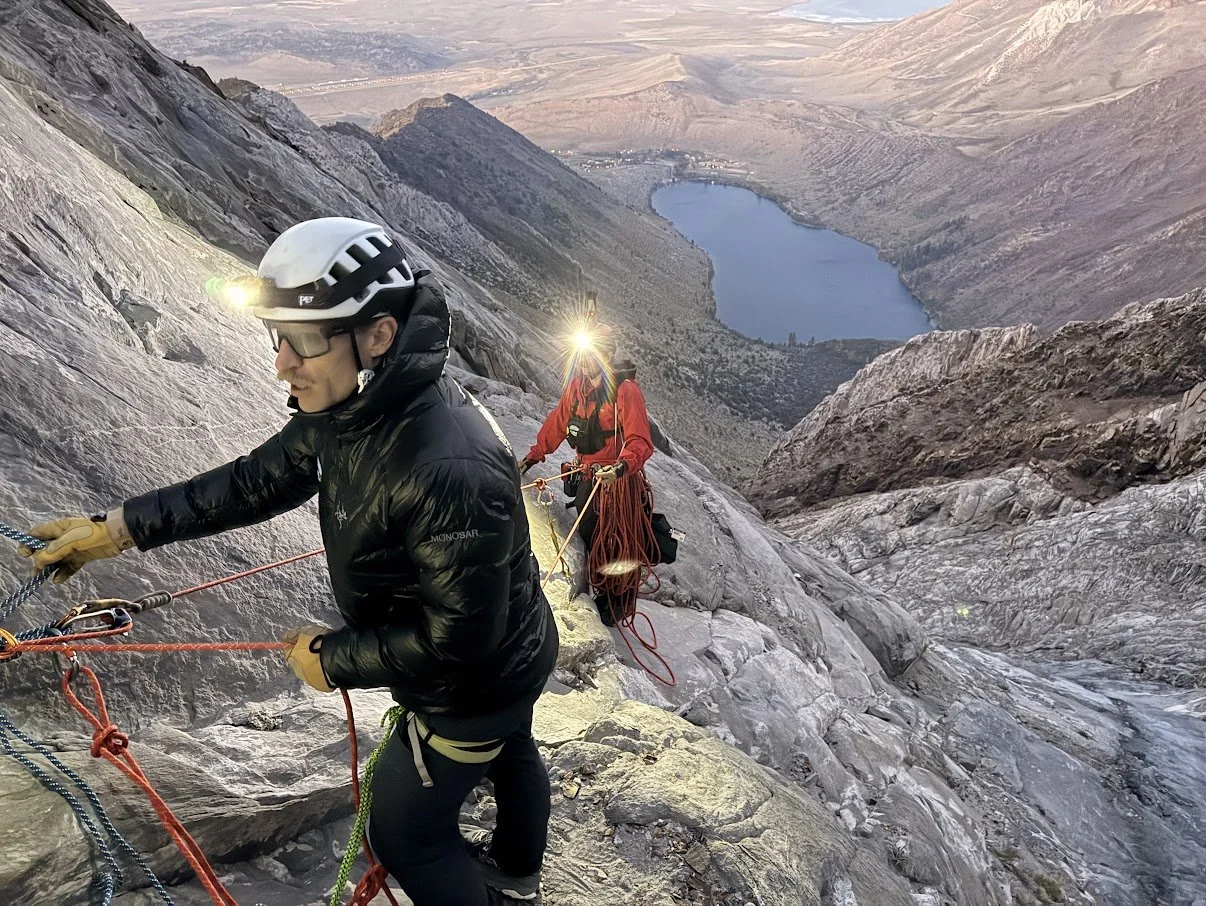
Rescuers begin the technical operation, just before nightfall, to access, secure and extricate the stranded climber.
On Saturday, at 1320 hours, the Team was paged by the Mono County Sheriff's Office (MCSO) for an InReach activation of a climber who had become stranded after getting off route in the Mendenhall Couloir. This classic route is a long, complex alpine gully with loose rock, route-finding, exposure, and significant objective-hazard potential. While these conditions exist when remaining on the route proper, traveling off-route quickly leads to increasingly vertical, unprotectable 5th-class terrain with no viable means of continuing either up or down. With thousands of feet of vertical exposure below, any fall would almost certainly be fatal. The subject followed what they believed to be the established route, making some tricky and committing moves into an incorrect gully. After manueuvring well out of the way of the main gully, the subject stopped on a 6-inch ledge and determined that they were likely off-route and that there was nowhere to continue safely — up or down.
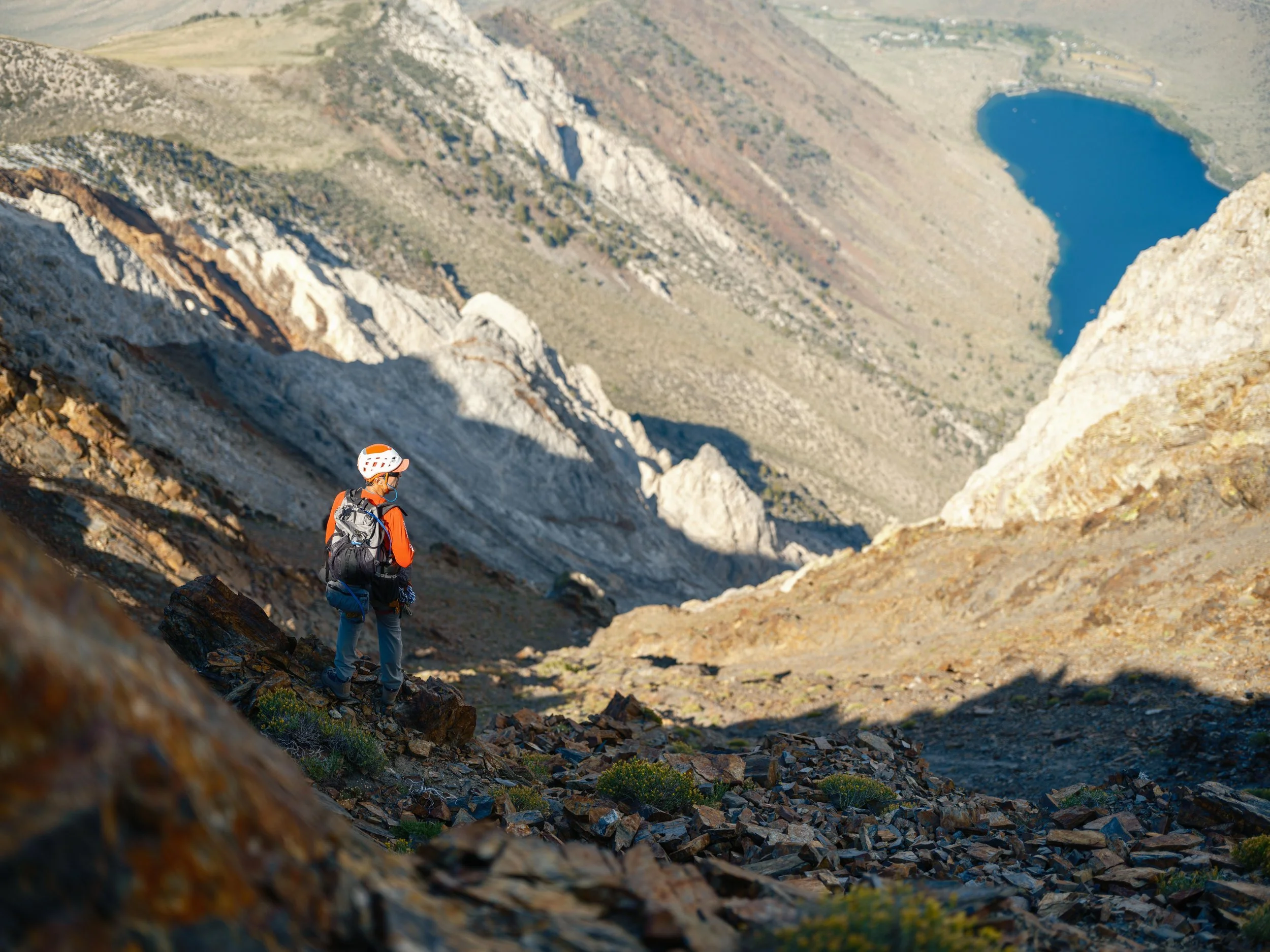
Looking into the Mendenhall Couloir top down. Rescuers will shortly begin to navigate down and into the middle to search for the subject.
Rescue Base was established at Mammoth Airport (MMH). Rescue Operations immediately requested air resources and deployed several different teams from the Mammoth Lakes SAR building, including a technical rigging team and a 6x6 Ranger (OHV) team. The combined tech/OHV team utilized the Team's 6x6 ranger, Ranger Two, to ferry the technical team, Team 1, up Laurel Lakes Road, where they then began working up the several-mile, multi-thousand-foot vertical approach to the summit of Laurel Mountain. This tech team deployed with 1,200' of rope, a rescue bolting kit, victim-protection harness/helmet, anchoring material, and significant PPE. A communications team also deployed to Convict Day Use Area to put eyes on the subject through powerful optics, as well as act as a radio communications relay. Team 3, a second technical rigging team of two including a wilderness EMT, was assembled at MMH, where they awaited CHP H42 from Fresno, who accepted the air resource request.
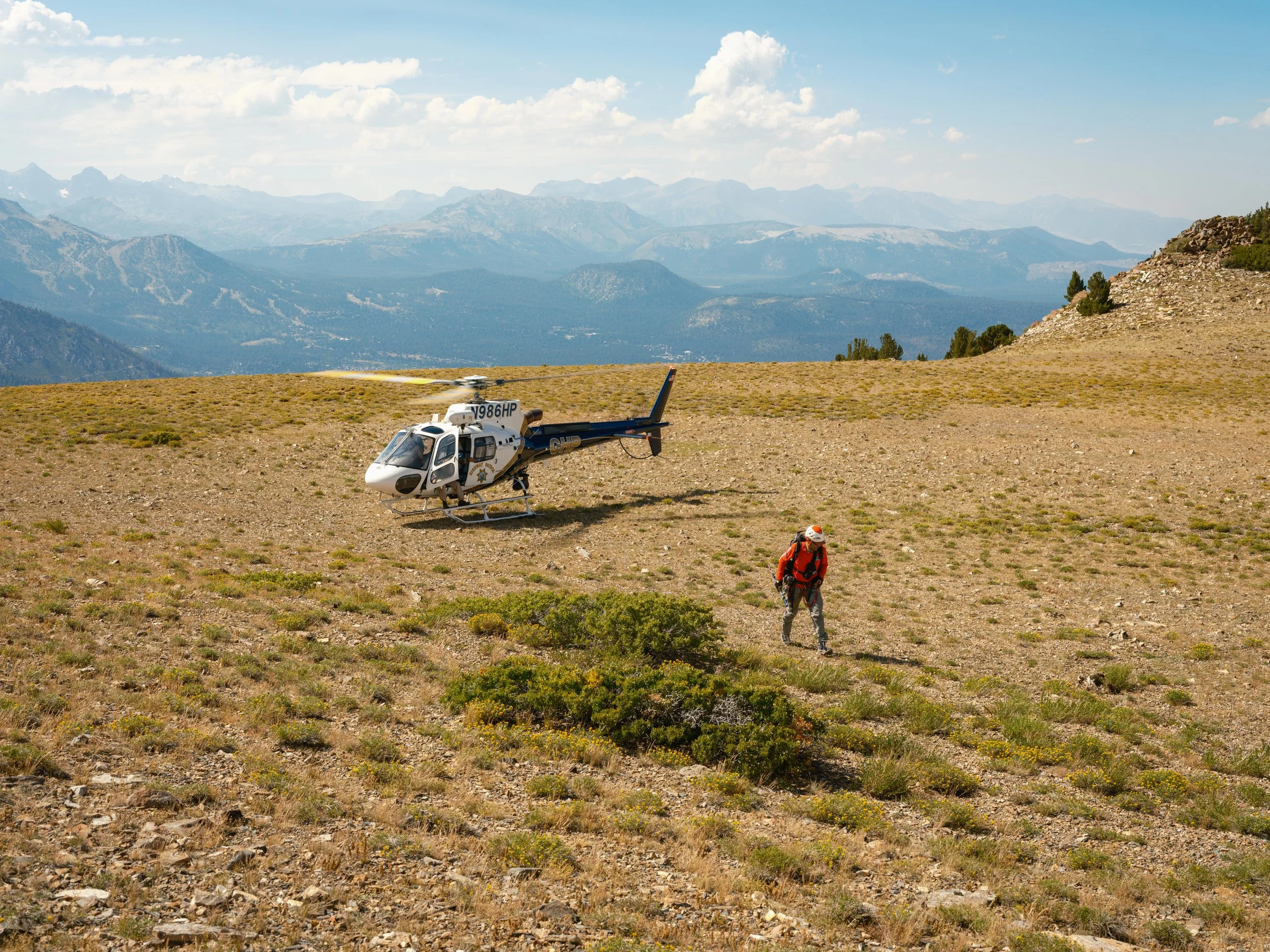
H42 on the saddle.
With winds gusting 40 knots (at ~11,000 feet) and hot conditions in the area, H42's initial assessment after flyover was that a hoist operation was not possible. Team 3 was ferried in one by one to a saddle on the North side of Laurel at 11,000 feet and began to work their way up to the summit. After summiting, Team 3 began moving downhill through the complex terrain of the Mendenhall to locate the subject using guidance from Team 2 and their spotting scope. After significant time navigating and working to locate the subject, Team 3 eventually made verbal and visual contact with them, confirming their location in an extremely dangerous and consequential gully adjacent to the main climbing route. Rescuers observed the subject alternating their stance on each foot, as there was only enough room for one on the small ledge. It was determined that, without intervention, a fatal fall was likely to occur if the subject remained in place overnight.
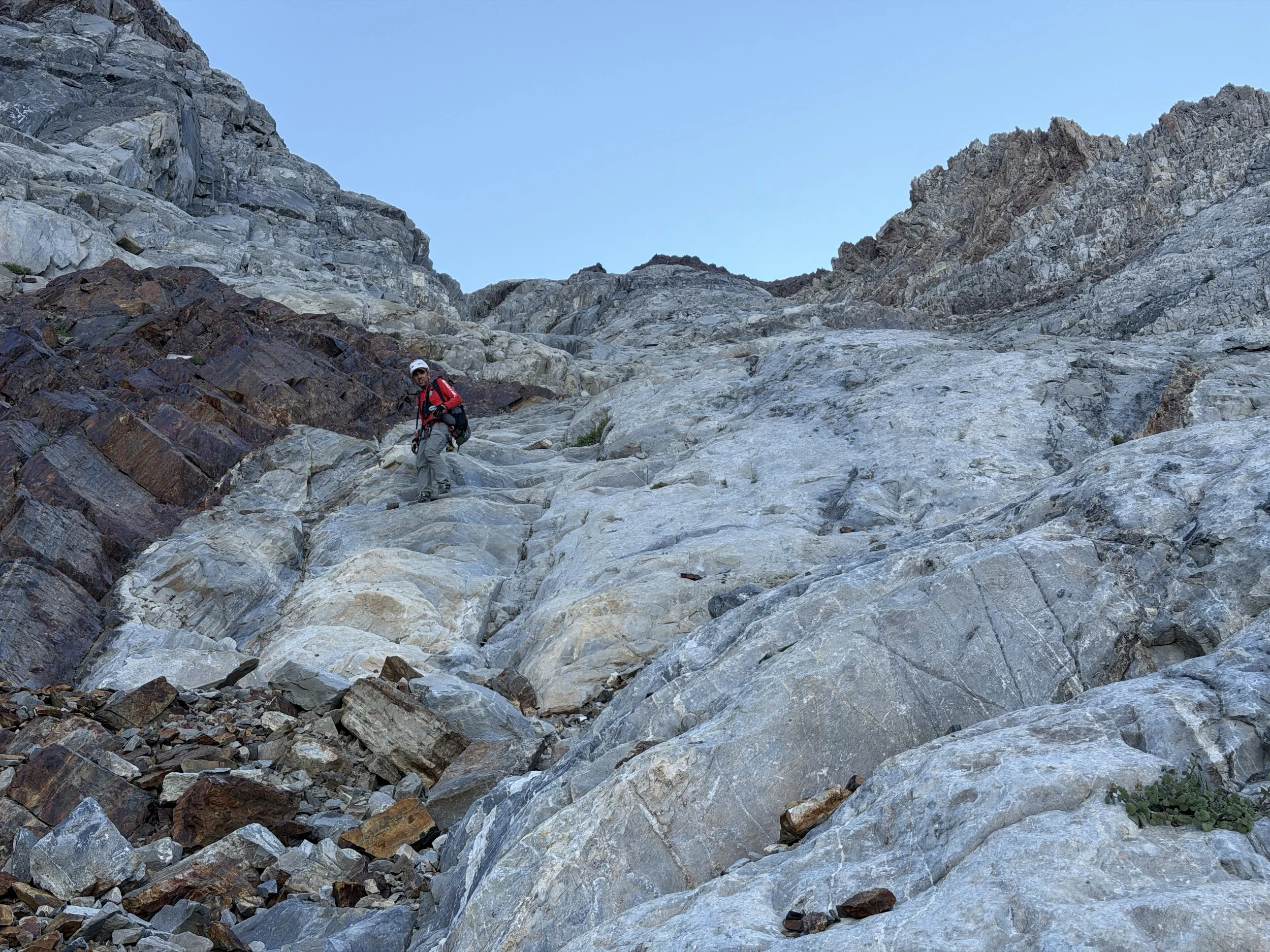
Moving down through the increasingly complex, 3D terrain.
Recognizing the increasingly narrow margin for error, the Team extended its operational timeline and accepted additional exposure to the hazards of the terrain and nighttime conditions in order to reach and secure the subject before a fatal fall occurred.
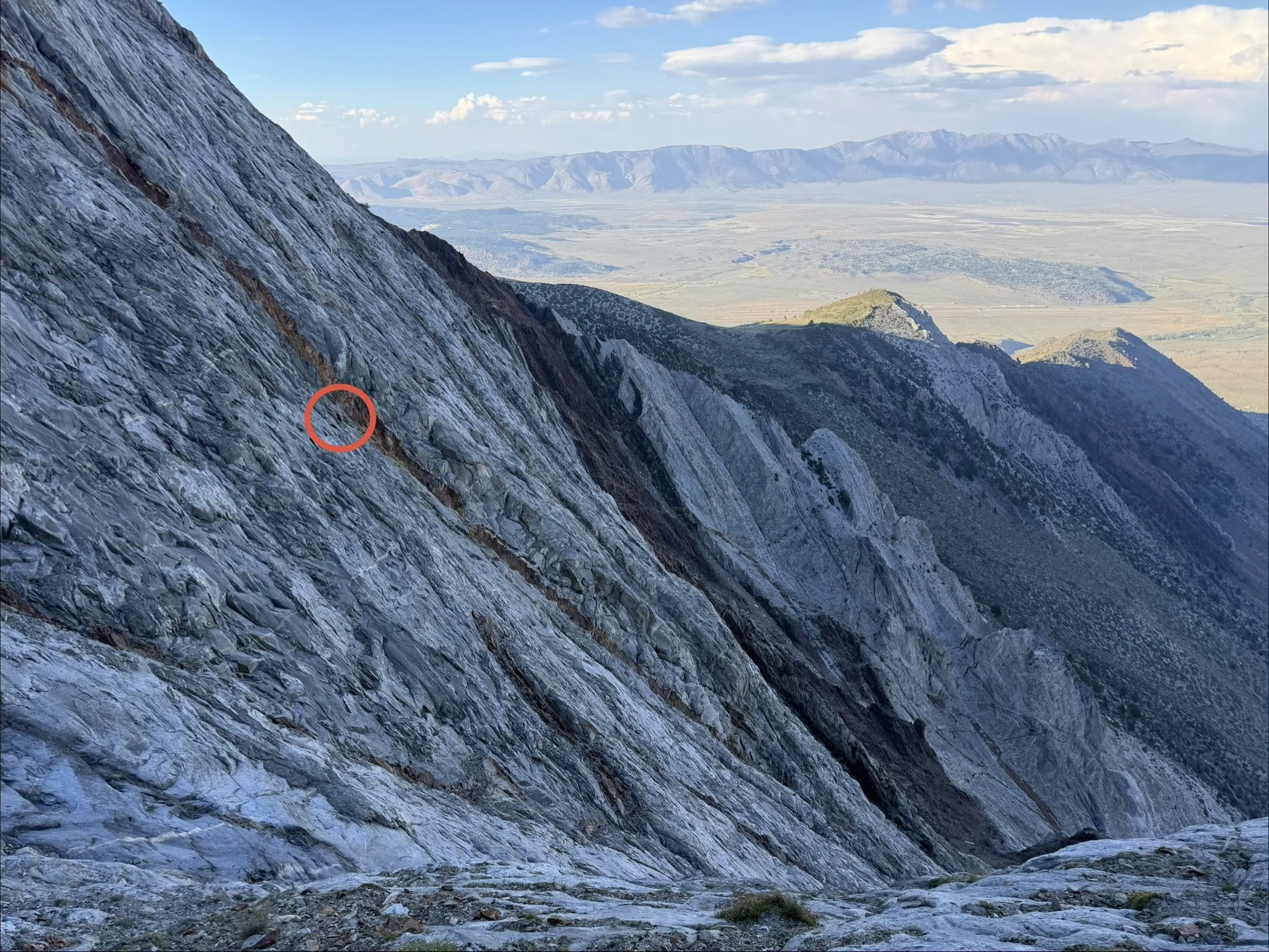
First glimpses of the stranded climber.
After a significant haul of heavy technical equipment 1,200 vertical feet down and into the couloir, Team 1 and Team 3 — a combined group of four technical rescuers — commenced a two-part complex technical rescue to approach, secure, and extract the subject from their precarious location. The operation began just as night fell and continued into the darkness. A 4-piece bolted rescue anchor was constructed utilizing Petzl Coeur Pulse removable bolts. A mix of 8mm cord was established between the bolts to allow for redistribution of force on the anchor as the operation shifted focal points. A 600-foot line was broken into two parts: a 400-foot section for the patient attendant, and a 200-foot line for a second eventual fixed line, both affixed to the anchor. One rescuer, the patient attendant, maneuvered laterally from the anchor point drilling safety bolts as they moved across several hundred feet. Eventually overhead of the subject, they were ultimately lowered above the subject's location, where they were able to affix the subject into the rope system. Both the subject and rescuer then moved as a tandem unit down the precarious off-shoot gully and back near the main route.
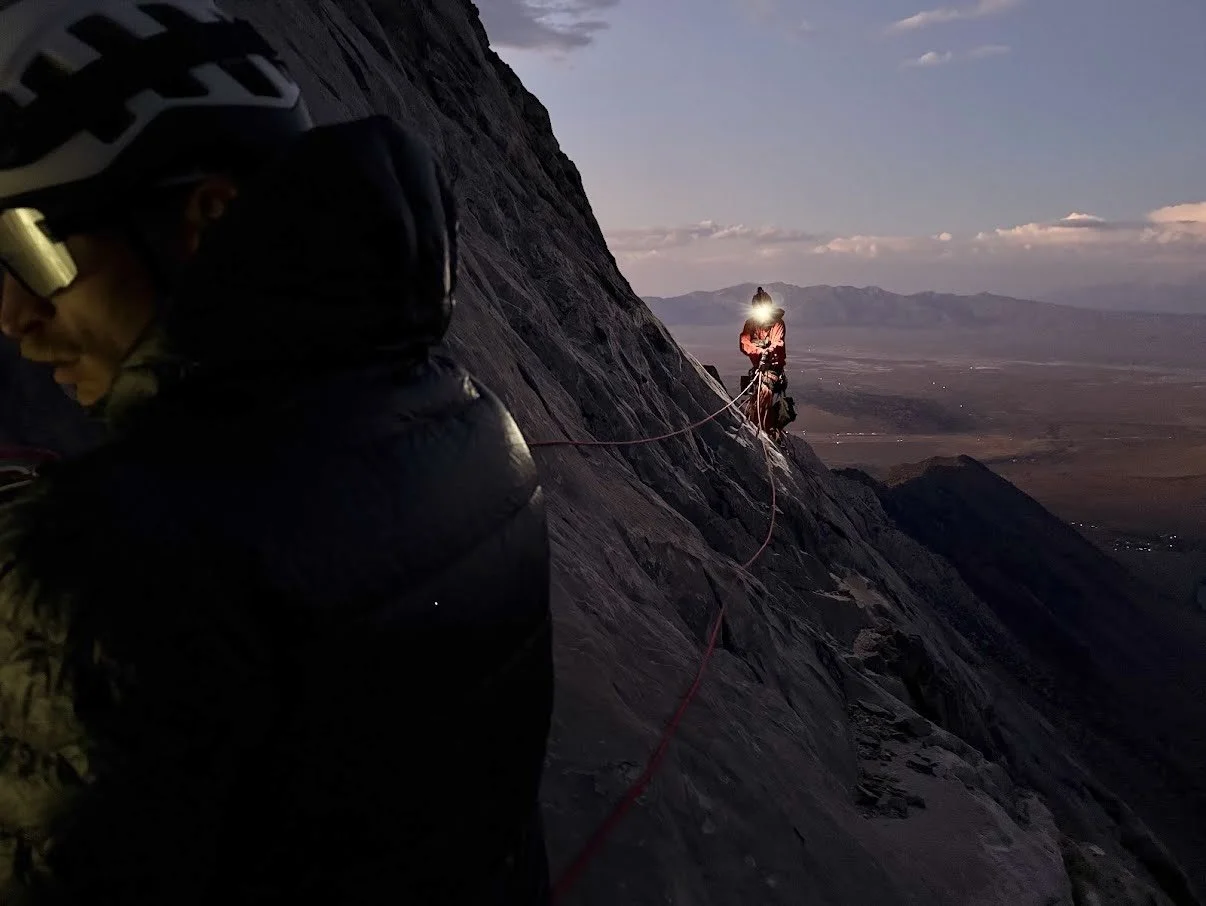
Nightfall settles in during the technical operation.
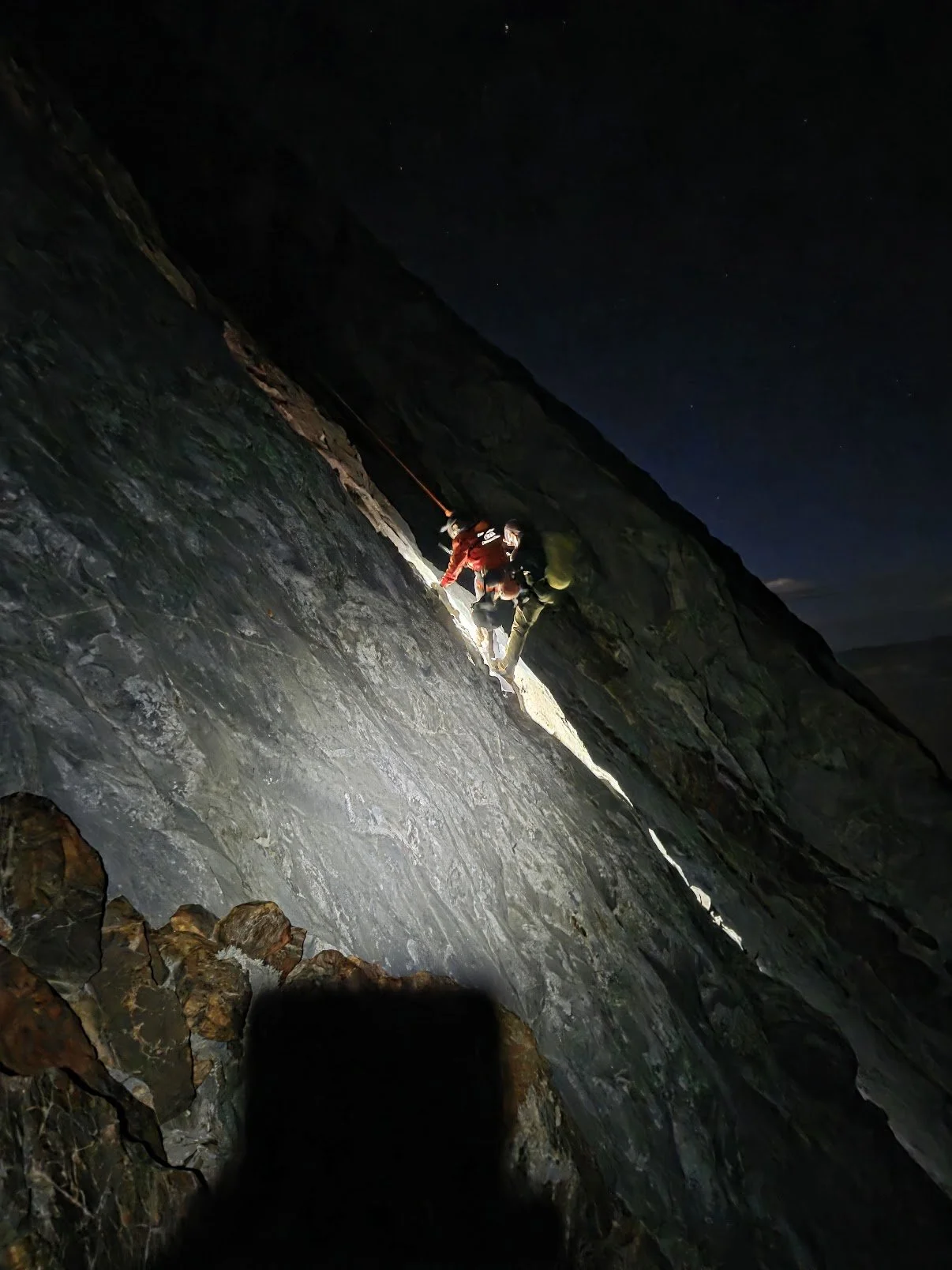
The subject, Rob Martin, after being secured, descends down with a rescuer.
Just as the subject and rescuer reached a large and accommodating ledge, part two of the technical operation went underway. A second line attendant rappelled with the 200-foot line to act as a safety fixed line through the crux of the Mendenhall where the subject and two rescuers were now located. All three rescuers and the subject ascended the fixed line to the anchor location. The subject and initial attendant rescuer detached from the fixed system and began ascending carefully up the regular route. The three remaining rescuers broke down the technical system and began ascending a few minutes later. All rescuers and the subject topped out on the Laurel Mountain ridgeline at 0045 hours Sunday morning.
The group of five descended the South side of Laurel to the Bloody/Laurel Col, then descended the remaining trail to an awaiting 6x6 OHV team, where all were delivered in two separate trips back into town.
The operation was ultimately terminated at 0443 hours Sunday, August 23rd.
The Team commends the subject for their incredible perseverance and determination, as well as their preparedness in their ability to call for help when help was needed.
IC: Rhoads // Responders (14): Ackerman, Anderson, Barker, Beck, Blackman, Bush (Ops), Knight, Lipman, Quiring, Salay (Ops), Thompson C, Thompson M, Wallace, Wojciechowski
Volunteer hours: 171.7
August 12, 2026 26-412 #42
Backpacker With a Lower Leg Injury on the Robinson Creek Trail
At 1001 hours the Team was called to assist a backpacker with a possible dislocated knee. Update in progress. The call was terminated at 1505 hours.
IC: Gillespie/Belcher Ops Leader: Bush/Beck Responders: Bui, Gerber, Haugh, Tardy, Romanova, Wallace, Wojciechowski
58.1 person hours volunteered
On-Scene Coordinator: Mono County Sheriff Search and Rescue
August 9, 2026 26-406 #41
Injured Climber on the Incredible Hulk
Operation initiated at 1441 hours. Update in progress. Operation terminated at 2009 hours.
IC: Rhoads Ops Leader: Beck Responders: Anderson, Barker, Blackman, Bush, Campbell, Huizingh, Kaufman, Lipman, M. Thompson
62.1 person hours volunteered
On-Scene Coordinator: Mono County Sheriff Search and Rescue
August 8, 2026 26-404 #40
Report of Possible Injuries from a Rockslide Incredible Hulk Descent Gully
Operation initiated at 1756 hours. Update in progress. Operation terminated at 2118 hours.
IC: Rhoads Ops Leader: Beck Responders: Arndt, Bui, Bush, Creager, Glessner, Haugh, Huizingh, Irving-Ruffing, Kelly, Pavlovsky, Quiring, Schildge, Tardy, C. Thompson, M. Thompson, Wojciechowski
On-Scene Coordinator: Mono County Sheriff Search and Rescue
89.9 person hours volunteered
August 7, 2026 26-### #39
Climber With Reported Head Injury Near Horseshoe Slabs
Call initiated at 1707 hours. Update in progress. Call terminated at 1723 hours.
IC: Rhoads Ops Leader: C. Thompson Responders: Barker, Bush, Gerber, Glessner Huizingh, Lipman, Quiring, Senior, Tardy, M. Thompson, Wojciechowski
3.2 person hours volunteered
August 5, 2026 26-### #38
Separated Party Convict Lake
Call initiated at 1322 hours. Update in progress. Call terminated at 1326 hours.
IC: Belcher Ops Leader: Haugh Responders: Blackman, Brownlee, Bush, Pavlovsky, Salay, M. Thompson, Wojciechowski
.5 person hour volunteered
August 1, 2026 26-394 #37
Hiker With Abdominal Pain on the Minaret Creek Trail
The Team was called at 2111 hours for a mutual aid request from the Madera County Sheriff’s Office for a report of a female with abdominal pain who was unable to continue her exit. It was reported that the subject was approximately 3 miles up the Minaret Creek Trail.
Rescue base was established at Minaret Vista, and Operations deployed several teams to Devil’s Postpile trailhead to make entry, contact the subject, assess them, and ultimately evacuate them from the backcountry. Just after arriving at Devil’s Postpile trailhead, the subject was at their vehicle and declined medical evaluation. Operation terminated at ?
IC: Rhoads Ops Leader: Haugh Responders: Huizingh, Cornelius, Pavlovsky, Salay
On-Scene Coordinator: Mono County Sheriff Search and Rescue Team
August 1, 2026 26-393 #36
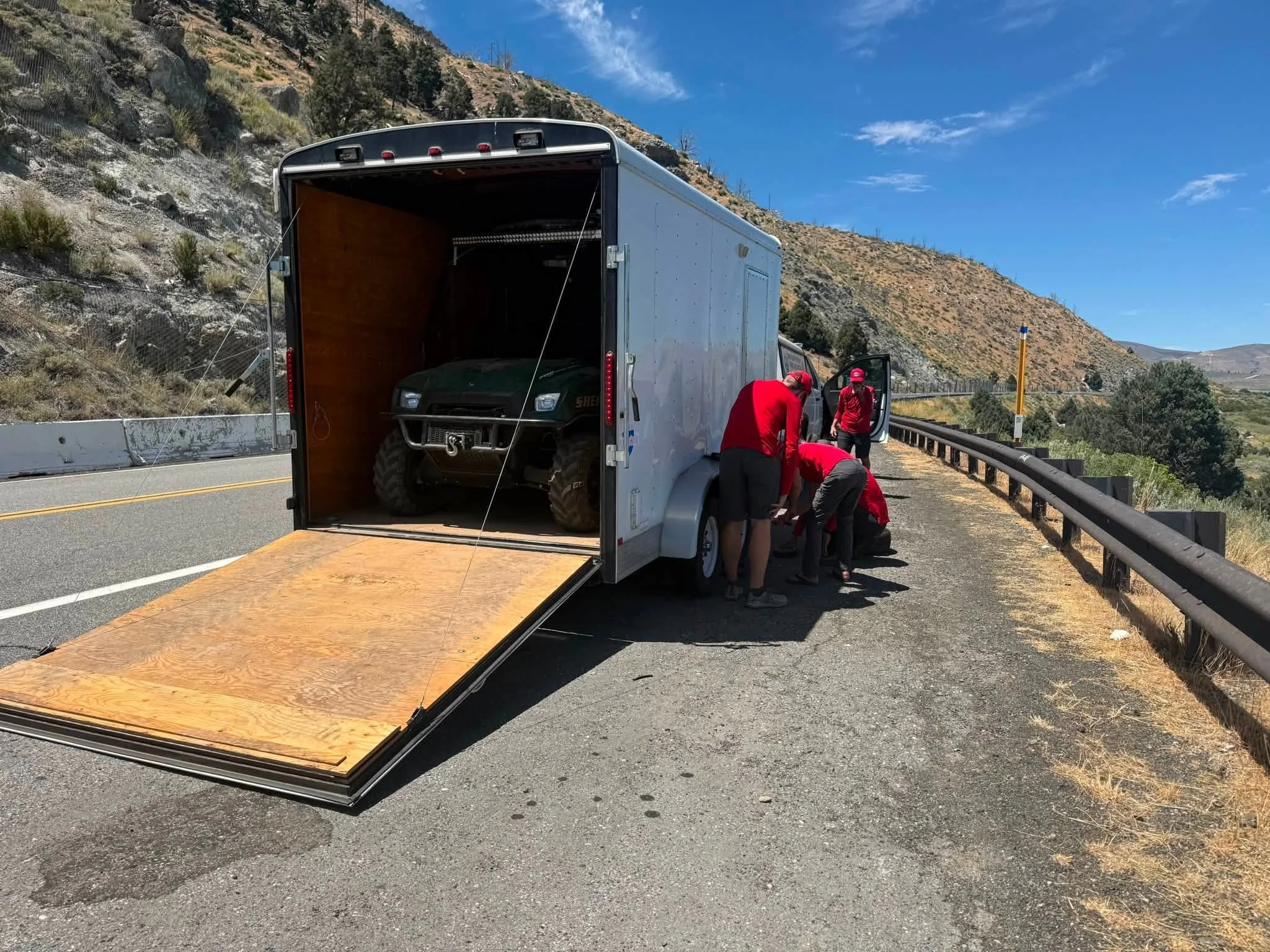
Changing a flat tire on the way to rescue base.
Backpackers With Possible Heat Exhaustion Near Peak 10,772 on the Pacific Crest Trail (Leavitt Lake area)
At 1236 hours the Team was called to assist a hiker near Peak 10,270, just off the Pacific Crest Trail, who was reported to be suffering from dehydration, nausea, fatigue, and general lethargy. The subject was part of a group of three. As the operation unfolded, it was communicated that another member of the party was experiencing similar symptoms, although to a lesser degree. Rescue base was established at the intersection of Highway 108 and the Leavitt Lake Road.
As base was being established, the Mono County Sheriff’s Office (MCSO) received notice of another incident nearby on the West Walker River. The reporting party (RP) reported that the subject had launched onto the river in a low-quality inflatable raft without a personal floatation device (PFD) or other safety equipment, had floated out of sight, and could not be located. Operations began allocating some of the responding resources to the river incident when it was communicated that the rafter had been located.
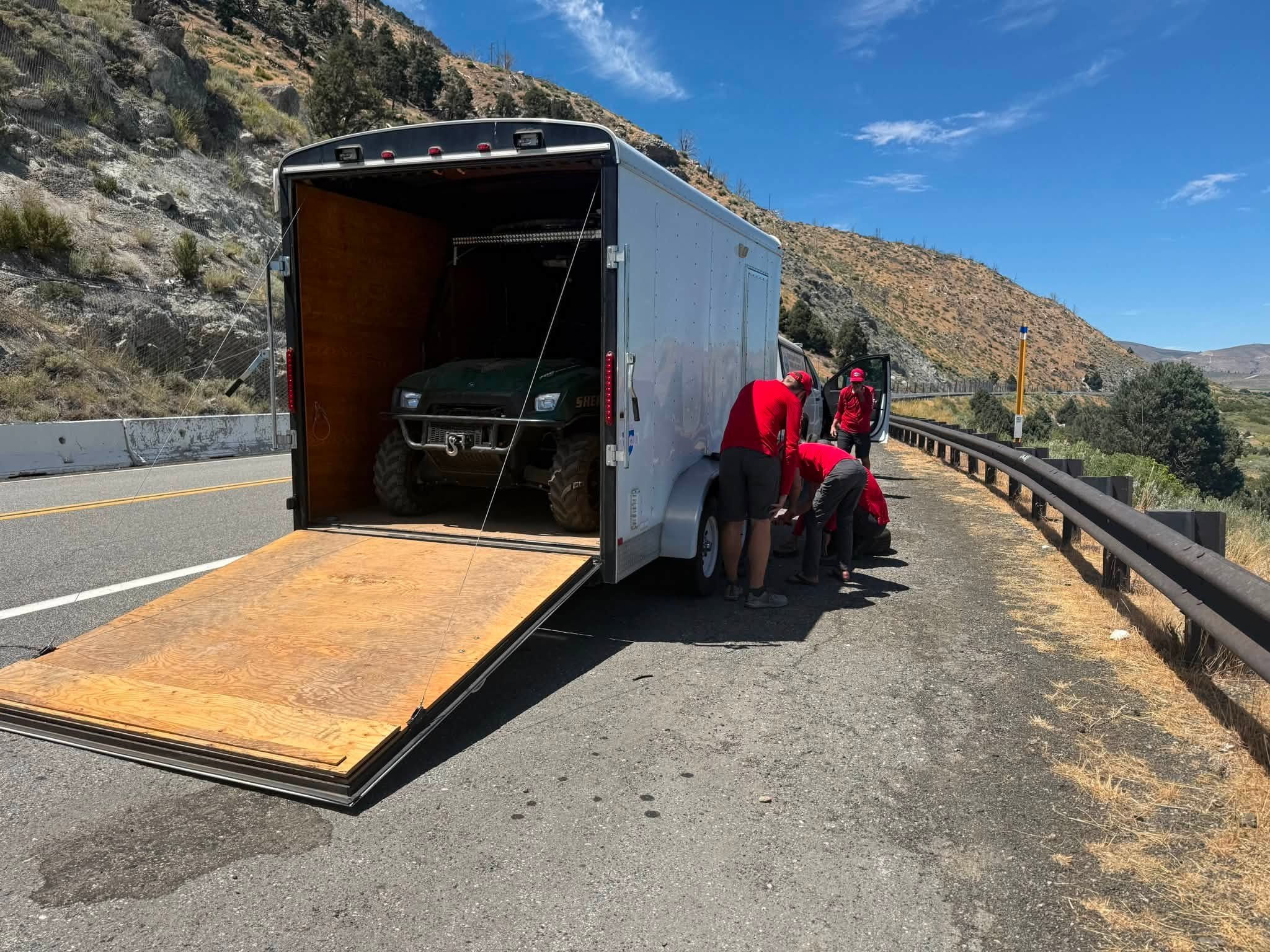
Changing a flat tire on the way to rescue base.
Team 1, consisting of two members, departed base in an MCSO Polaris RZR. Team 1 was able to travel past Leavitt Lake on an abandoned road to a location on the Sierra Crest near the subjects' location. The RZR was parked at 1456 hours, and the team hiked a short distance to the subjects, arriving at 1509 hours.
Team 1 performed an assessment, provided hydration, and began escorting the subjects back to the RZR at 1520 hours, arriving at 1541 hours. Team 1 carried the original subject's backpack, while the other two members of the party were able to carry their own gear.
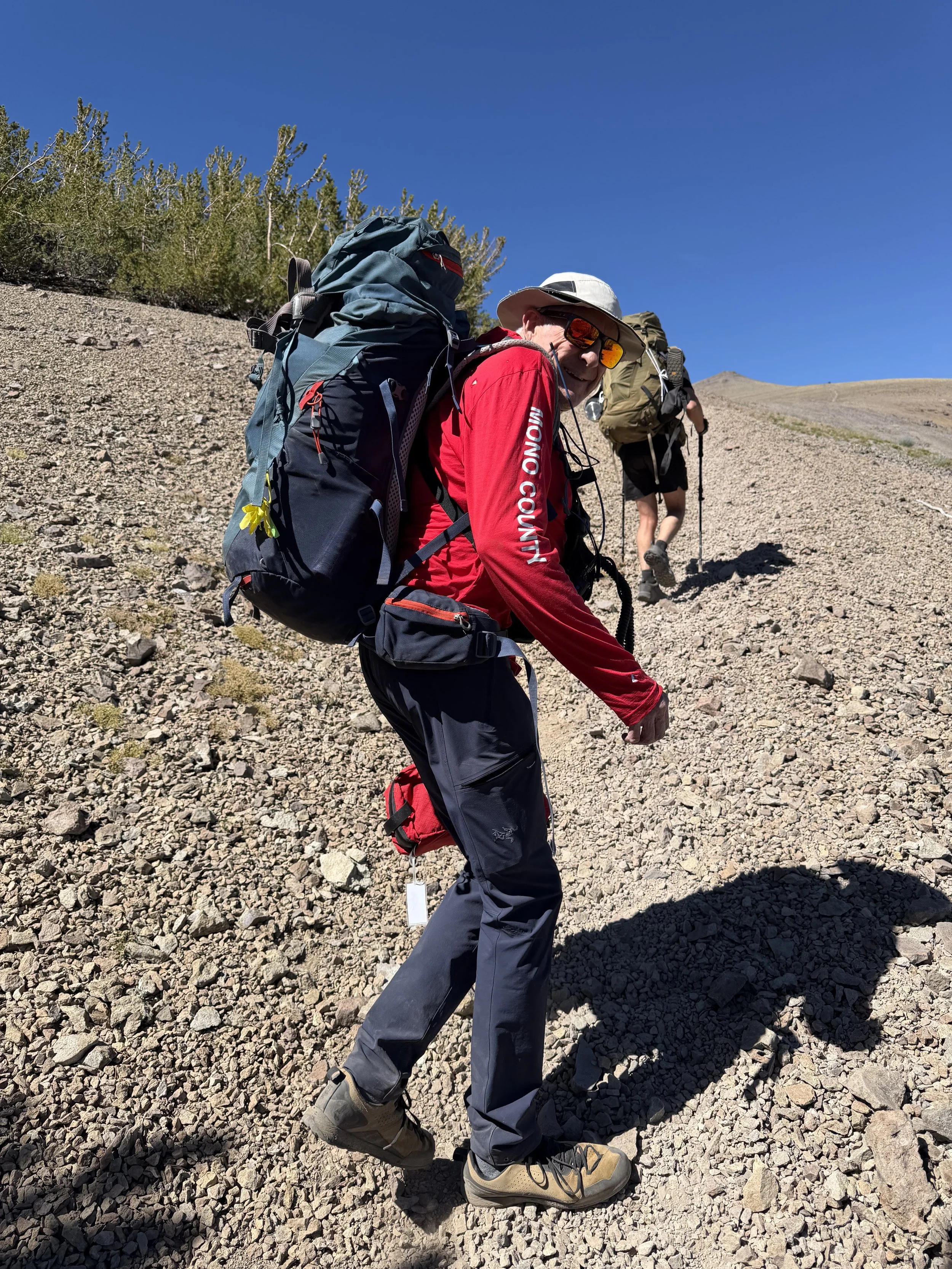
Hiking out the subject’s backpack. Image by J. Bush
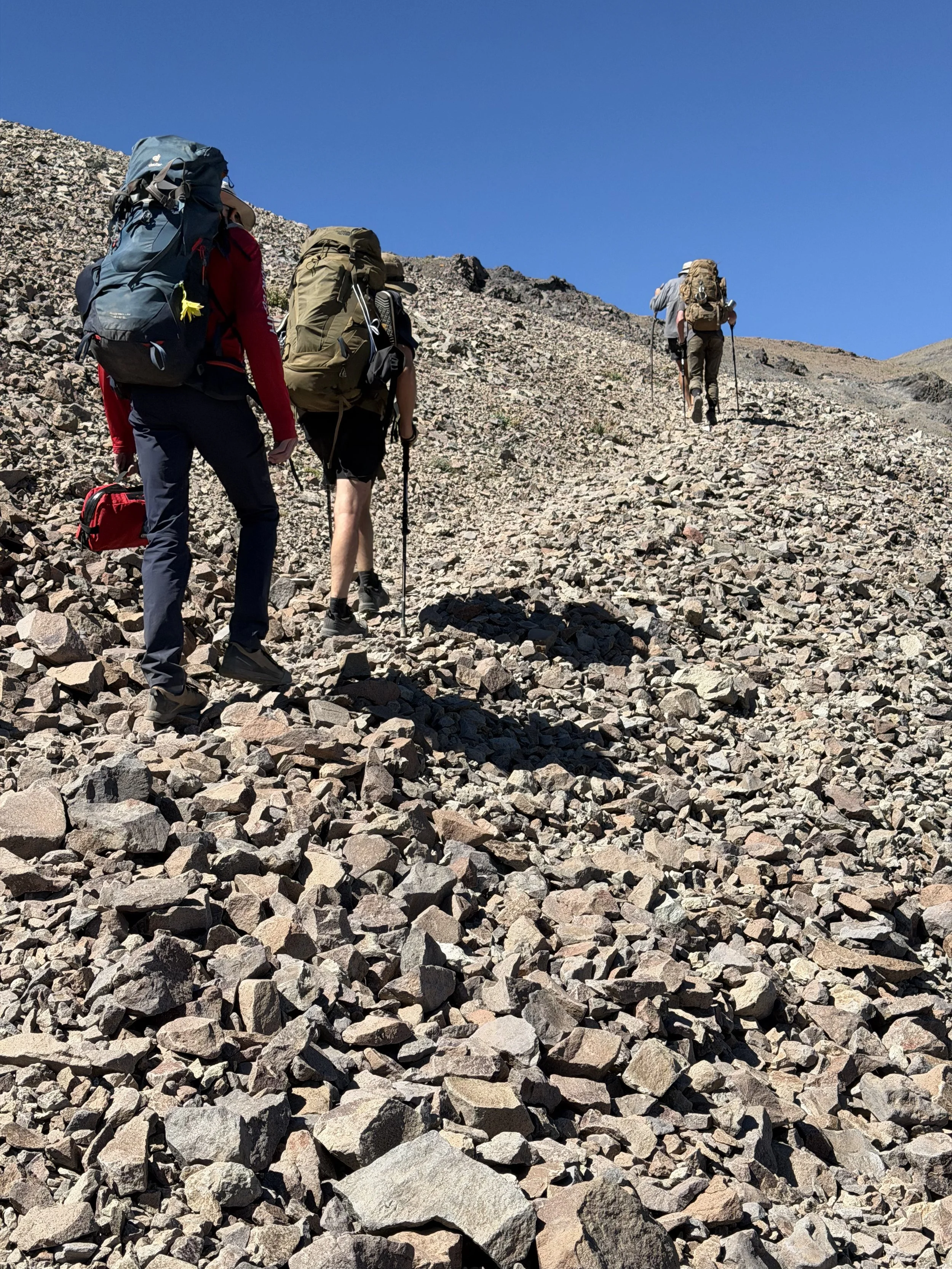
On the Pacific Crest Trail with the subjects. Image by J. Bush
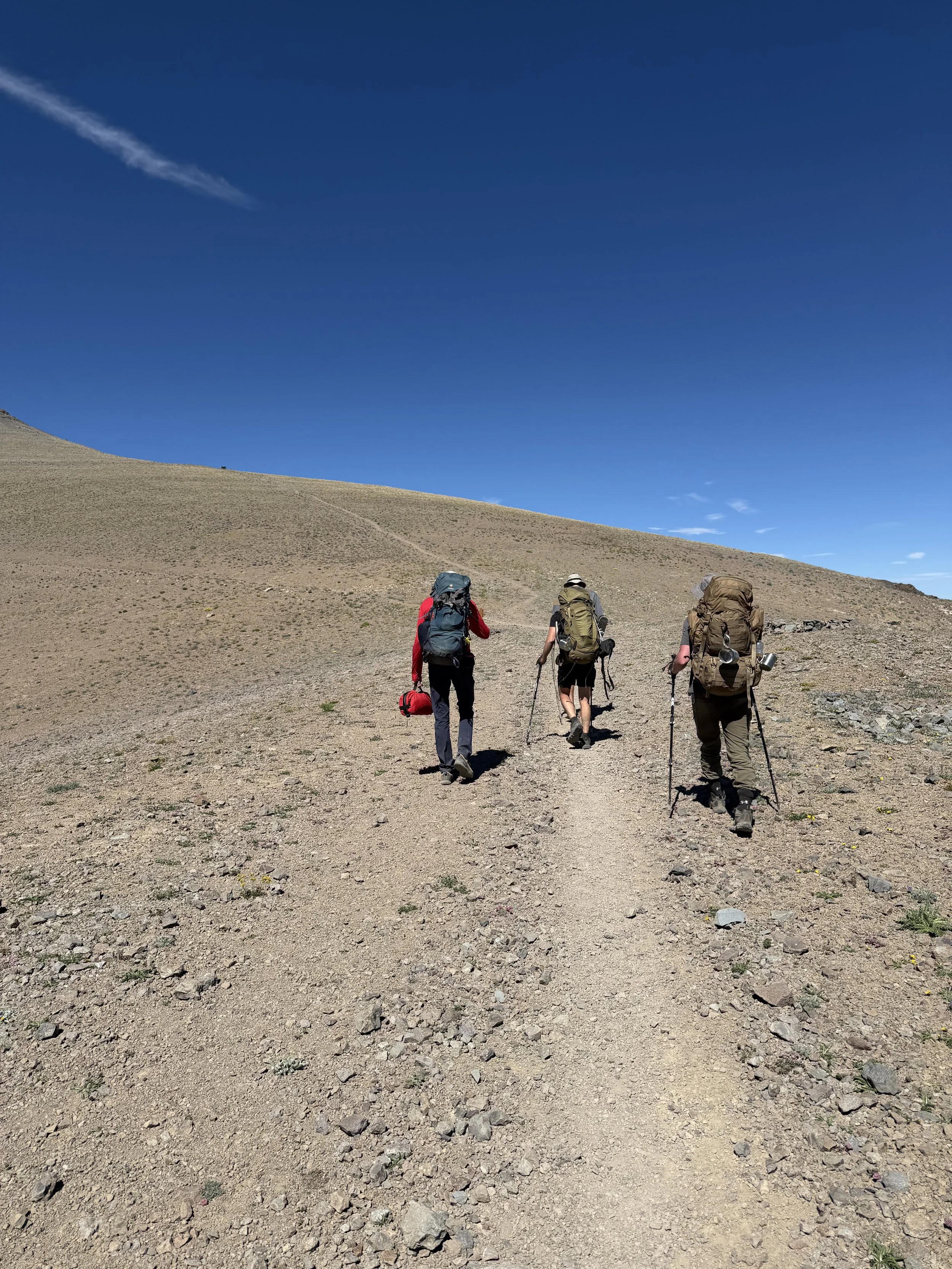
On the Pacific Crest Trail near the wilderness boundary. Image by J. Bush
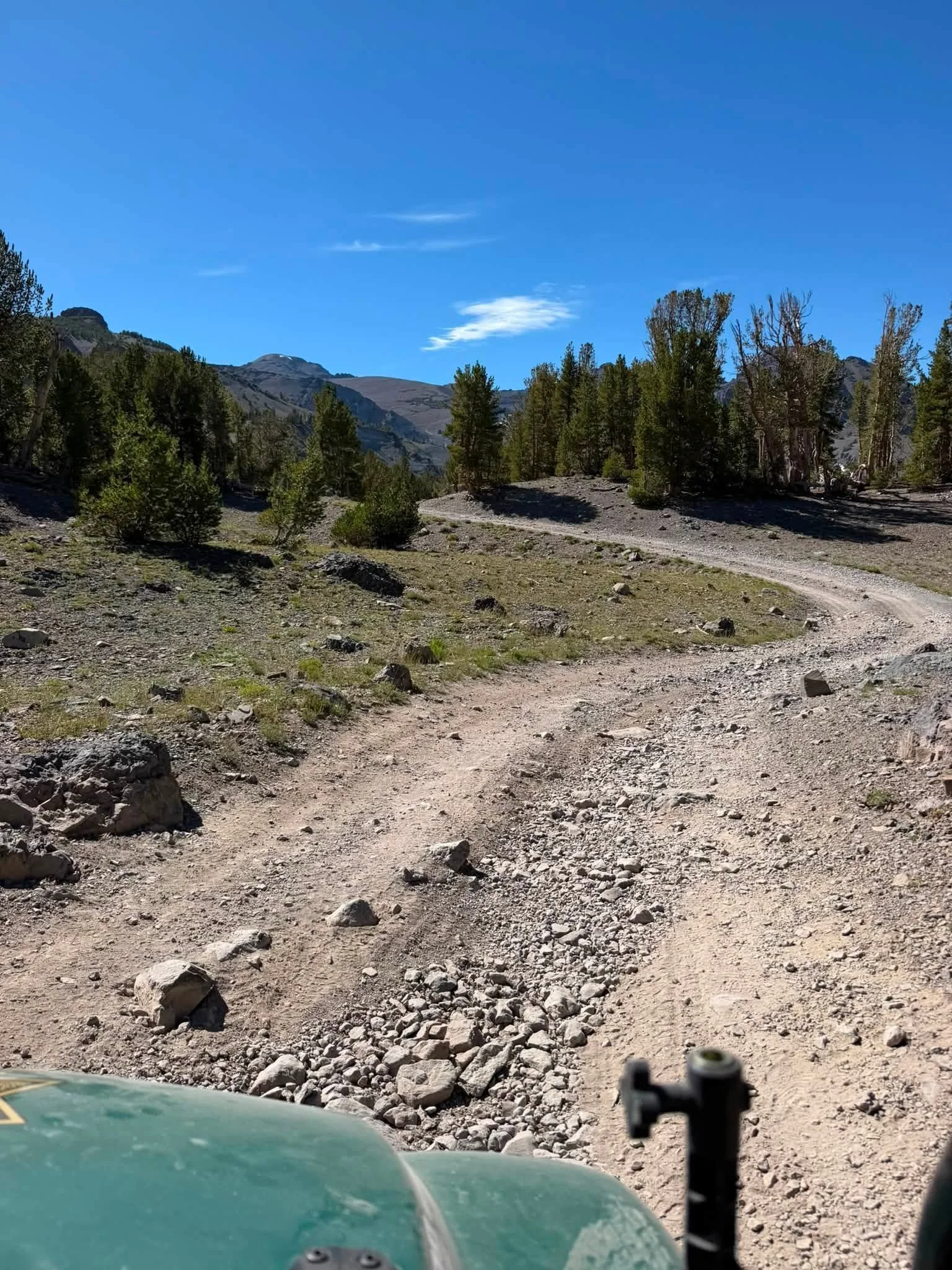
Team 2 arriving at Leavitt Lake
Team 2, also consisting of two members, departed base in the team’s six-wheel-drive Polaris Ranger and met Team 1 near Leavitt Lake. One passenger and additional gear were transferred to the Ranger, and both teams continued toward base. The three subjects were part of a larger group of 11. The remainder of the group overtook the teams on the descent and caught up when Teams 1 and 2 stopped at the subjects' vehicle, which was parked just prior to the first water crossing.
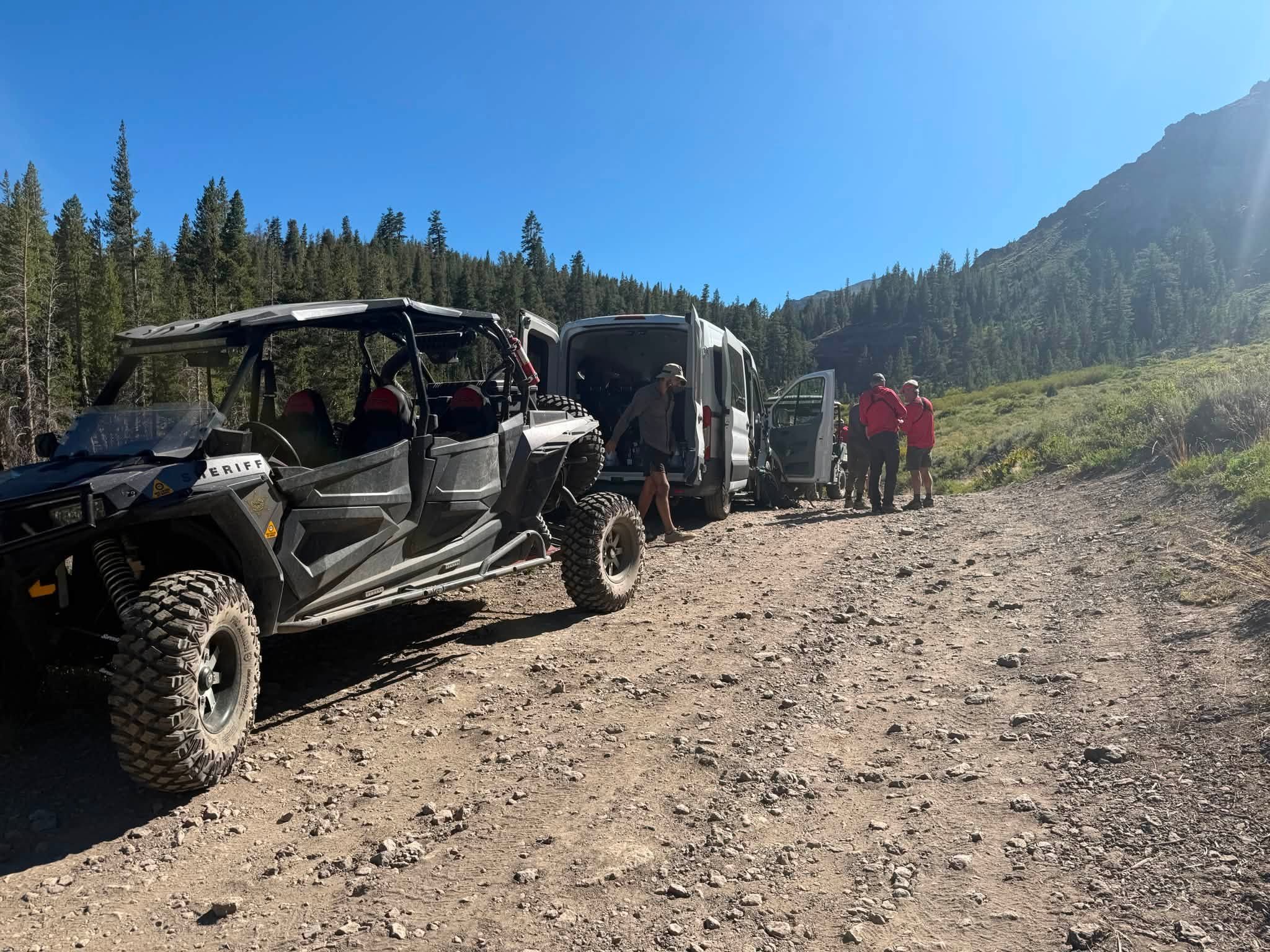
Assembling the group of 11 on the way to rescue base
Teams 1 and 2 and the remainder of the group met at base, where the original subject's condition was reassessed. The subject was advised to obtain an evaluation from Medic 1. The group met Medic 1 near the Marine Warfare Training Center for further assessment.. Operation terminated at 1713 hours.
IC: Rhoads Ops Leader: Beck Deputy Ops Leader: Salay Responders: Blackman, Brownlee, Bush, Cornelius, Haugh, Huizingh
36.9 person hours volunteered
On-Scene Coordinator: Mono County Sheriff Search and Rescue Team
July 31, 2026 26-387 #35
Missing Backpacker Near Thousand Island Lake
On Friday July 31st at 1751 hours, the Team was called for a report of two teens who had become separated from their companion, a 53-year-old male. The teens arrived at Thousand Island Lake at 1000 hours and had not heard from their companion as darkness approached. Rescue base was established at Minaret Vista. Rescue Operations deployed a hasty team of three to conduct a rapid search assignment along the River Trail. Shortly after deployment from the Agnew Meadows Campground Trailhead, the 53-year-old male was reunited with his party at Thousand Island Lake.
The operation was terminated at 2030 hours.
IC: Rhoads // Responders (9): Barker, Brownlee, Campbell, Cornelius, Haugh (Ops), Huizingh, Lipman, Senior, Wojciechowski
Volunteer hours: 23.9
On-Scene Coordinator: Mono County Sheriff Search and Rescue
July 31, 2026 26-385 #34
Assist Medic 3 with an Ill Hiker Near Rainbow Falls — Friday, July 31st, 2026, 26-385, Op #34
On Friday, July 31st, at 1400 hours, the Team was paged by MCSO for a mutual aid request from the Madera County Sheriff’s Office for a report of a 68-year-old female experiencing heat exhaustion at Rainbow Falls. Rescue Base was established at Reds Meadow. Personnel from Medic 3 and Mammoth Fire were also dispatched and were already on scene upon the arrival of Rescue 4 and Rescue 2. The Team’s response was canceled shortly thereafter.
The operation was terminated at 1600 hours.
IC: Rhoads // Responders (10): Barker, Brownlee, Campbell, Cucura, Haugh (Ops), Pavlovsky, Quiring, Thompson C., Thompson M., Wojciechowski
Volunteer hours: 20
*no media was captured
July 28, 2026 26-381 #33 Mutual Aid Inyo County
Ill Hiker Near Lamarck Lakes, Inyo County Mutual Aid
At 1827 hours, the Team was called by MCSO for a mutual aid request from the Inyo County Sheriff’s Office for assistance with a litter evacuation of an ill subject from Lower Lamarck Lake. Rescue base was established at the end of the North Lake Campground. An MCSO Incident Commander relayed the mutual aid request for a team of four, one Operations Leader and three rescuers, to serve as the Mono County contingent. Team rescuers met up with Inyo SAR personnel in the field and completed the assigned mission to help extricate the subject.
The operation was terminated at 2104 hours.
IC: Belcher Ops Leader: Salay Responders: Anderson, Brownlee, Huizingh
10.5 person hours volunteered
July 27 & 28, 2026 26-378 #32
Lost Hiker Near Garnet Lake
At 1948 hours, the Team was called for a mutual aid request from the Madera County Sheriff’s Office for a report of a lost hiker on the Garnet Lake Cutoff Trail. It was reported that the subject had limited food and water, no overnight equipment, and no means of navigating in the dark. Rescue Base was established at Minaret Vista. Operations deployed two teams: one hasty team and a second team to shuttle equipment, both making their way to the subject to guide them out. At 2240 hours, the subject was contacted, assessed, given food and water, and subsequently guided back to the Agnew Meadows Campground Trailhead, where they were transported to a Motel 6 for the night.
The operation was terminated at 0151 hours on Tuesday, July 28th.
IC: Rhoads Ops Leader: Bush Responders: Ackerman, Barker, Beck, Brownlee, Romanova, Salay, M.Thompson
Volunteer hours: 40.6
On-Scene Coordinator: Mono County Sheriff Search and Rescue
July 25, 2026 26-373 #31
Seizure at Arrowhead Lake
On Saturday, July 25th, at 1252 hours the Team was called for a report of a 74-year-old male who had suffered a seizure near Arrowhead Lake. Rescue base was established at the end of Coldwater Creek Campground at the Duck Pass Trailhead. Personnel from Medic 3 and Mammoth Fire were also dispatched and were already on scene upon Rescue 4’s arrival. Medic 3 notified Rescue 4 that the subject was moving downhill under their own power. All arriving team members were advised to cancel shortly thereafter. The operation was terminated at 1430 hours.
IC: Rhoads Ops Leader: Haugh Responders: Anderson, Barker, Bush, Cowan, Knight, Quiring, Wallace
Volunteer hours: 13.1
July 22, 2026 26-363 #30
Rockfall Injures Two Hikers, One Critically, Below Mildred Lake — Wednesday, July 22, 2026, 26-363, Op #30
On Wednesday, July 22, at 1345 hours, the Team was paged by the Mono County Sheriff's Office (MCSO) for a report of two subjects who had been struck by rockfall while hiking from Convict Lake to Mildred Lake. The text-to-911 coordinates provided an approximate location a few hundred feet below Mildred Lake. The reporting party's (RP) follow-up messages indicated that he had been immobilized by the rockfall after his ankle was crushed, and that his hiking partner and wife had been rendered unresponsive. The RP estimated that the rock which struck his partner was approximately the size of a basketball and had hit her directly in the head.
Rescue Operations immediately requested air resources, and CHP H-42 from Fresno accepted the mission. Rescue Base was established at both the Convict Lake Marina and Mammoth Yosemite Airport (MMH), with Rescue Operations establishing command at each location.
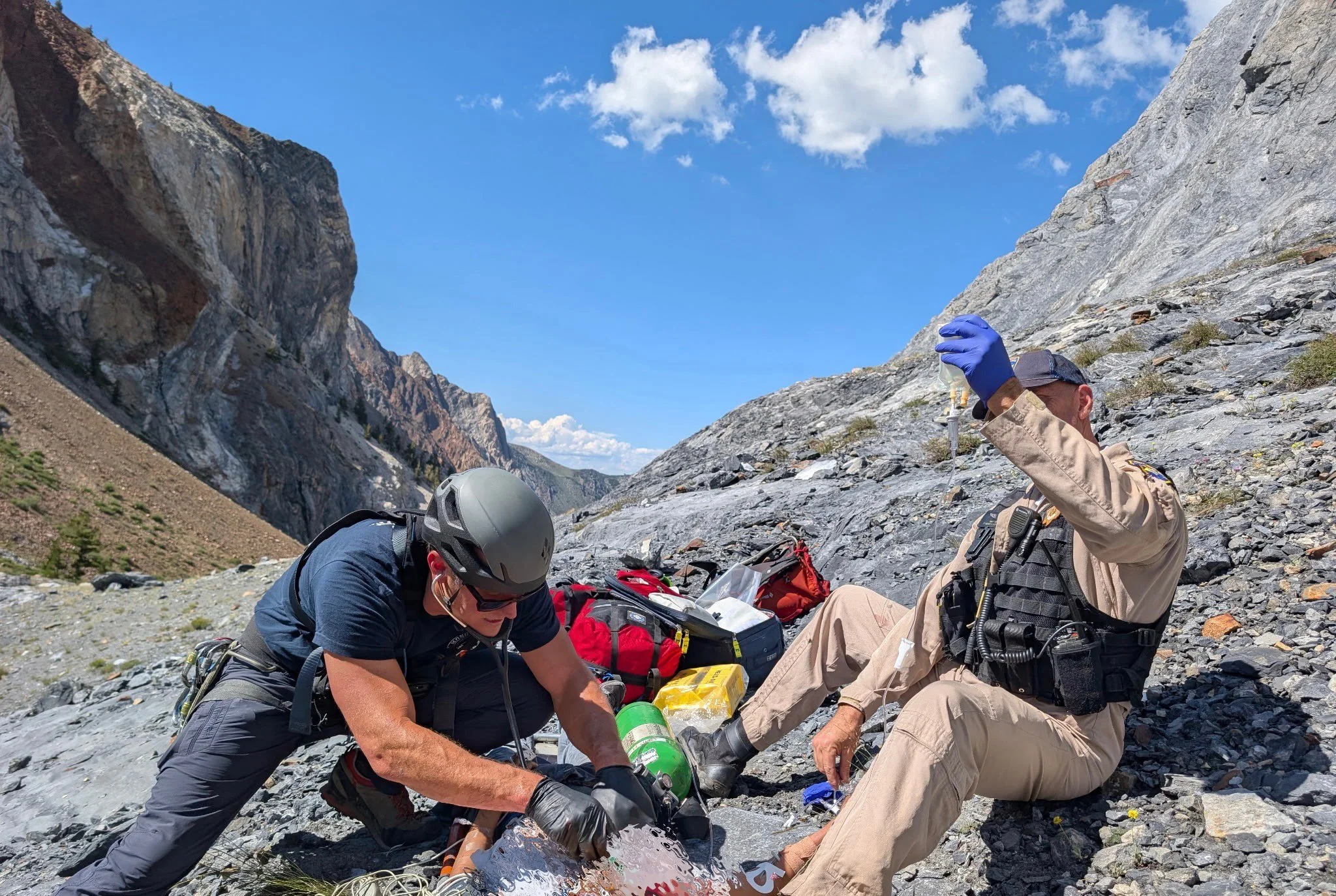
Airport Operations assembled a hasty helicopter rescue team (HRT) consisting of a wilderness EMT, the on-duty paramedic from Mono County Medic 3 (who is also a SAR rescuer), and a third team member to transport equipment and manage technical operations on scene. Marina Operations immediately assembled and deployed several ground teams carrying critical medical equipment, multiple litters, and technical evacuation gear. Their approach was estimated at 4.5 miles with approximately 2,000 feet of elevation gain.
H-42 flew over the subjects to reconnoiter the area before landing at MMH. Due to repeated patient updates indicating that the female subject's condition was worsening, H-42 instead landed at Mildred Lake and offloaded its flight officer/paramedic. The paramedic made contact with the subjects and initiated patient care while H-42 flew to MMH to pick up a second paramedic who was also a SAR member. Due to erratic afternoon winds, and in the interest of expediency, H-42 elected to remain on the ground at Mildred Lake while both paramedics worked to stabilize the critically injured subject. At least one additional flight was completed to deliver critical medications and advanced medical equipment needed for comprehensive mountainside ALS care.
Once the subject was stable enough for movement, both paramedics, along with the H-42 pilot, packaged and carried her several hundred vertical feet uphill from the accident site to the helicopter. Just before this movement began, the ground teams reached the accident site and initiated patient care for the second injured subject.
H-42 transported the critically injured subject back to MMH, where she was received by SAR personnel, a second Mono County paramedic, Mammoth Fire personnel, and the critical care team from Sierra Life Flight. Extensive treatment continued as the Sierra Life Flight crew prepared her for transport to a Level I Trauma Center in Fresno.
Meanwhile, SAR personnel worked with H-42 to reconfigure the aircraft for the evacuation of the second injured subject. Shortly after Sierra Life Flight departed, H-42 returned to extract the second subject. The subject was briefly cared for by Mono County paramedics and Mammoth Fire personnel while H-42 made one final flight to retrieve the remaining Mono County paramedic.
All ground teams exited the area and were ferried back to the Convict Lake Marina aboard the Team's rescue boat after reaching Convict Lake. H-42 was reconfigured at MMH before transporting the second injured subject to a Level I Trauma Center in Fresno.
The Team wishes the best possible outcome for both subjects following this tragic incident.
A sincere thank you to CHP, Sierra Life Flight, Mono County Paramedics, Mammoth Fire, and Long Valley Fire Chaplain Zastoupil for their assistance during this operation.
IC: Belcher // Responders (22): Ackerman, Anderson, Arndt, Beck, Blackman, Brownlee, Creager, Cucura, Glessner, Haugh, Huizingh, Kelly, Knight, Quiring, Romanova, Salay (Ops), Senior, Schildge, Thompson C., Thompson M., Wallace, Wojciechowski
July 18, 2026 26-352 #29
Missing Juvenile at Convict Lake
The Team was activated for a report of a missing 13-year-old with autism who was last seen near the day use area at Convict Lake. As teams began responding—including several members returning from driver training in Bridgeport—the subject was located safe before field operations were initiated. The response was canceled shortly after activation.
IC: Rhoads Ops Leader: Haugh Responders: Arndt, Cowan, Huizingh, Lipman, Salay, Tardy, Zila
Volunteer hours: 2.9
On-Scene Coordinator: Mono County Search and Rescue Team
July 16 & 17, 2026 26-352 #28
Mono SAR Assists Hiker Experiencing Medical Emergency Near Gibbs Lake — Thursday-Friday, July 16th-17th, 2026, 26-352, Op #28
On Thursday, July 16th, at 2152 hours, the Team was paged by the Mono County Sheriff’s Office (MCSO) for a report of a 21-year-old hiker experiencing difficulty breathing and chest pain on the Gibbs Lake Trail.
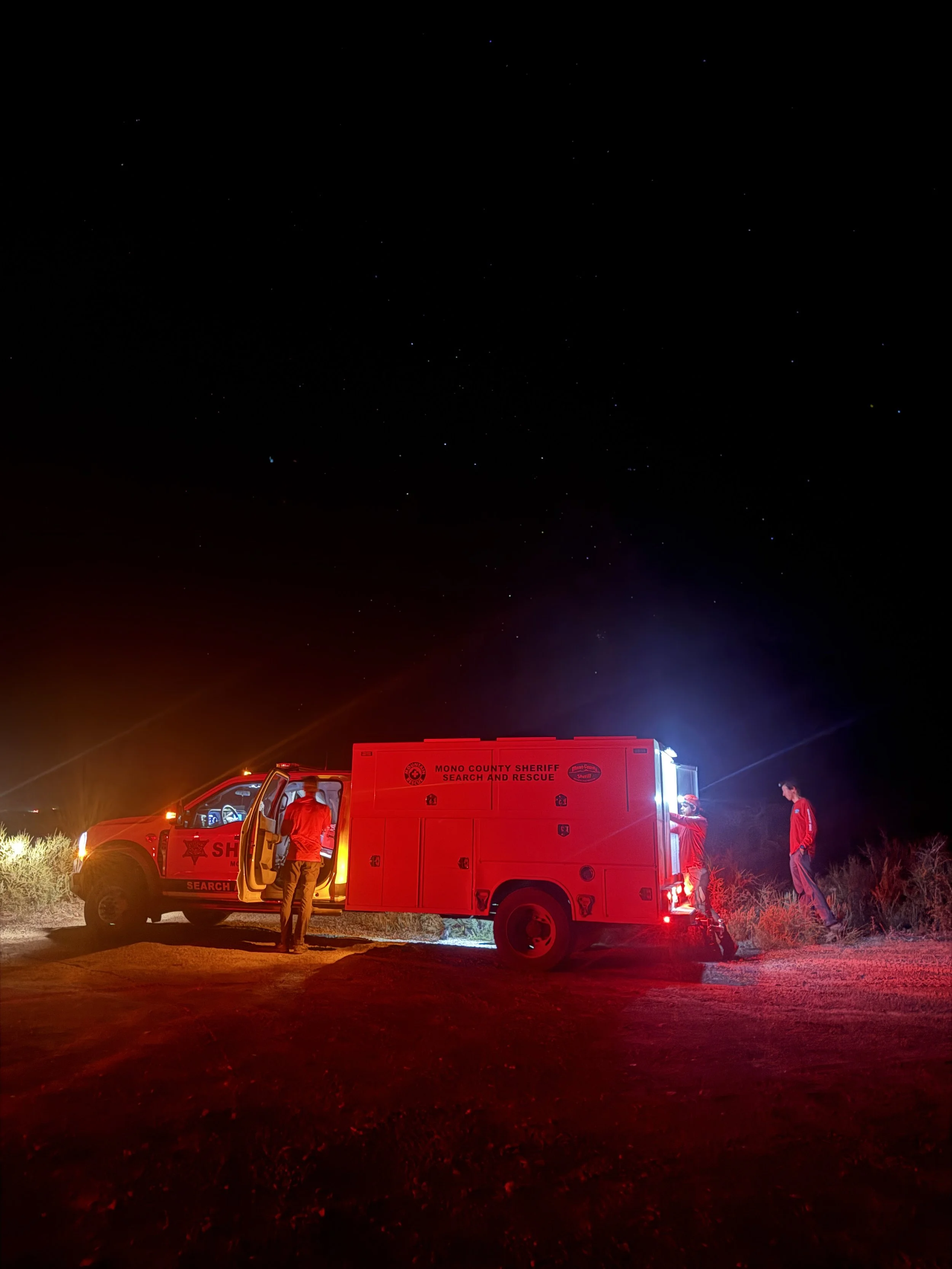
Rescue Base at night. Photo by C. Brownlee.
Rescue Base was established at the Gibbs Lake Trailhead. Rescue Operations deployed a hasty medical team on foot with advanced medical equipment, including oxygen and an AED, while additional teams followed with a litter and supplemental medical supplies. SAR personnel located the subject on the trail and conducted a medical assessment, identifying signs consistent with altitude sickness. Oxygen therapy was initiated, resulting in a significant improvement in the subject's condition.
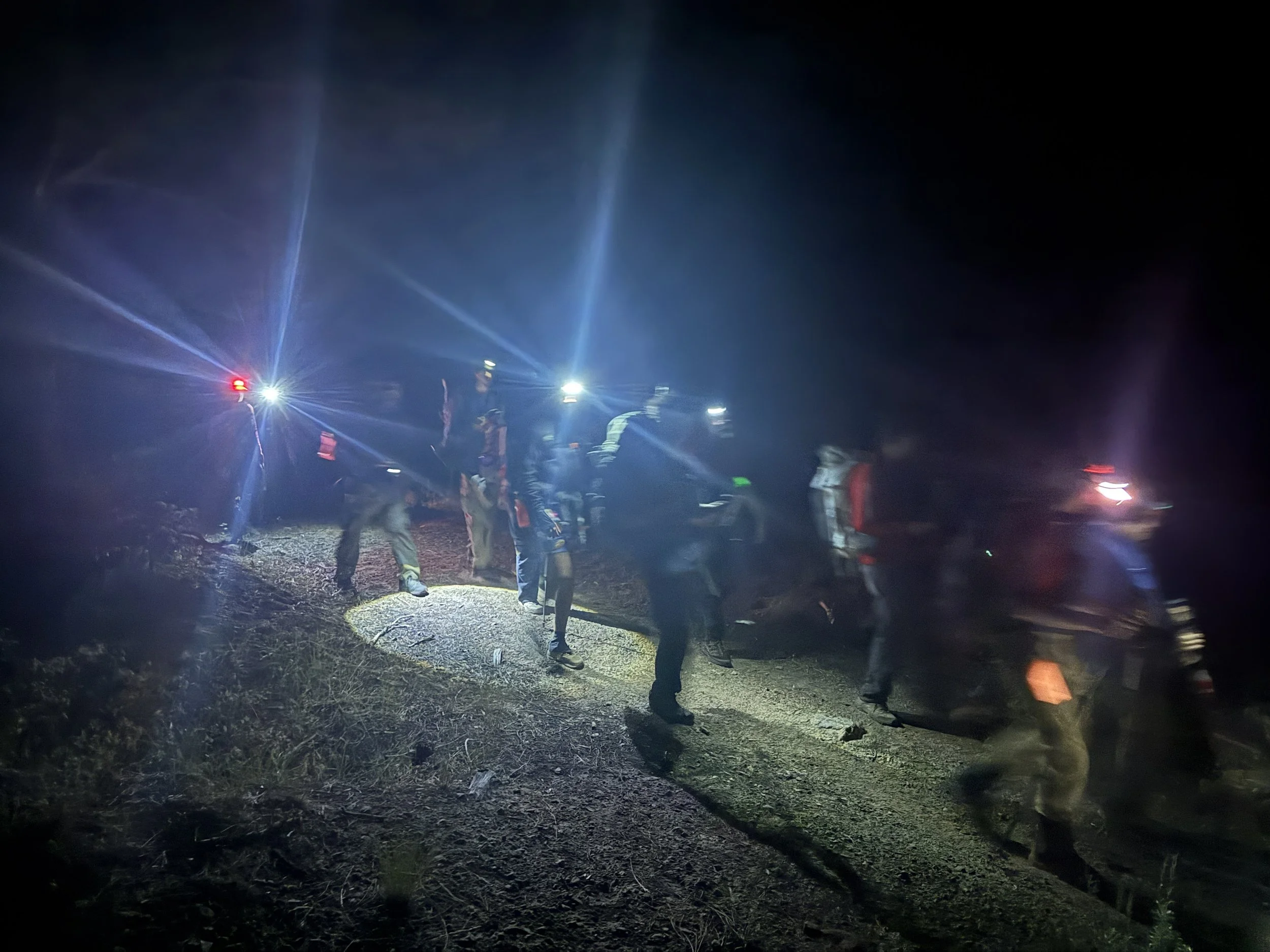
All teams and subject returning to Base. Photo by C. Brownlee.
After the subject stabilized, rescuers assisted them back to the trailhead while continuously monitoring their condition. The subject remained ambulatory throughout the evacuation and was transferred to awaiting paramedics for continued evaluation and transport.
The operation was terminated at 0115 hours on Friday, July 17th.
IC: Salazar // Responders (11): Ackerman, Brownlee, Campbell, Cornelius, Glassner, Huizingh, Kelly, Romanova, Salay (Ops), Tardy, Wojciechowski
Volunteer hours: 37.2
July 11 & 12, 2026 26-335 #27
Injured Peak Bagger on Carson Peak
On Saturday, July 11, at 1532 hours, the Team was called by the Mono County Sheriff’s Office (MCSO) regarding a peak bagger who had taken an estimated 15-foot fall off a cliff while descending from the summit of Carson Peak. The subject was rendered immobile by the fall and self-reported other serious injuries.
Rescue base was established at the Fern Lake Trailhead. Operations immediately began coordinating air resources; however, due to multiple ongoing incidents elsewhere in the state, air resources were initially unavailable. Operations deployed a hasty team of three on foot carrying critical trauma-care, hypothermia-management, and technical rigging equipment. Multiple additional teams were deployed shortly afterward to ferry other critical technical rescue equipment to a staging area at Fern Lake.
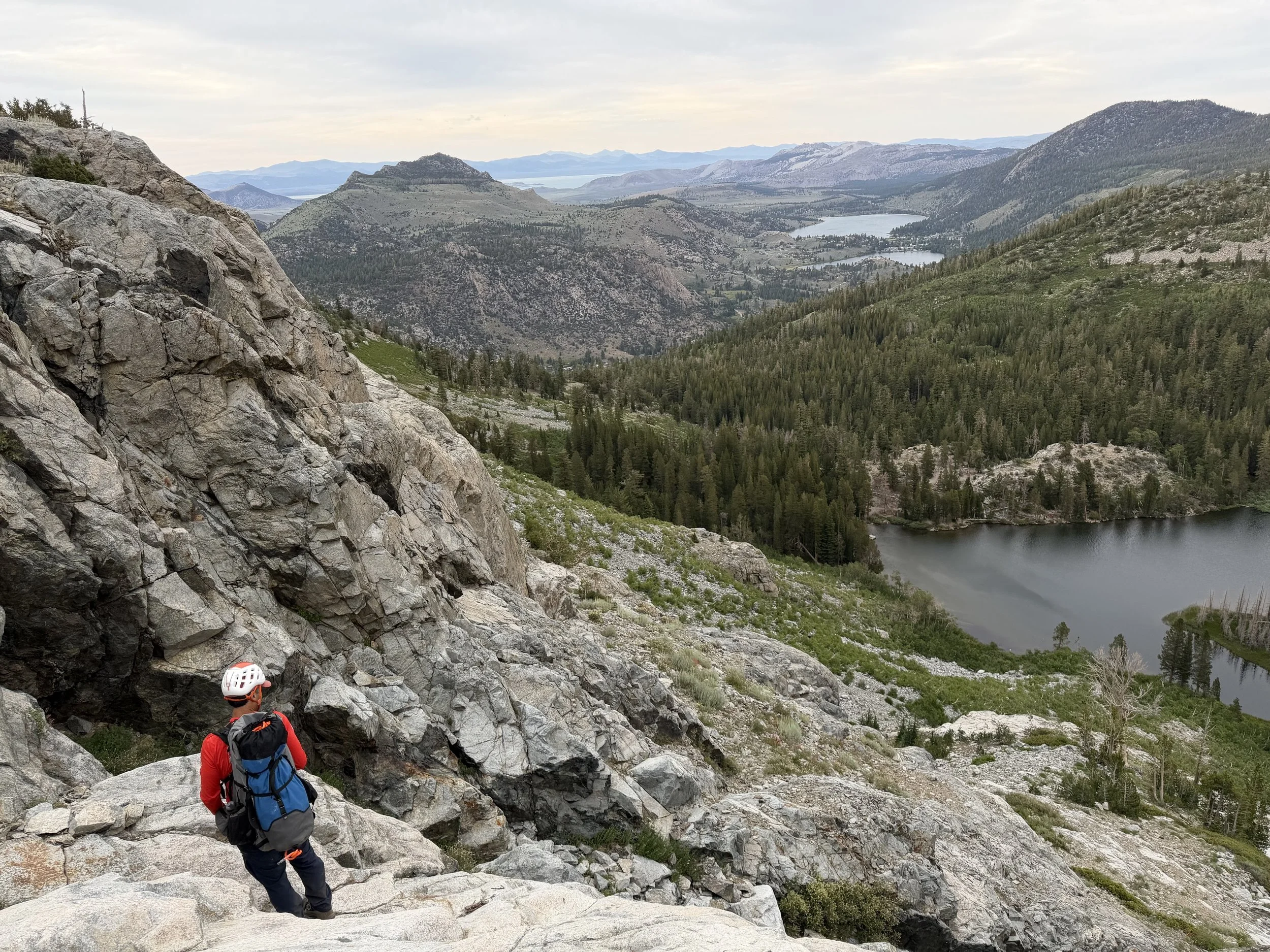
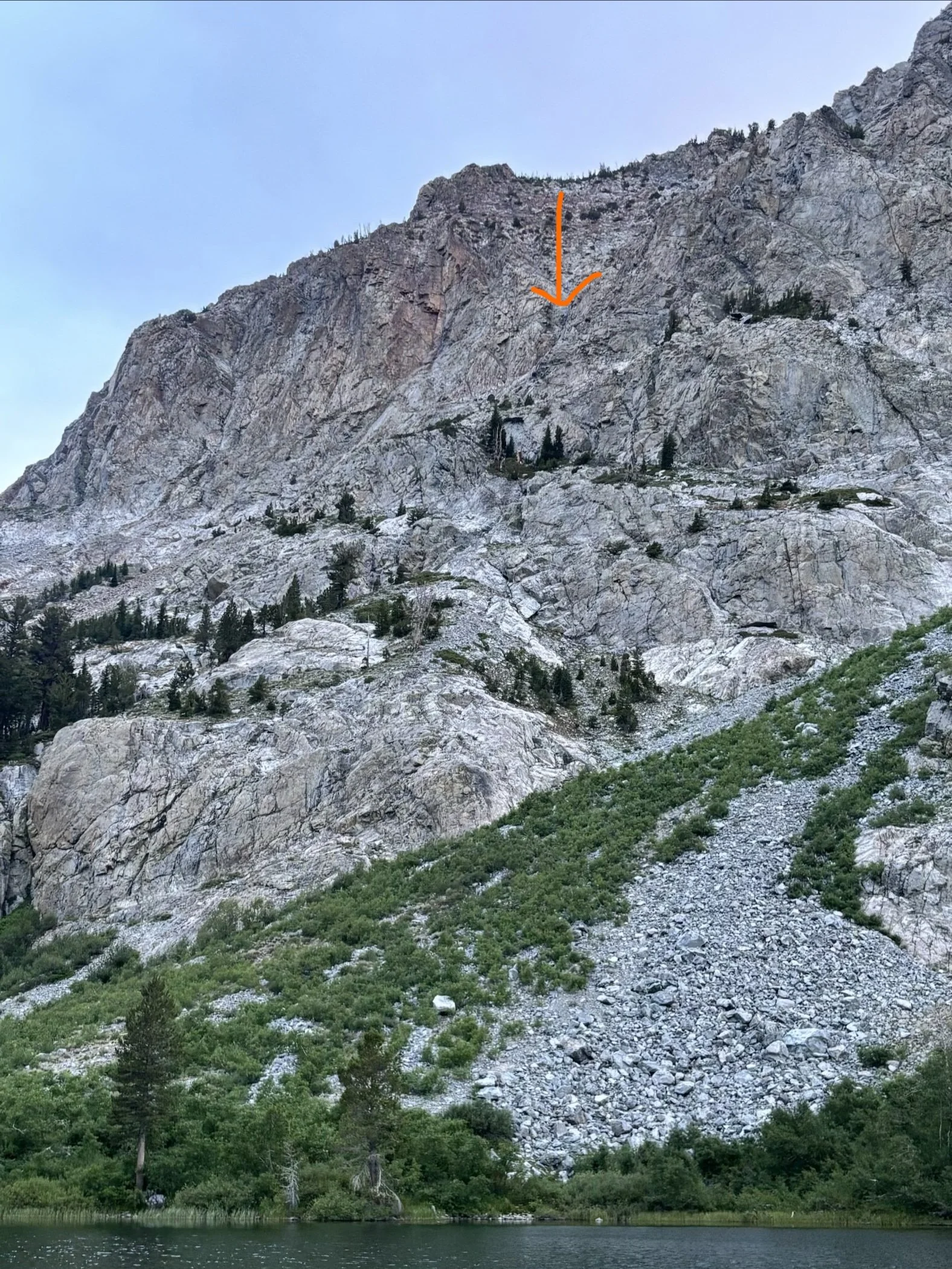
Fern Lake and the cliffs above below the summit of Carson Peak. Photo by S. Campbell.
After an arduous approach to the subject, while approximately 300 vertical feet below the reported location, rescuers called out and blew a whistle. When the subject answered from somewhere above them, the team was finally able to narrow their location and climb toward their voice through steep terrain.
When Team 1 arrived on scene, it was determined that the subject's condition was serious and required extrication by air as soon as possible. Team 1 assessed that the subject had taken a much larger fall of approximately 30 feet. While Operations continued working to secure an aircraft, alternative plans were developed, including remaining overnight with the subject to provide continuous mountainside medical care. A paramedic (and SAR member) from Mono County Medic 3 was also on standby for insertion should a suitable aircraft become available.
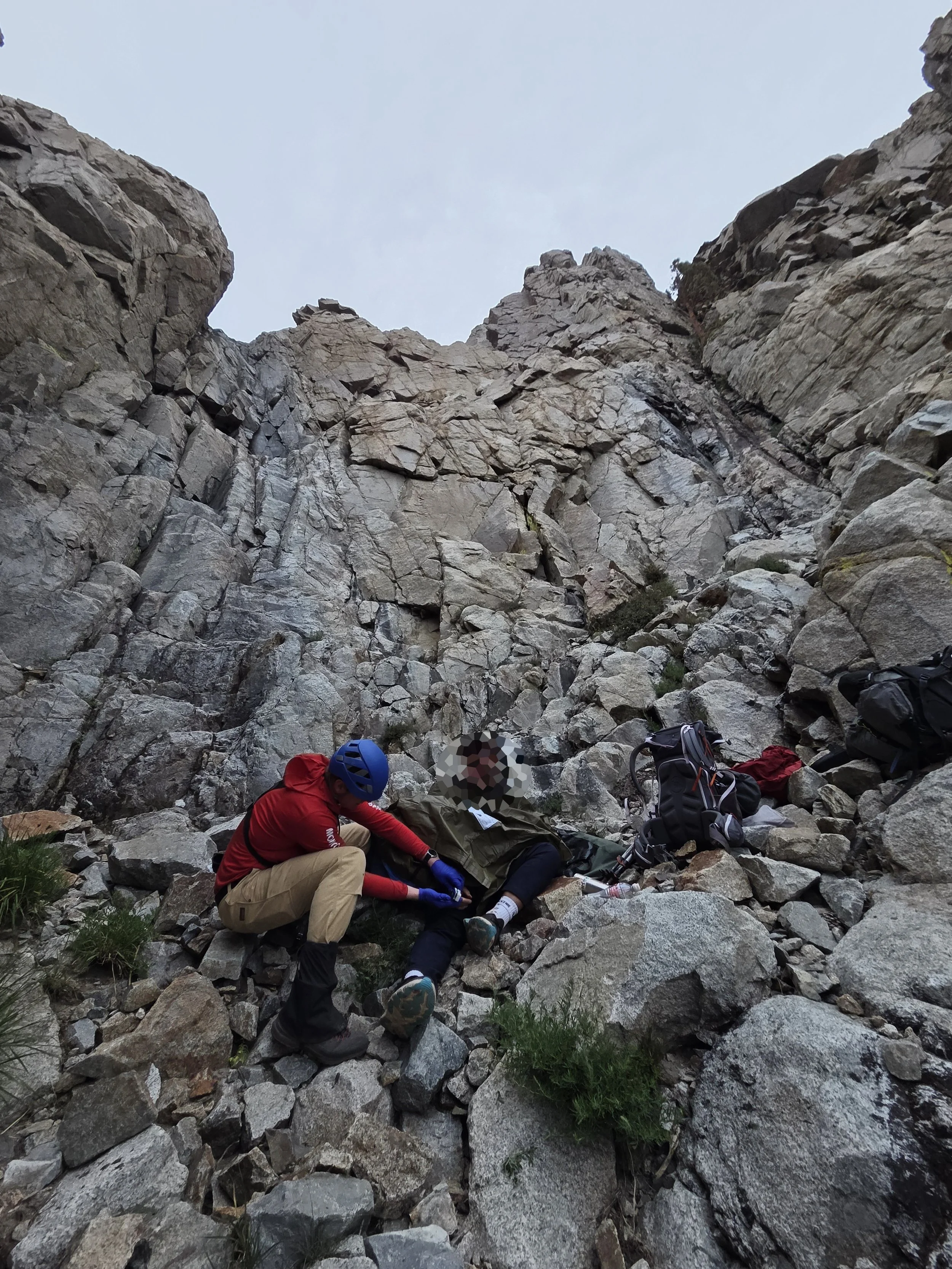
Team One assessing the subject. Photo by J. Lipman.
The subject had landed in a deeply recessed natural alcove surrounded by cliffs on three sides, two of them overhanging. His position was not visible from Fern Lake and likely difficult to identify even from the air. The initial team did not establish visual contact until they were within approximately 100 feet. Given this terrain, coupled with strong swirling winds, it appeared a hoist out of this alcove would be unlikely. Therefore, Team One set up a belay system to lower the subject out of the alcove and onto a ledge that would be more accessible to a helicopter.
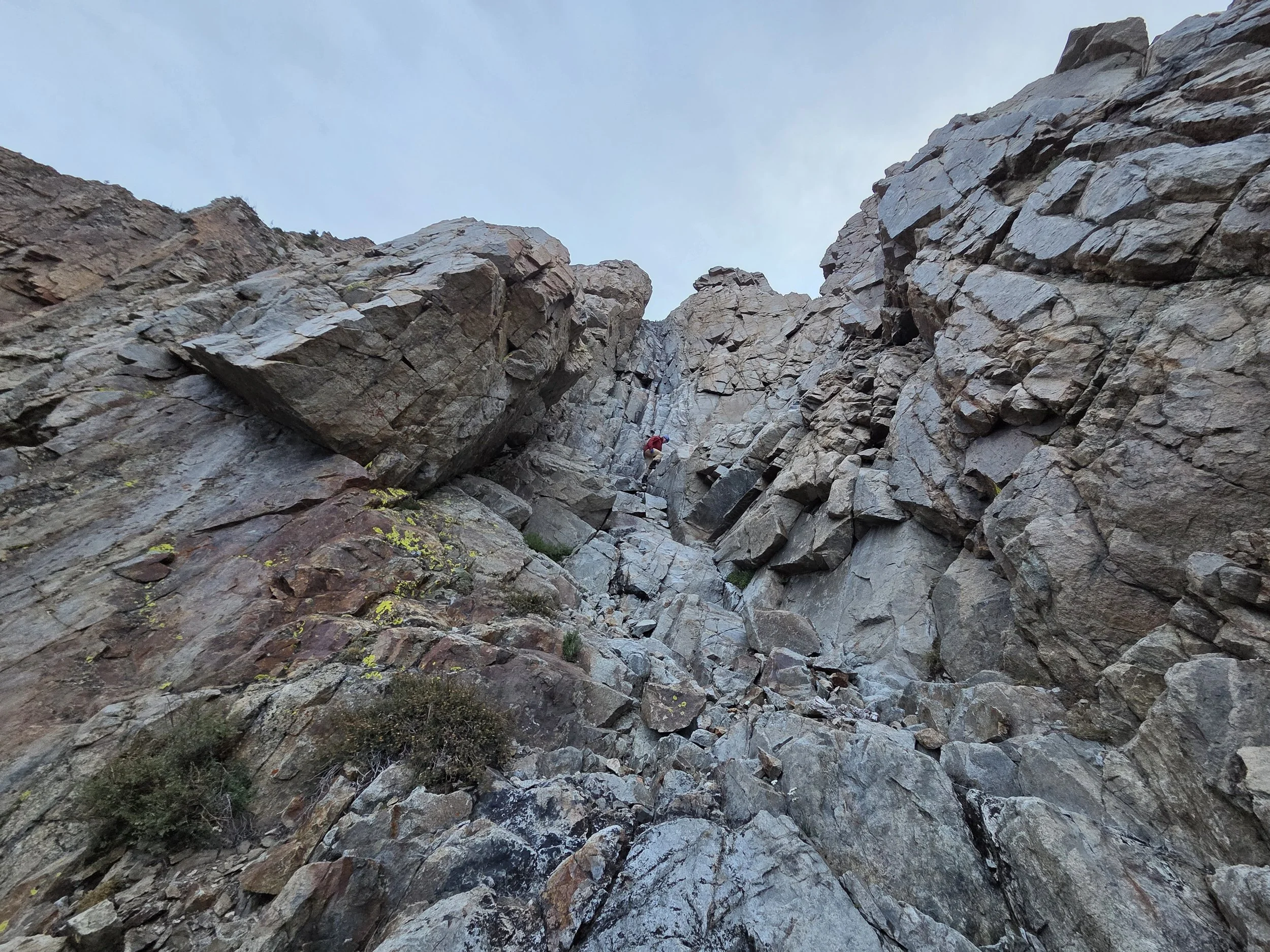
Wider view of the Alcove. Photo by J. Lipman.
As nightfall approached, Operations secured a hoist-capable Army National Guard UH-60A Black Hawk helicopter out of former Mather Air Force Base in Sacramento. Although the aircraft had been ordered, this did not guarantee its arrival or a successful rescue upon arrival. Therefore, teams staged at Fern Lake began moving toward Team One's location with the remaining technical rescue equipment.
As the Black Hawk, call sign "SPARTAN 978," appeared overhead at 2130 hours, rescuers hoped to hoist the injured subject, who had been packaged by the on-site team. Gusty winds and steep terrain prevented a successful initial hoist. The additional teams had not yet reached Team One and were approximately 500 feet lower. The SPARTAN 978 crew determined that the lower team’s location offered more favorable hoisting conditions and asked whether the subject could be transported there.
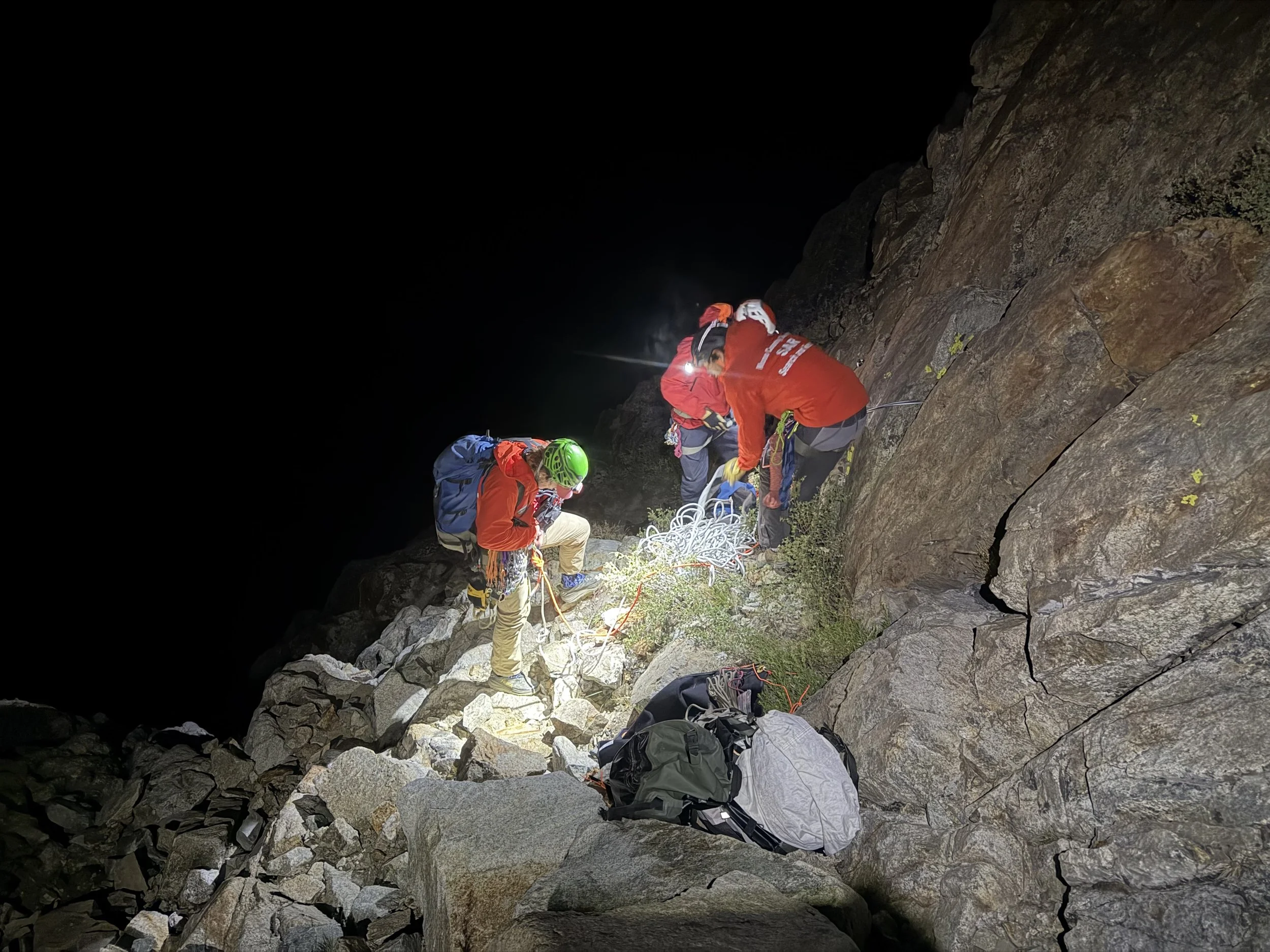
Teams preparing for a nighttime technical lowering operation. Photo by S. Campbell.
At first, moving the injured subject that far through the cliffs appeared nearly impossible. A closer nighttime assessment with headlamps revealed a steep, continuous gully connecting the upper ledge with the newly identified hoist zone. The teams quickly developed a two-pitch technical lowering plan while the SPARTAN 978 crew departed for Mammoth Airport to refuel. Before departing, the aircrew advised rescuers that it had a strict operational deadline and could remain available only for a limited period.
While the helicopter was at Mammoth Airport refueling and standing by, rescuers rapidly constructed anchors in the cliff and prepared the subject for a technical lower. Using a twin-tension rope system, the team lowered the subject in a Sked, accompanied by attendants, down the first steep pitch to an intermediate anchor station. The ropes were then recovered, reconfigured, and used for a second lower to the designated hoist zone. The operation was completed under significant time pressure as the helicopter approached its deadline to depart.
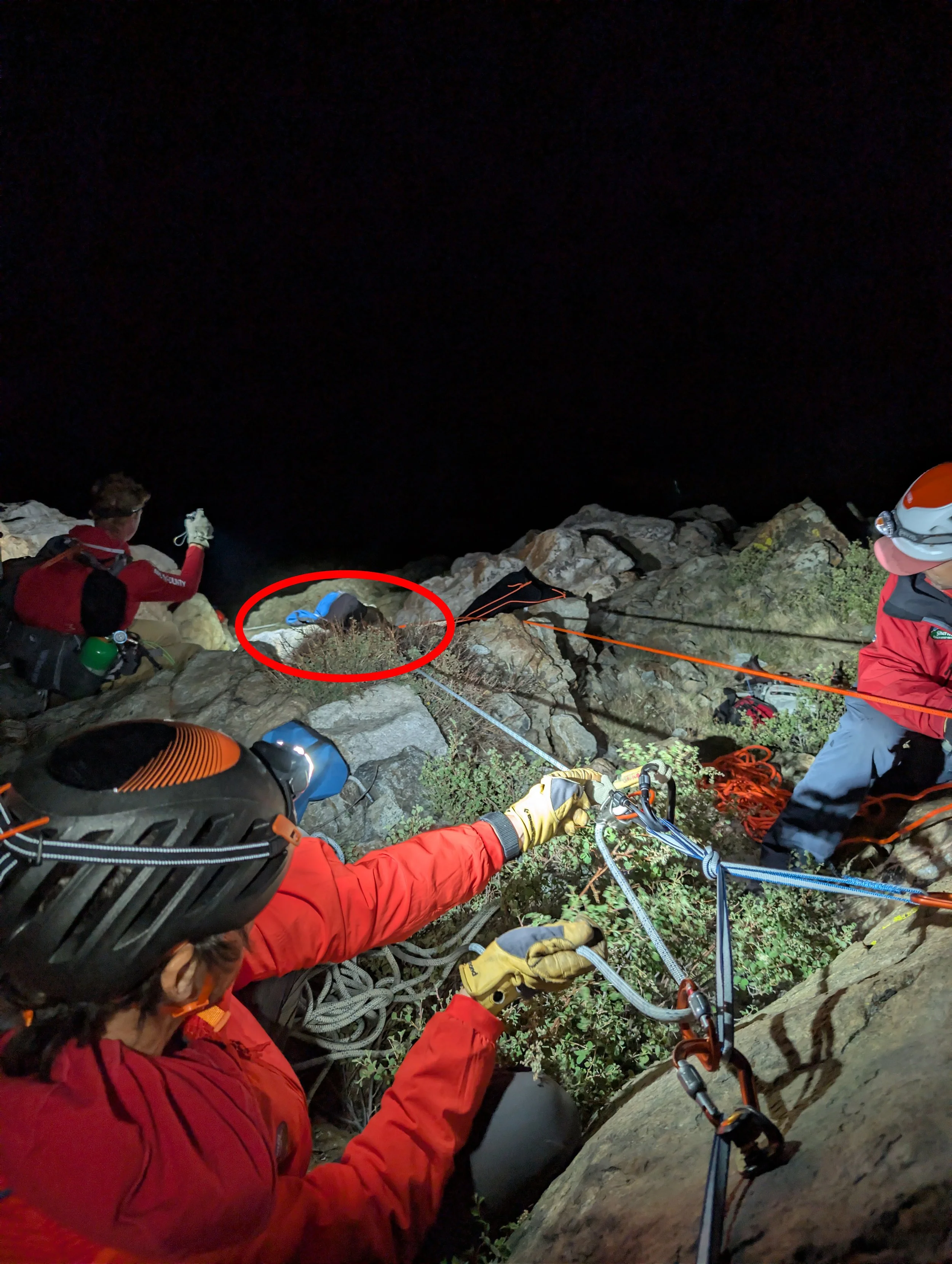
The lowering operations commencing. Photo by C. Thompson.
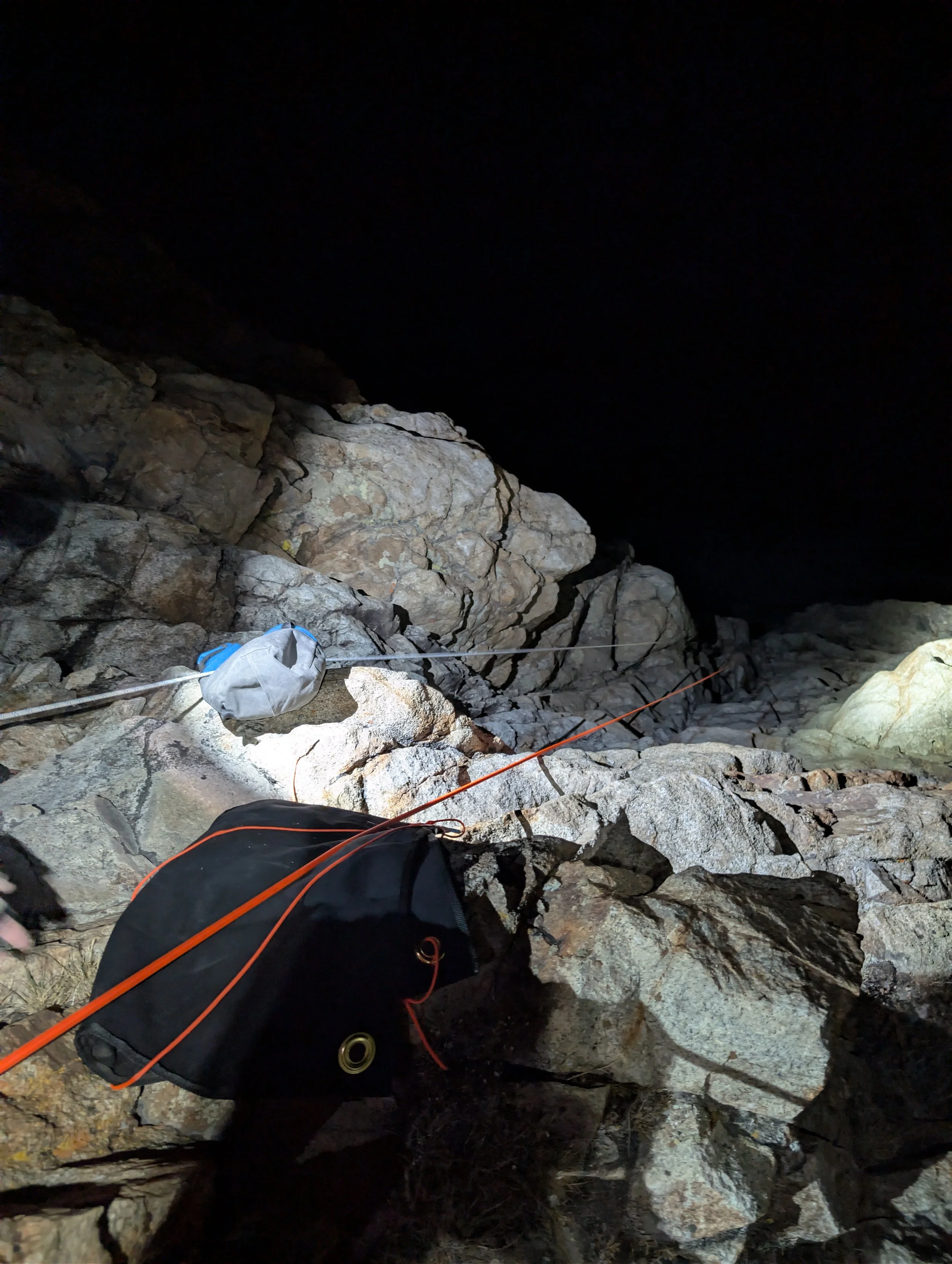
Lowering through the natural rock features. Photo by J. Lipman.
The team reached the designated hoist zone with the subject just 15 minutes before the helicopter’s deadline to depart, and SPARTAN 978 returned to make a final hoist attempt. Once back on-station, the aircraft lowered a medic to the rescuers. Strong winds and turbulence near the mountainside continued to move the helicopter during the operation. After the subject was successfully transferred into the aircraft’s rescue harness and the hoist line was prepared, the medic and subject were lifted clear of the terrain, and the subject was flown to a Level I Trauma Center.
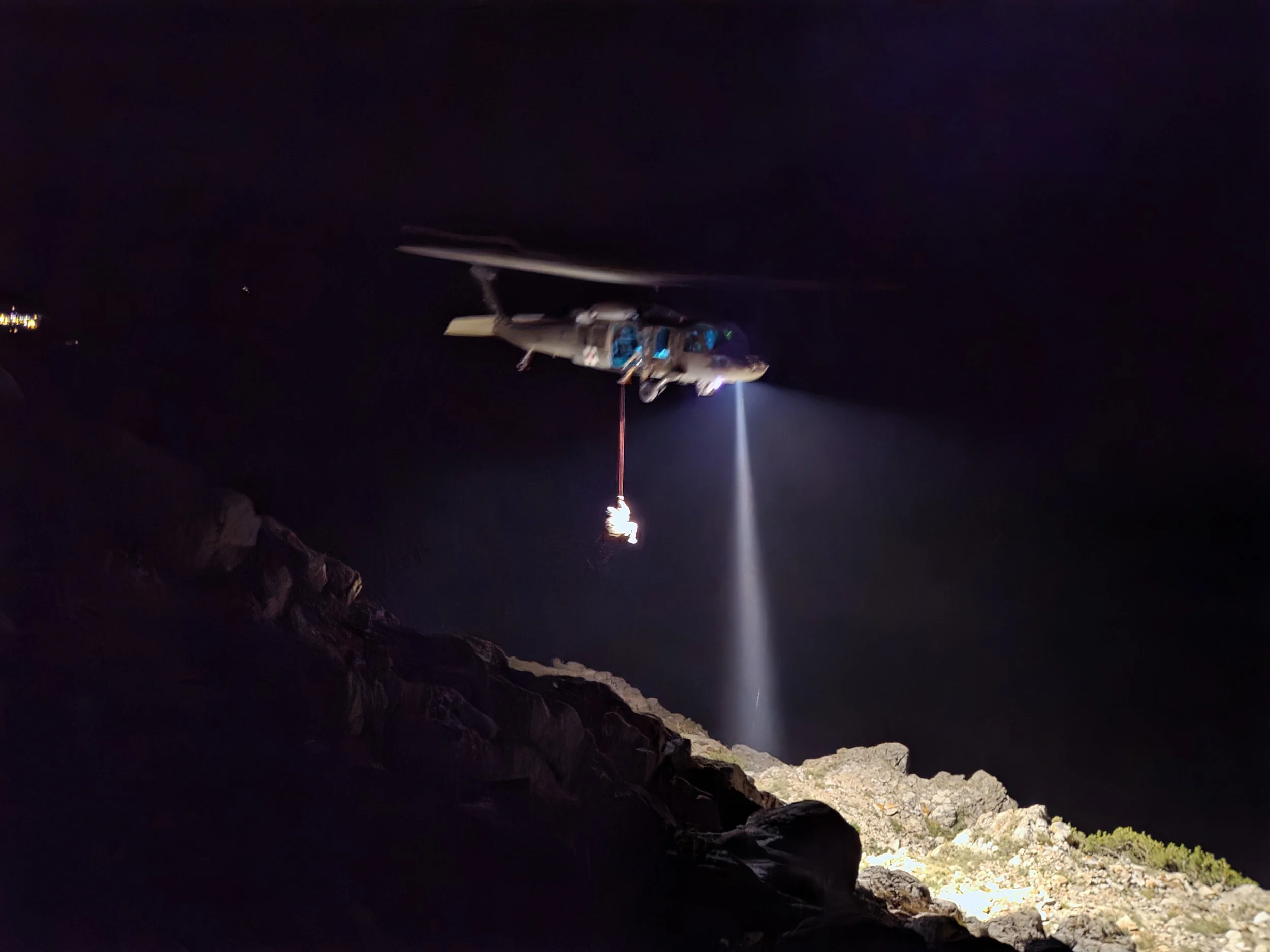
Spartan978 lowers a medic for hoisting of the subject.
All teams then worked slowly and deliberately to extract themselves from the precarious, steep terrain of the Fern Lake Cliffs and make their way back to Base, retrieving the heavy cache of staged equipment along the way.
The operation was terminated at 0700 hours on Sunday morning.
We wish the subject a speedy recovery and are incredibly grateful for the assistance of our MCSO SAR Coordinators, the Army National Guard SPARTAN 978 crew, and the dedicated team at Hot Creek Aviation for providing the resources necessary to complete this critical and dangerous rescue. We also want to applaud the subject for his ability to withstand incredible pain during both lowering operations. Without his fortitude, cooperation, and trust in our team, this may have been a very different outcome.
We also thank YOSAR and the National Park Service for standing by with their longline-capable helicopter, YNP551, for possible deployment the next morning.
IC: Rhoads, Pelichowski // Responders (12): Barker, Campbell, Carlson, Cowan, Haugh (Ops), Lipman, Mayernick, Salay (Ops), Tardy, Thompson C, Wallace, Zila
Volunteer hours: 185.6