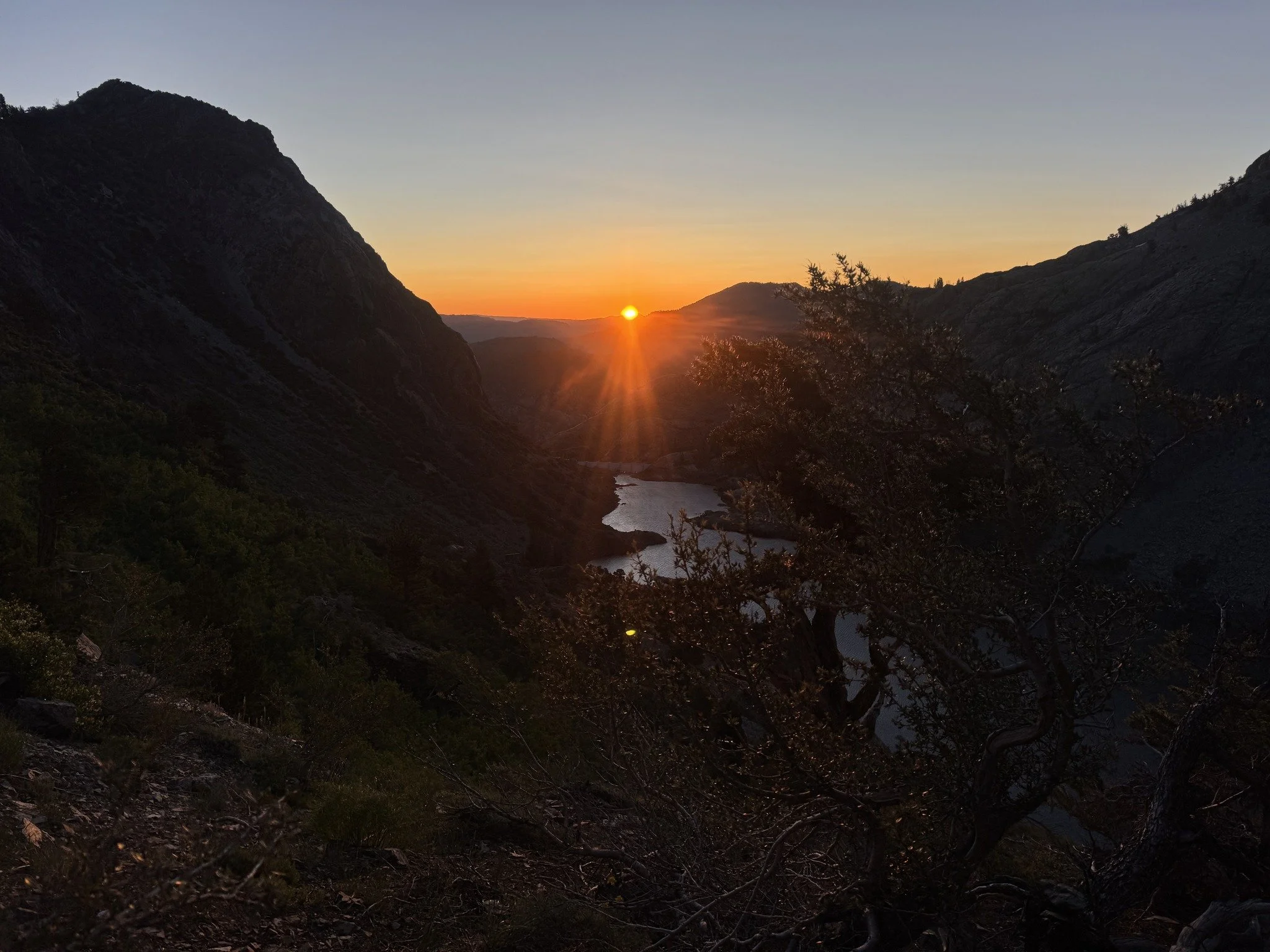
The Carabiner | Behind the rescue
Inside the Carson Peak rescue
Scott was hurt high on Carson Peak, hidden among cliffs. When the helicopter could not reach him, Mono SAR volunteers had to find another way.
The following content from the rescue has never been shown to the public, including the team callouts, field radio, photos and footage behind the rescue, and the training and equipment the support of our donors helped put in place.
Support the next rescue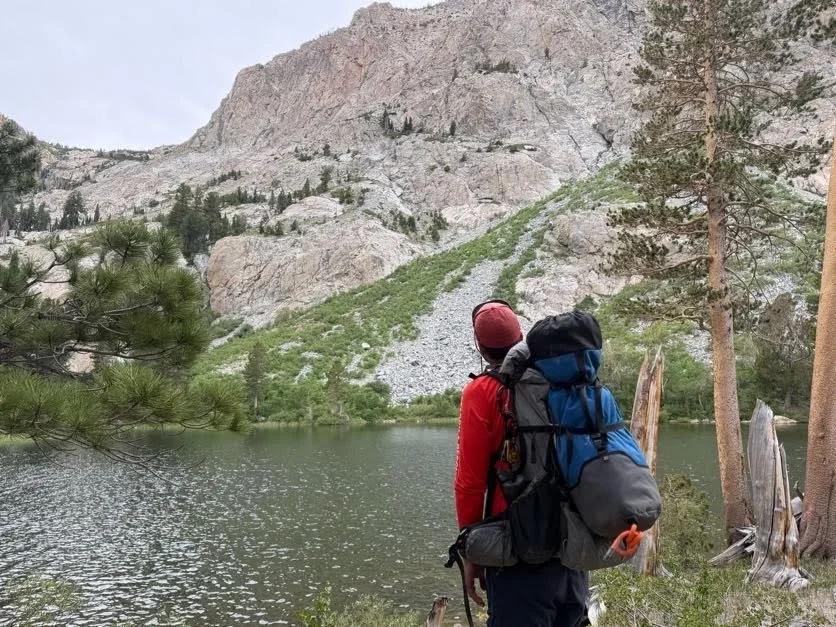
01 / The call
More hands on the mountain
The first callout reported a solo hiker or climber who had fallen above Fern Lake. Air support had been requested. The terrain and injuries pointed toward a difficult technical rescue, and a second callout was deemed essential to rally more volunteers, especially riggers.
Listen to the team callouts
The first recording is the initial report. The second asks for all hands on deck, especially riggers.
The first callout
A request for more rescuers
Audio description: The initial callout reports a fall near Fern Lake, a head injury and an air-resource request. The follow-up asks team members, especially riggers, to respond. The recordings are presented in their original form.
At the trailhead, the team used a GAR safety assessment and an incident command process before deploying. A week of AvSAR training this year helped formalize those practices for calls in every season, not just winter. Donors supported the instruction that brought three instructors to the team and trained 12 members.
02 / The approach
A way through the cliffs
From Fern Lake, the east side of Carson Peak looked nearly impassable. Using CalTopo's 3D terrain view and slope-angle shading, rescuers picked out benches and ramps that might lead toward Scott's reported location. The team practices CalTopo every year and conducted an intensive advanced CalTopo training this year.
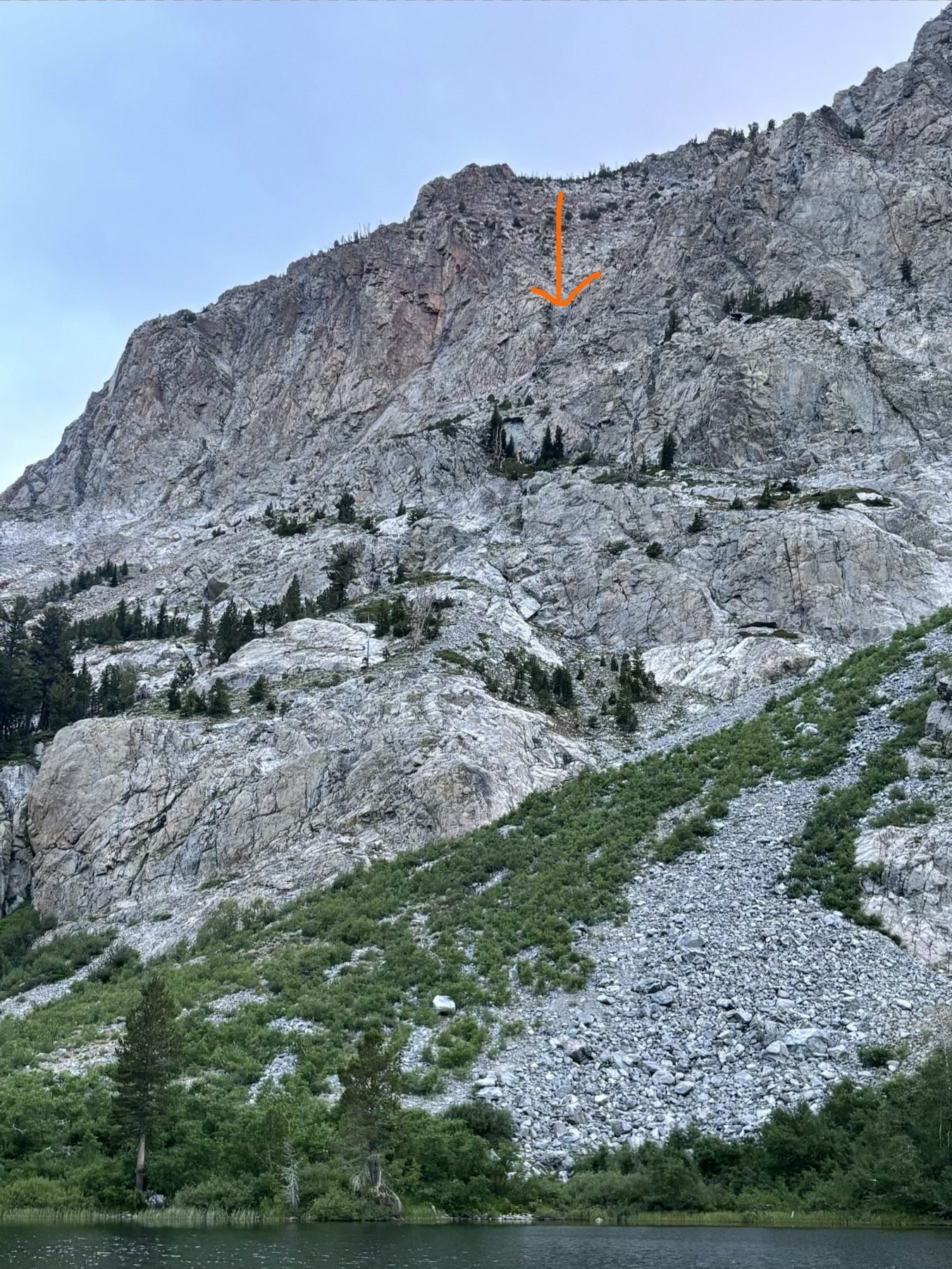
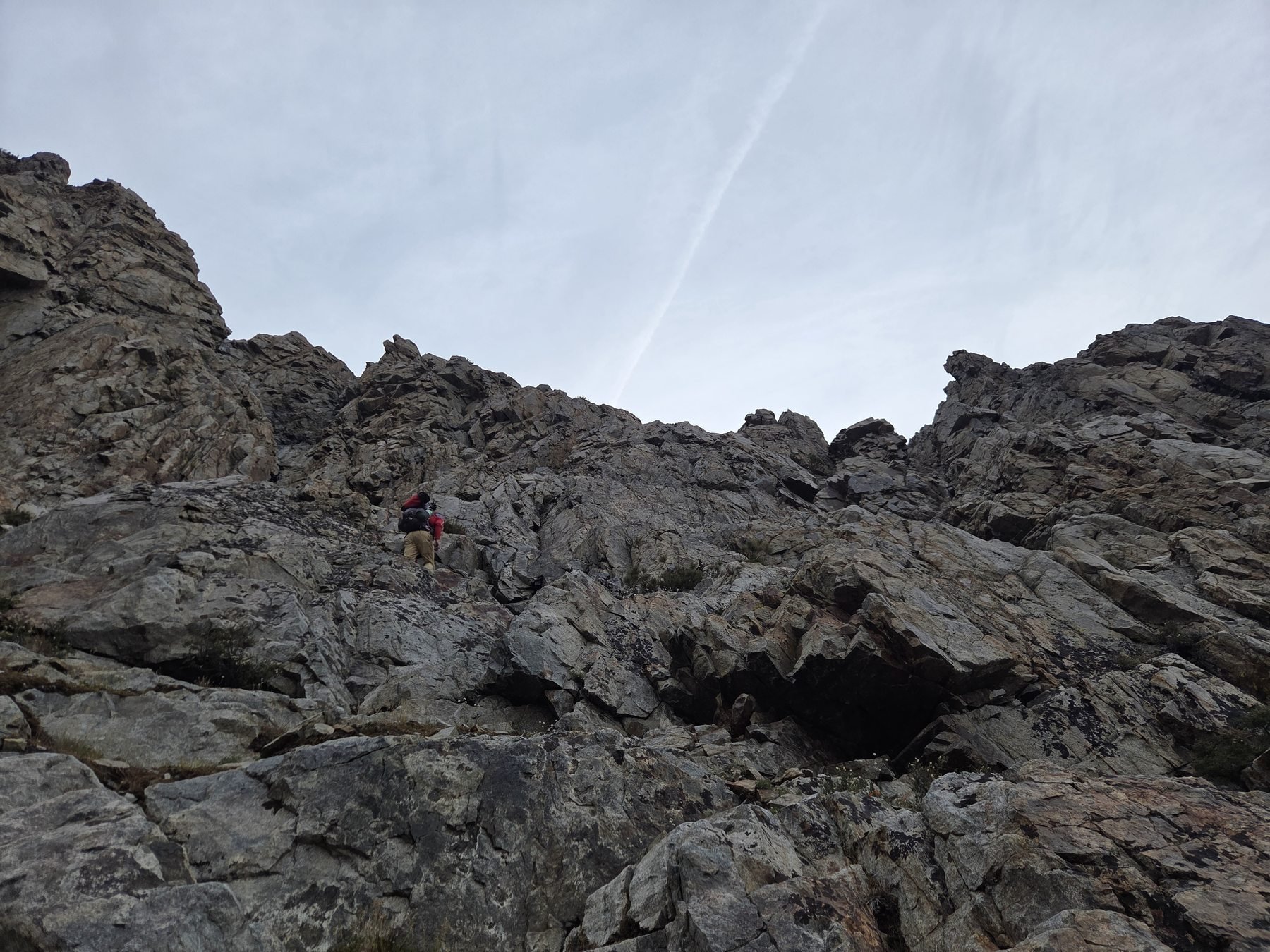
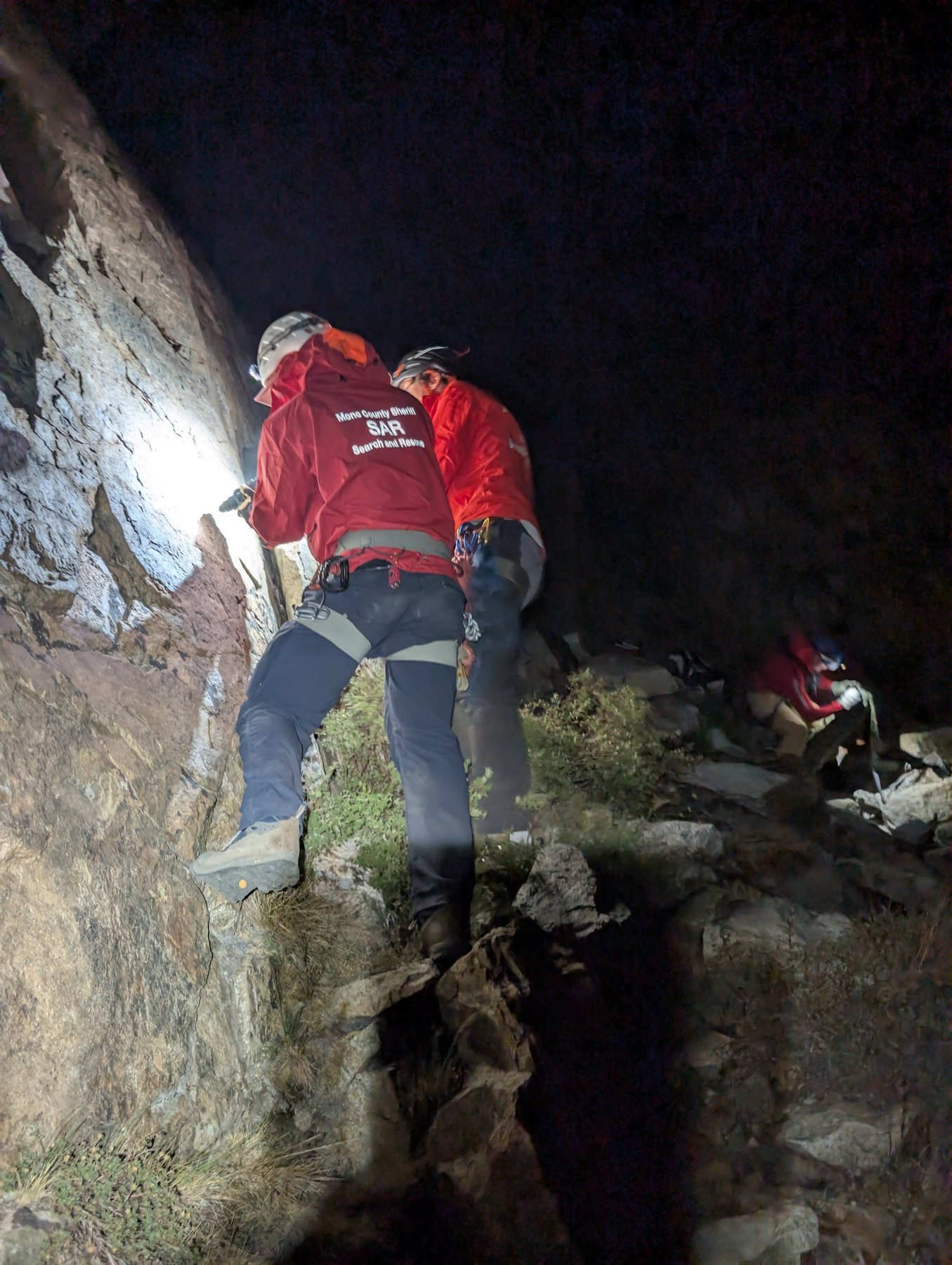
Two rescuers climbed toward a possible opening in the terrain. They heard Scott answer from roughly 300 feet below him, then found him in a recessed alcove that concealed him from the lake.
03 / Reaching Scott
Care in the alcove
Scott was alert but seriously injured. A team member began medical care while another rescuer assessed whether a helicopter could lift him from the alcove. Mono SAR brings in a wilderness medical instructor each year to refresh these skills, through donor support.
Overhanging cliffs, walls on three sides and strong winds made that position look unsuitable for a hoist. With the aircraft expected, the rescuers decided to move Scott roughly 50 feet toward a more exposed ledge more suitable for a hoist in these conditions.
04 / The first move
Fifty difficult feet
One rescuer belayed Scott for the first part of the move while another attended him. They then used the handles of the team's Screamer Suit to help him through the remaining distance. The movement was painful, but it gave the aircraft a better chance to reach him. The plan was to hoist Scott directly from the ledge in the Screamer Suit.
05 / The turning point
The helicopter could not reach the ledge
After dark, the Army National Guard Blackhawk Helicopter, Spartan 978, made repeated passes but could not hold a stable hover over Scott's new position. An unexpected hover over Team 2, about 500 feet below, revealed a location where the aircraft could operate. Could the rescuers bring Scott down there before the aircraft's time limit?
Listen to the field radio
The aircrew asks for a realistic assessment of whether Scott can be moved to a workable hoist location or whether the team must shelter with him. The field team says it will reassess the terrain while the aircraft refuels.
06 / A new route
Bring Scott to the helicopter
Looking down by headlamp, the team identified a steep gully leading toward the lower hoist area. The plan changed: build a system to lower Scott through that gully while the aircraft went to refuel.
Throughout the operation, the team's TSat phones - cell phones with real-time satellite capabilities - supported communication, especially during the early coordination of air resources. Eight team phones keep this capability ready.
07 / The lower
Two pitches in the dark
Once the helicopter could not hold a hover at the ledge, the plan became a two-pitch lower. Rescuers shifted from the Screamer Suit to a Sked for that ground descent. Team 2 brought the Sked up to Scott's location, along with a bolt kit and more rigging gear. The team built and reinforced anchors, packaged Scott, and lowered him with attendants on two ropes. An intermediate anchor station made a second pitch possible when the descent exceeded a single rope length.
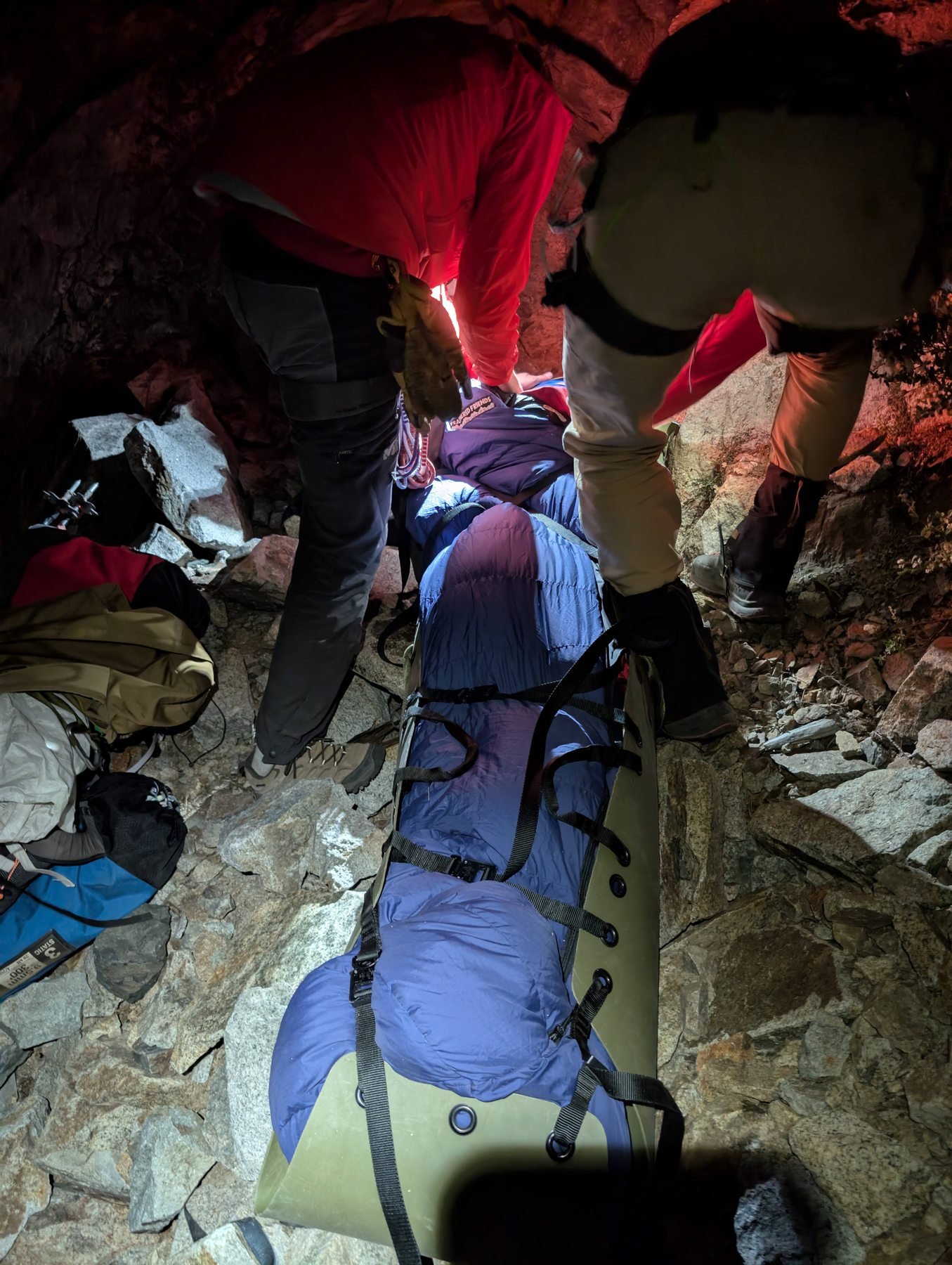
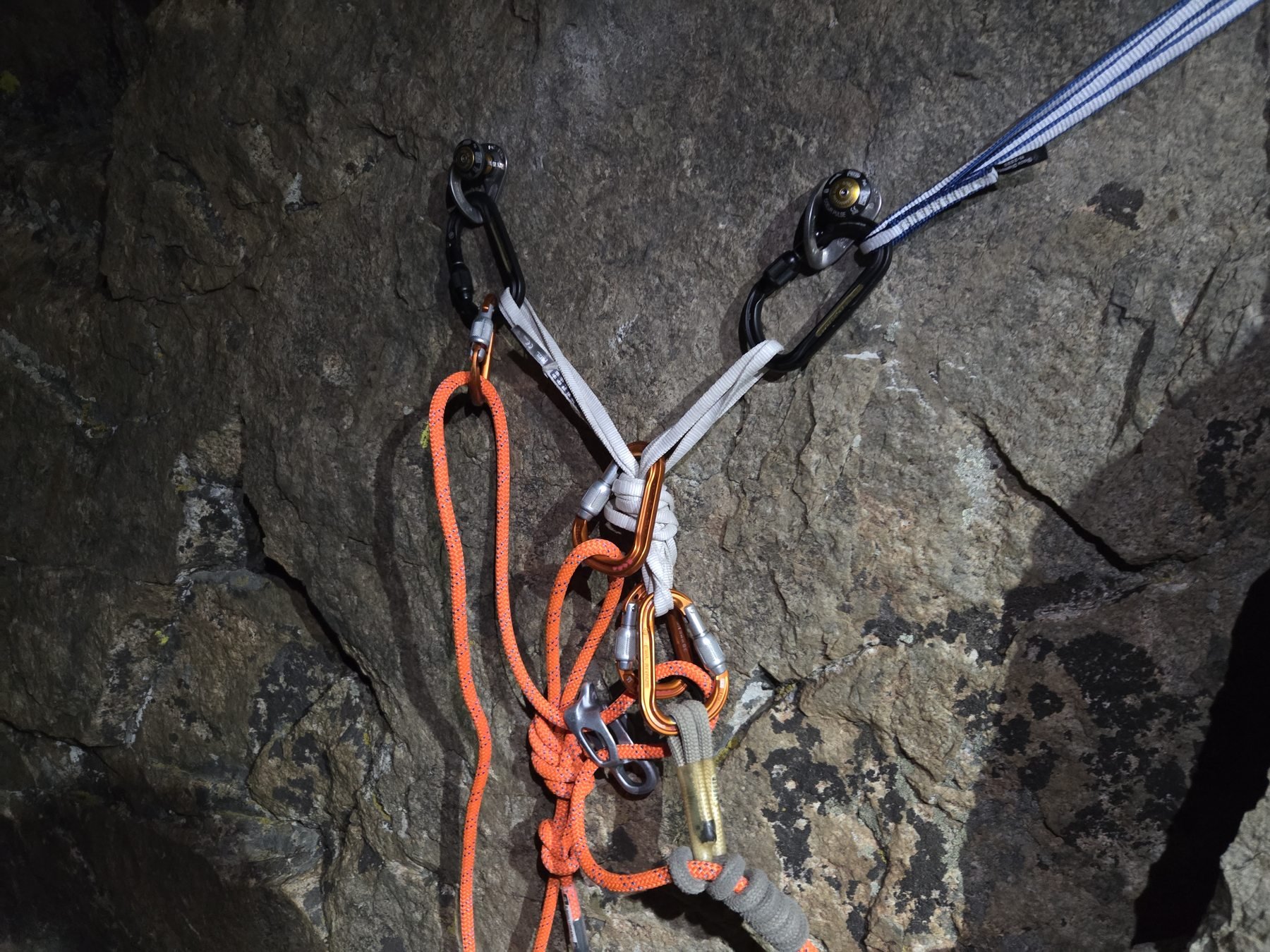
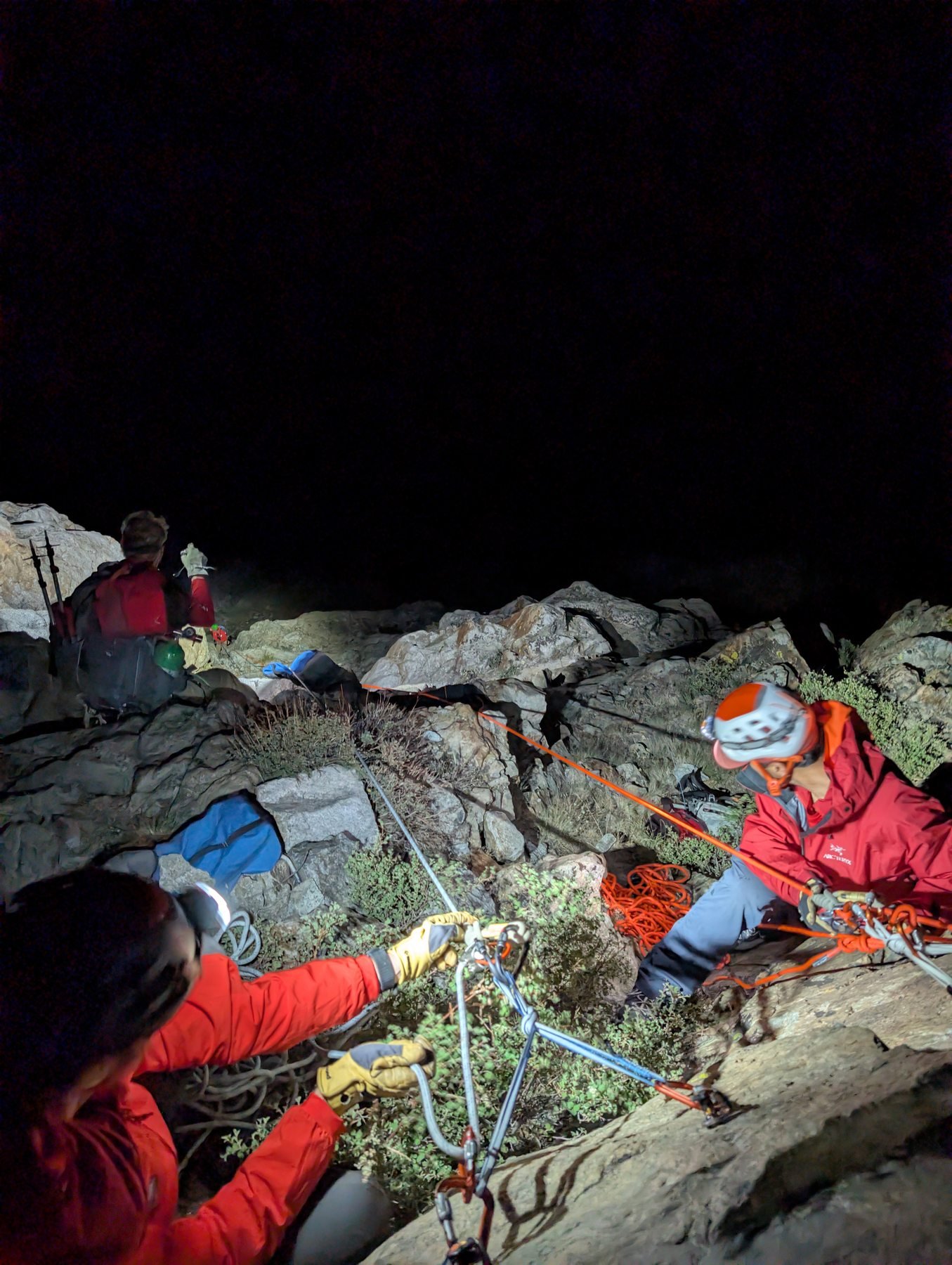
Training behind this lower: Rigging for Rescue Fundamentals and Small Teams, in-house rigging practice and equipment all contributed to the team's readiness.
08 / The extraction
At last, a hoist
When Scott and his attendants reached the lower location, rescuers secured the ropes and loose equipment. The helicopter returned, lowered its medic and lifted Scott from the mountain. The team's helicopter training guided its work with the aircraft throughout the mission.
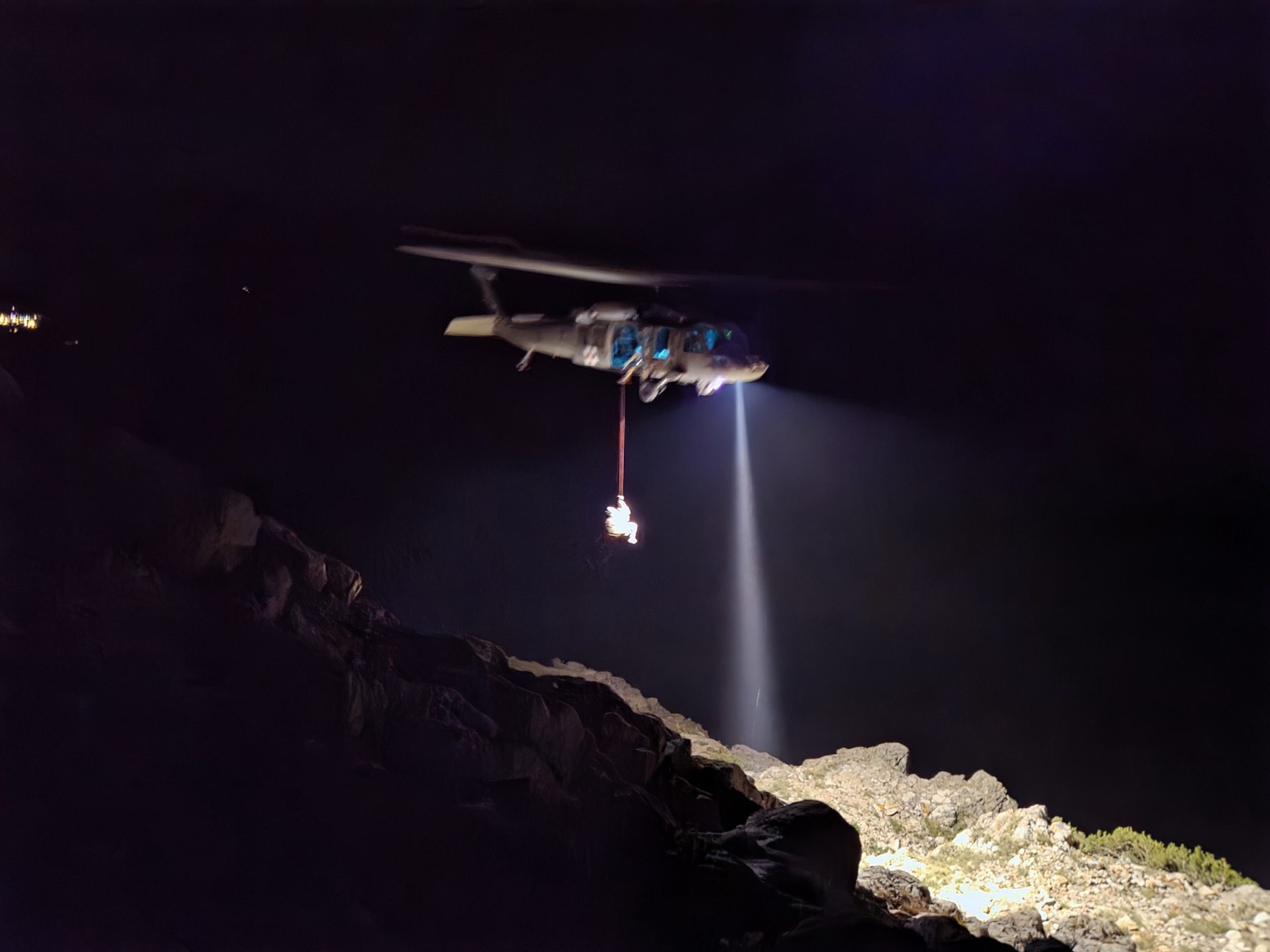
Watch the final hoist
This short excerpt shows Scott and the medic rising from the lower hoist area. It was recorded by rescuers on the mountain.
09 / The way down
Scott was airborne. The team was still on Carson Peak.
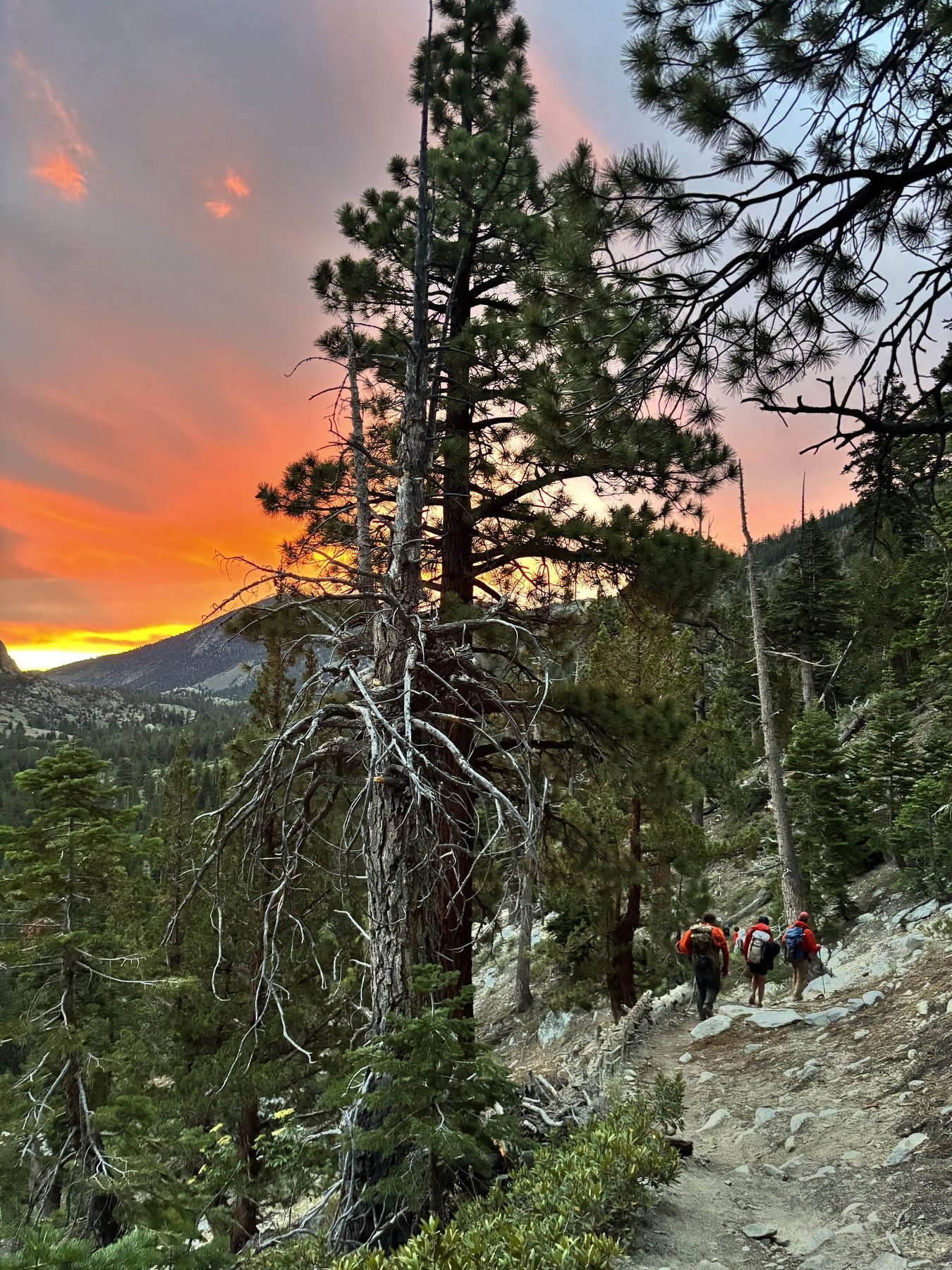
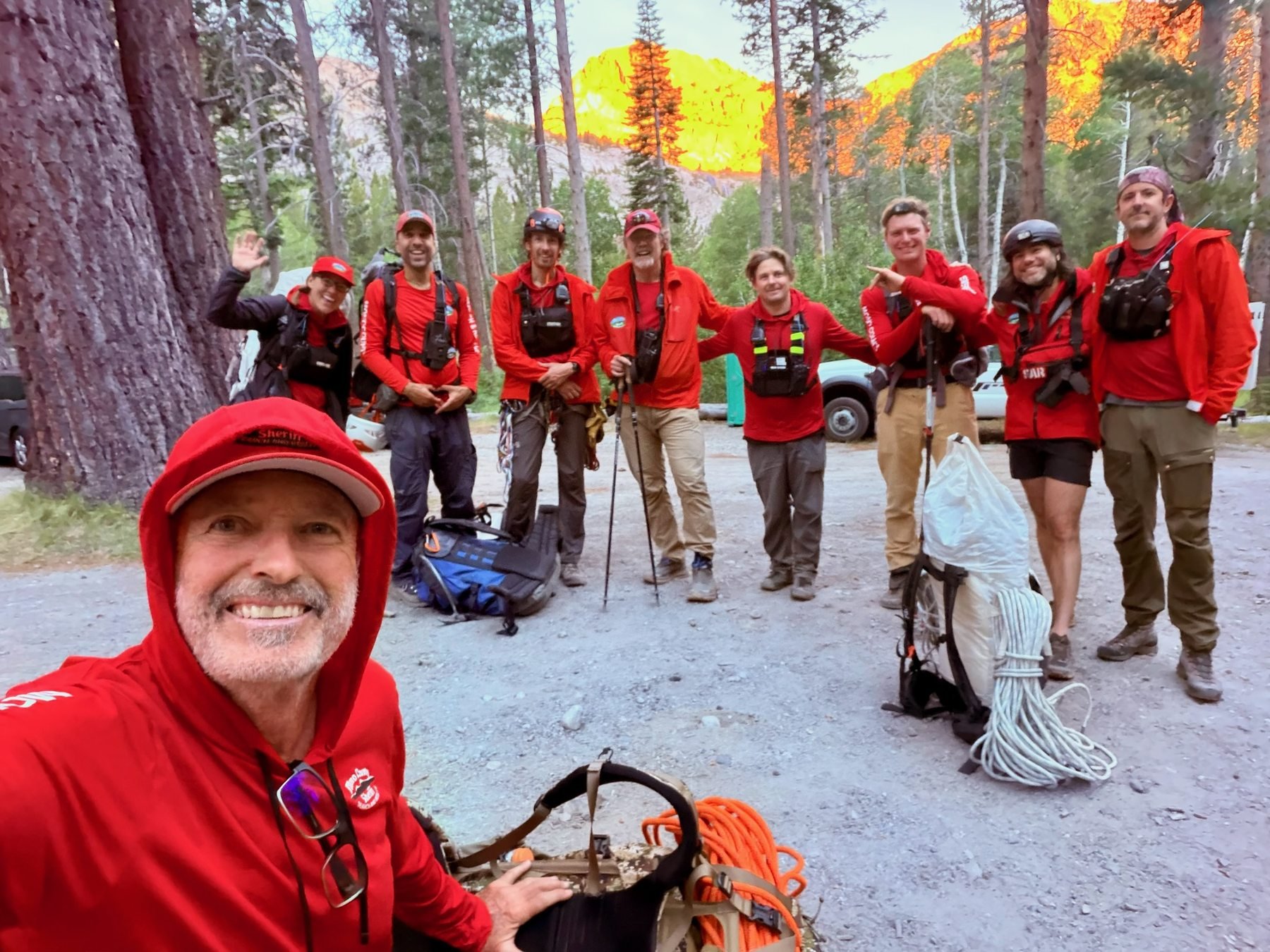
The rescuers retraced their ascent using CalTopo tracks and made another roughly 300-foot rappel on the way down. By sunrise, they were making their way home. Scott spent weeks in the hospital and rehabilitation after the fall.
10 / Your support at work
Readiness was already on the mountain
Mono SAR is an all-volunteer team supported by donors. This rescue drew on roughly $60,000 in specifically identified training and equipment: AvSAR, annual wilderness medical instruction, both Rigging for Rescue courses, the Screamer Suit and an estimate of the rigging gear. That investment prepares the team for many missions; it was not a bill for this one rescue.
Rounded from the identified training and gear amounts above. It does not include the countless other purchases and training sessions that helped prepare the team for this rescue.
Scott's rescue showed what those preparations and the people behind them can accomplish together. The next call will bring a different problem. Your gift helps volunteers be ready when it comes.
Make the next rescue possible
Support Mono SAR
Choose an amount in the donation form below. Your gift helps train and equip the volunteers who answer the next call.
Donate Online
Our 501(c)(3) team is made up entirely of unpaid community members who volunteer their time and often their own equipment. We rely on donations to fund team gear, advanced rescue and medical training, and facilities maintenance. Please consider making a donation below.
Mono County Sheriff Search and Rescue team is a not-for-profit 501(c)3 California corporation. The team's federal tax identifier (TIN/EIN) is 77-0334436 .
Donate via Postal Mail
Paper checks and money orders can be mailed to:
Mono County Sheriff Search and Rescue Team
PO Box 1954
Mammoth Lakes, CA 93546-1954
“Bless you all for your very important work. You found my son after 9 hours lost, several years ago. Thank you for your very special work.”
Donations through this page directly support our operations and the training, equipping, and safety of our volunteers and facilities. None of our members are paid.