July 11 & 12, 2026 26-335 #27
Injured Peak Bagger on Carson Peak
On Saturday, July 11, at 1532 hours, the Team was called by the Mono County Sheriff’s Office (MCSO) regarding a peak bagger who had taken an estimated 15-foot fall off a cliff while descending from the summit of Carson Peak. The subject was rendered immobile by the fall and self-reported other serious injuries.
Rescue base was established at the Fern Lake Trailhead. Operations immediately began coordinating air resources; however, due to multiple ongoing incidents elsewhere in the state, air resources were initially unavailable. Operations deployed a hasty team of three on foot carrying critical trauma-care, hypothermia-management, and technical rigging equipment. Multiple additional teams were deployed shortly afterward to ferry other critical technical rescue equipment to a staging area at Fern Lake.
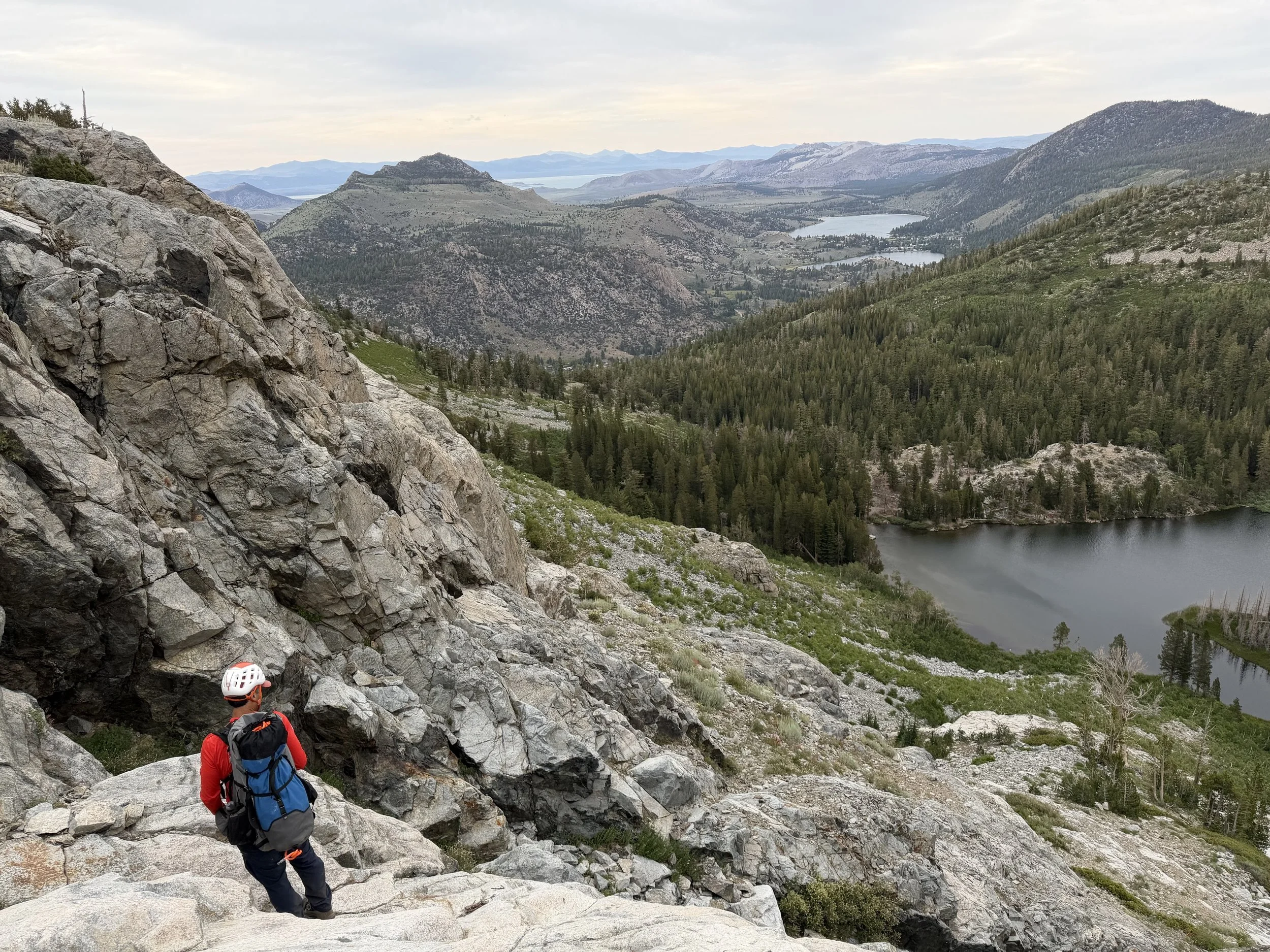
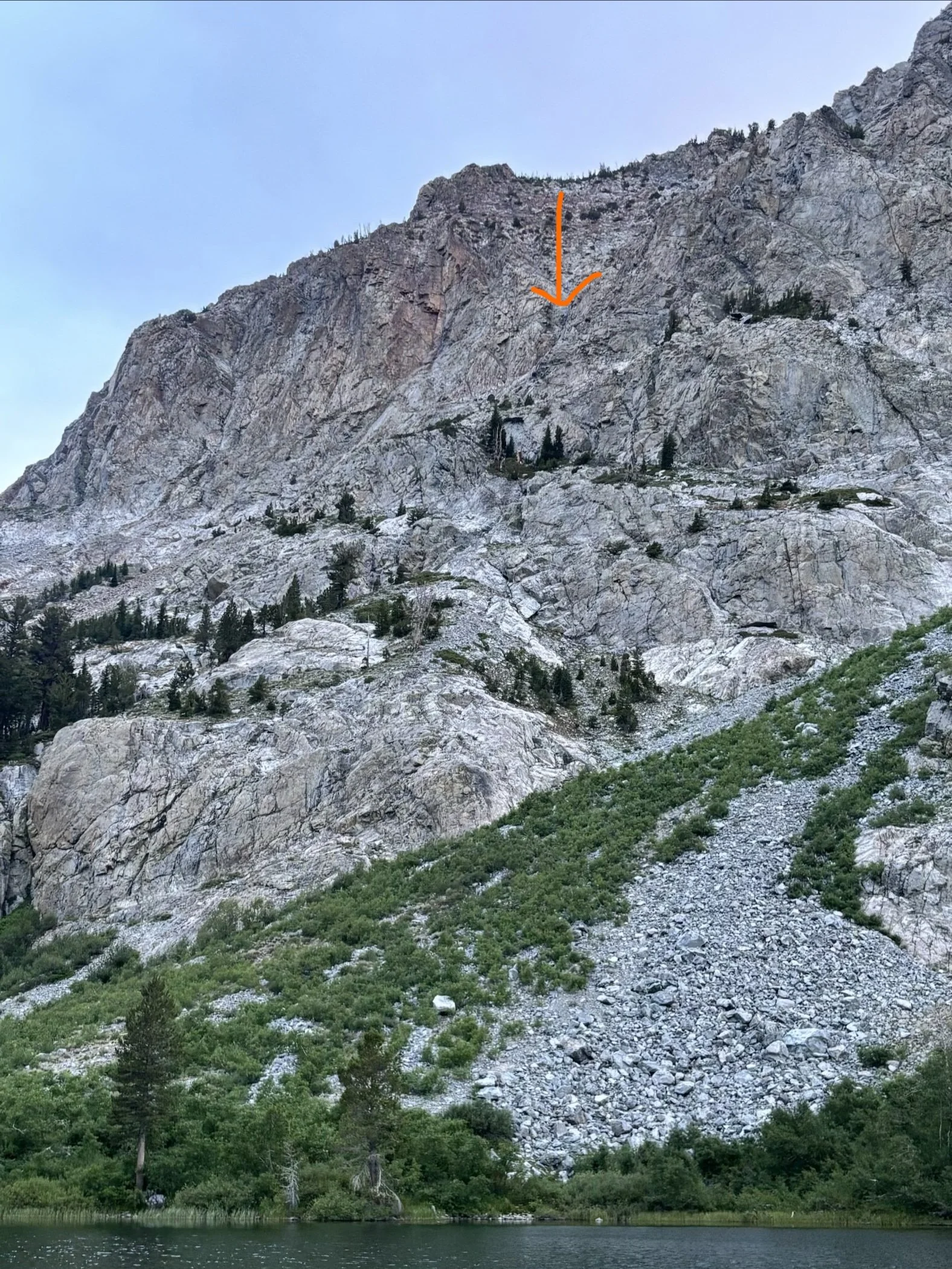
Fern Lake and the cliffs above below the summit of Carson Peak. Photo by S. Campbell.
After an arduous approach to the subject, while approximately 300 vertical feet below the reported location, rescuers called out and blew a whistle. When the subject answered from somewhere above them, the team was finally able to narrow their location and climb toward their voice through steep terrain.
When Team 1 arrived on scene, it was determined that the subject's condition was serious and required extrication by air as soon as possible. Team 1 assessed that the subject had taken a much larger fall of approximately 30 feet. While Operations continued working to secure an aircraft, alternative plans were developed, including remaining overnight with the subject to provide continuous mountainside medical care. A paramedic (and SAR member) from Mono County Medic 3 was also on standby for insertion should a suitable aircraft become available.
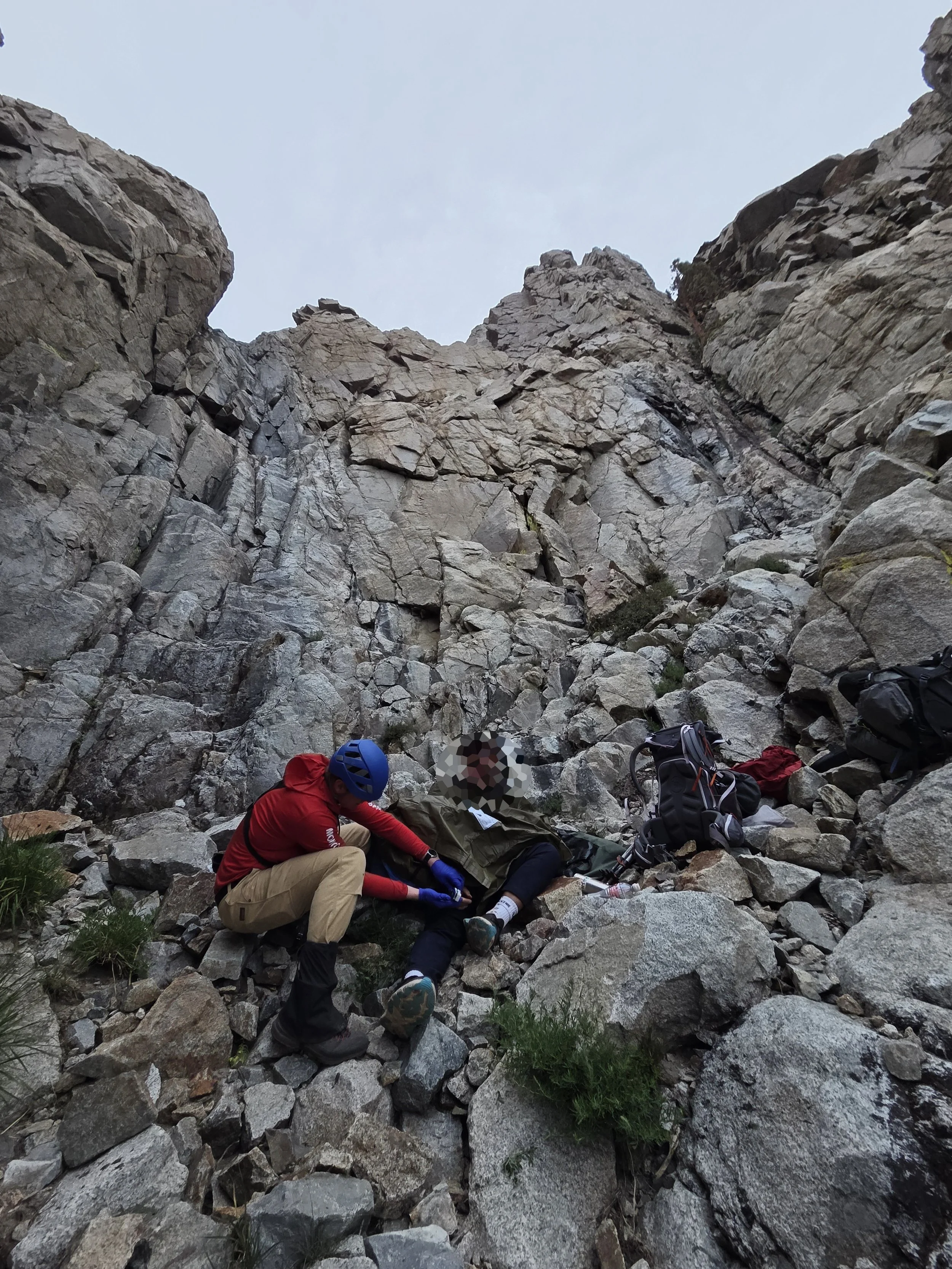
Team One assessing the subject. Photo by J. Lipman.
The subject had landed in a deeply recessed natural alcove surrounded by cliffs on three sides, two of them overhanging. His position was not visible from Fern Lake and likely difficult to identify even from the air. The initial team did not establish visual contact until they were within approximately 100 feet. Given this terrain, coupled with strong swirling winds, it appeared a hoist out of this alcove would be unlikely. Therefore, Team One set up a belay system to lower the subject out of the alcove and onto a ledge that would be more accessible to a helicopter.
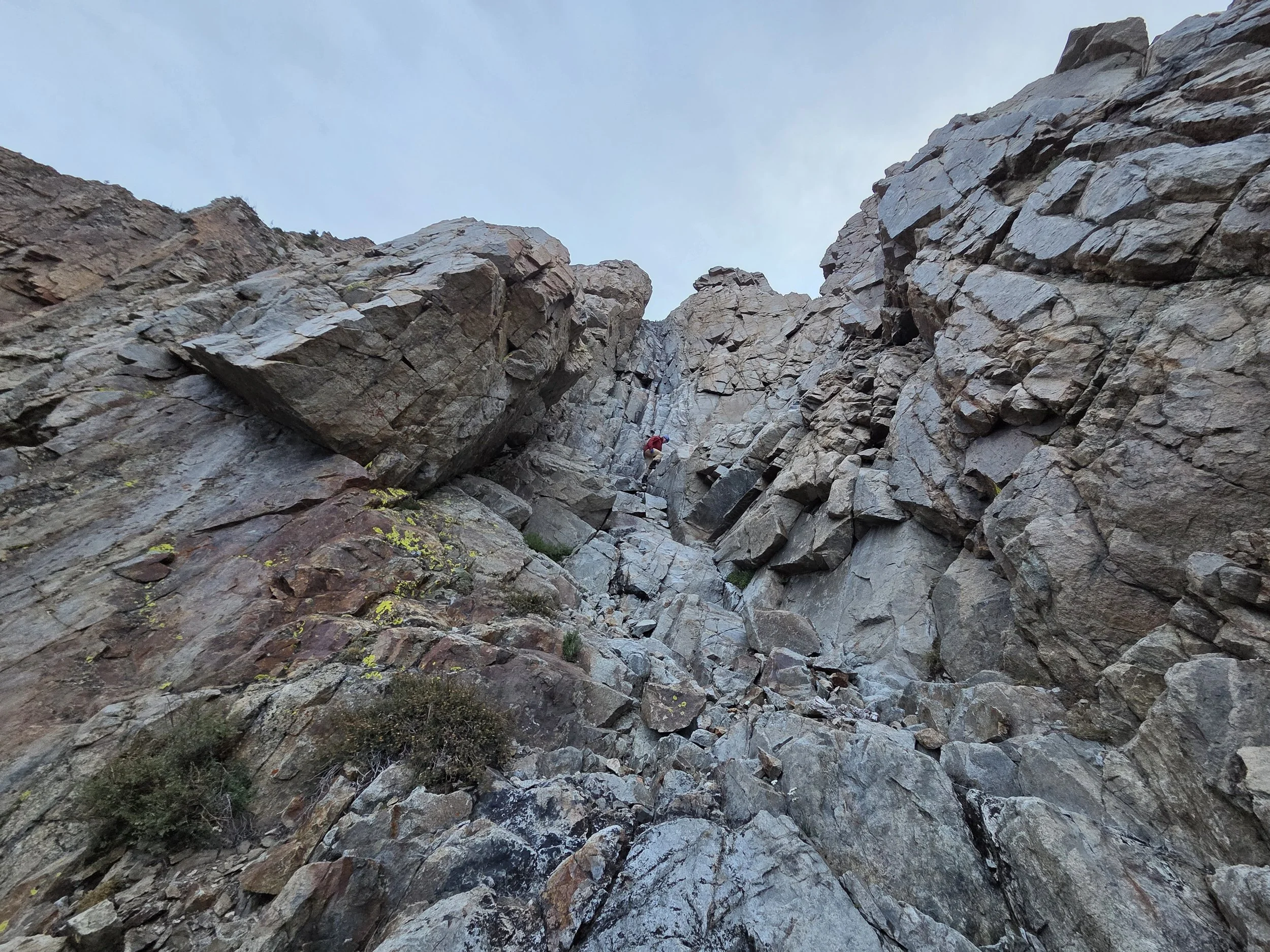
Wider view of the Alcove. Photo by J. Lipman.
As nightfall approached, Operations secured a hoist-capable Army National Guard UH-60A Black Hawk helicopter out of former Mather Air Force Base in Sacramento. Although the aircraft had been ordered, this did not guarantee its arrival or a successful rescue upon arrival. Therefore, teams staged at Fern Lake began moving toward Team One's location with the remaining technical rescue equipment.
As the Black Hawk, call sign "SPARTAN 978," appeared overhead at 2130 hours, rescuers hoped to hoist the injured subject, who had been packaged by the on-site team. Gusty winds and steep terrain prevented a successful initial hoist. The additional teams had not yet reached Team One and were approximately 500 feet lower. The SPARTAN 978 crew determined that the lower team’s location offered more favorable hoisting conditions and asked whether the subject could be transported there.
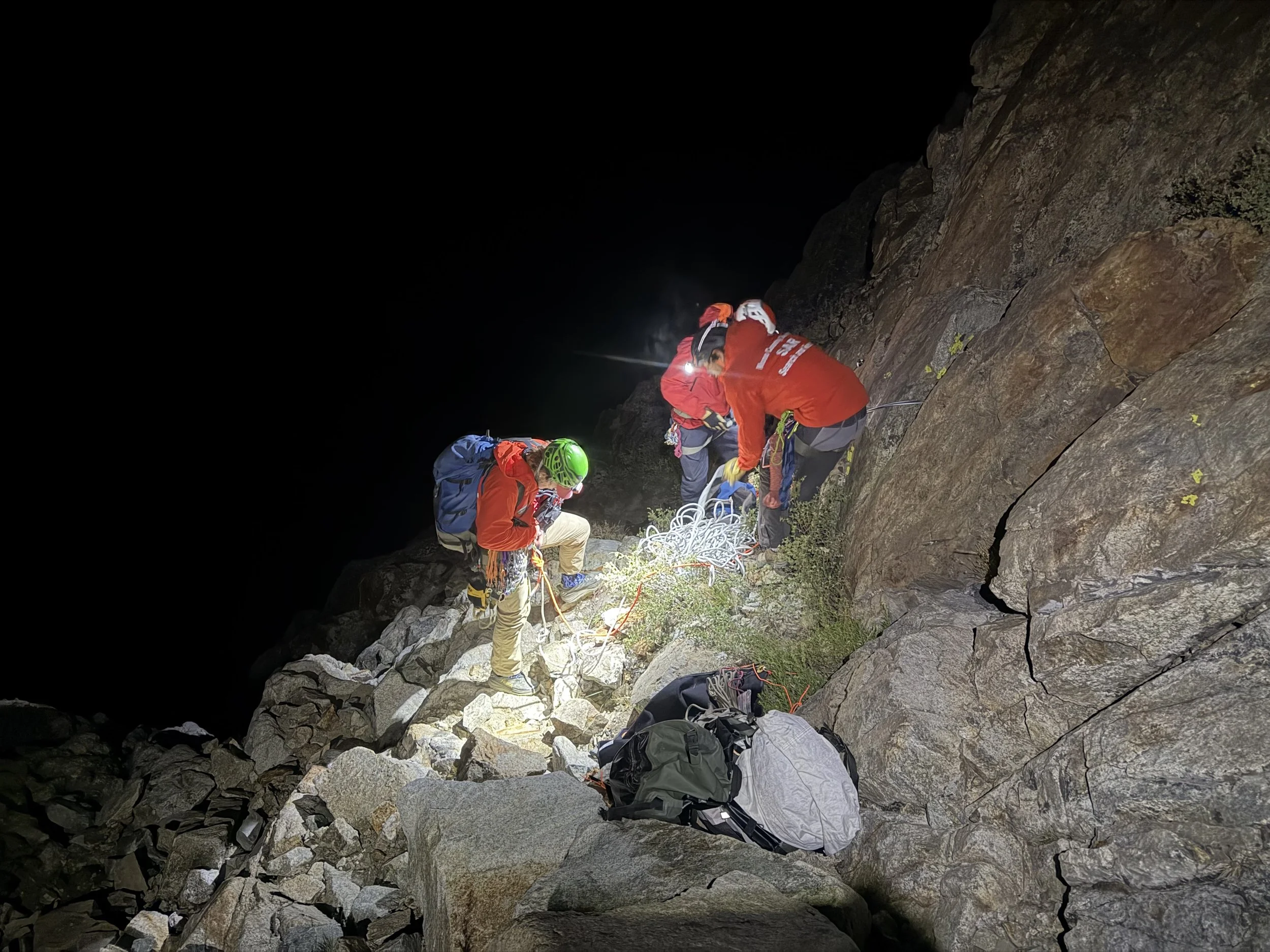
Teams preparing for a nighttime technical lowering operation. Photo by S. Campbell.
At first, moving the injured subject that far through the cliffs appeared nearly impossible. A closer nighttime assessment with headlamps revealed a steep, continuous gully connecting the upper ledge with the newly identified hoist zone. The teams quickly developed a two-pitch technical lowering plan while the SPARTAN 978 crew departed for Mammoth Airport to refuel. Before departing, the aircrew advised rescuers that it had a strict operational deadline and could remain available only for a limited period.
While the helicopter was at Mammoth Airport refueling and standing by, rescuers rapidly constructed anchors in the cliff and prepared the subject for a technical lower. Using a twin-tension rope system, the team lowered the subject in a Sked, accompanied by attendants, down the first steep pitch to an intermediate anchor station. The ropes were then recovered, reconfigured, and used for a second lower to the designated hoist zone. The operation was completed under significant time pressure as the helicopter approached its deadline to depart.
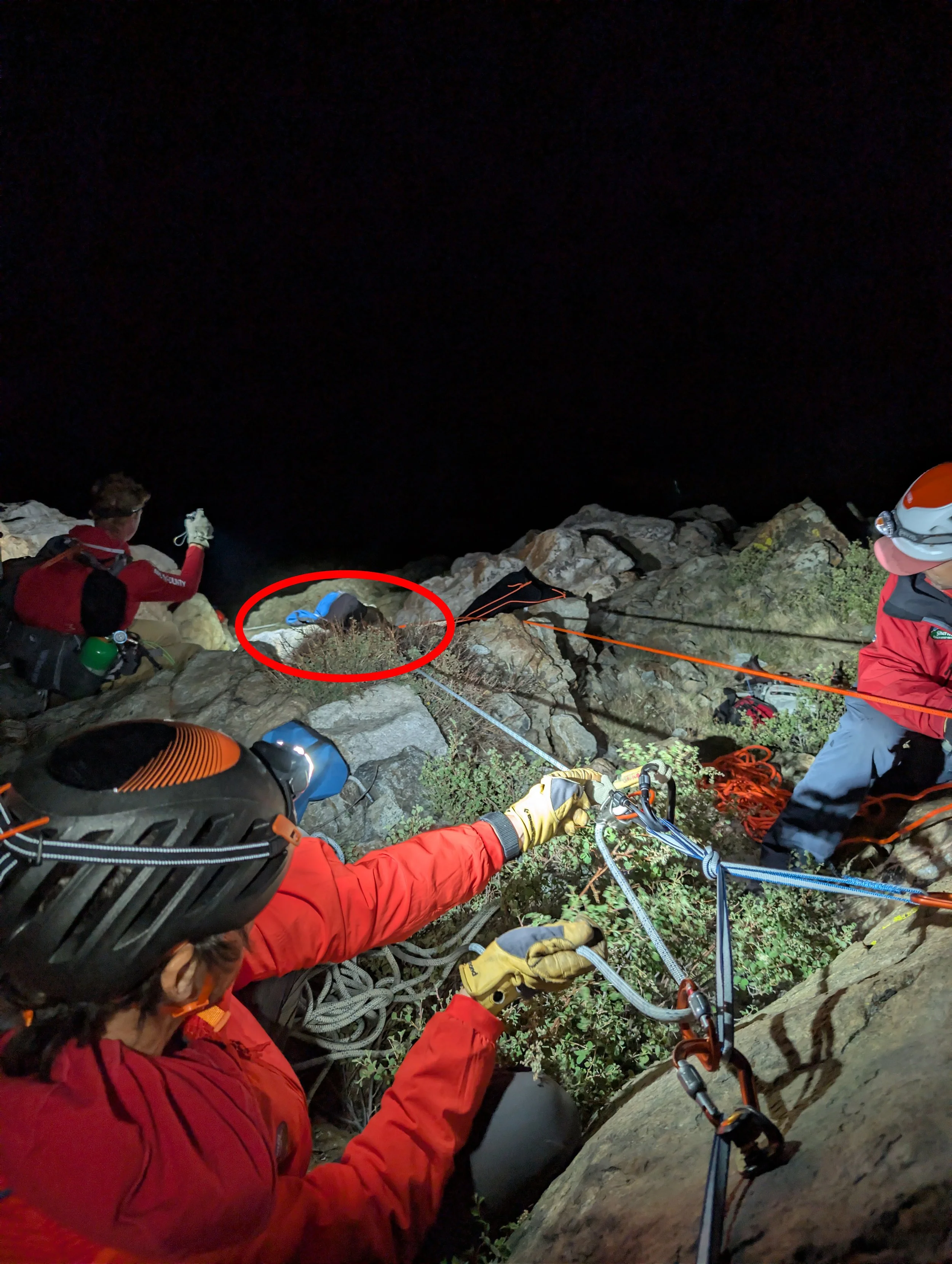
The lowering operations commencing. Photo by C. Thompson.
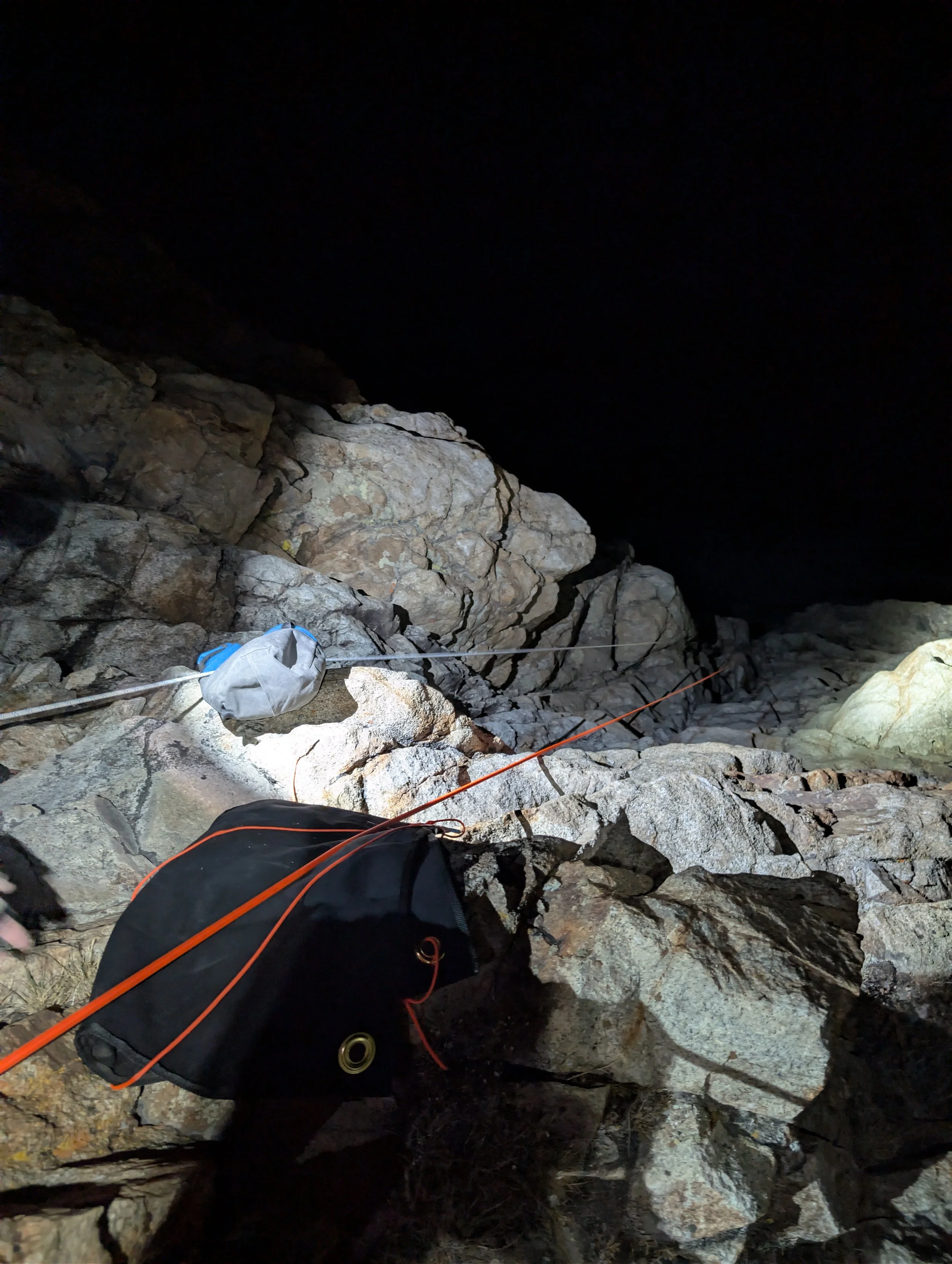
Lowering through the natural rock features. Photo by J. Lipman.
The team reached the designated hoist zone with the subject just 15 minutes before the helicopter’s deadline to depart, and SPARTAN 978 returned to make a final hoist attempt. Once back on-station, the aircraft lowered a medic to the rescuers. Strong winds and turbulence near the mountainside continued to move the helicopter during the operation. After the subject was successfully transferred into the aircraft’s rescue harness and the hoist line was prepared, the medic and subject were lifted clear of the terrain, and the subject was flown to a Level I Trauma Center.
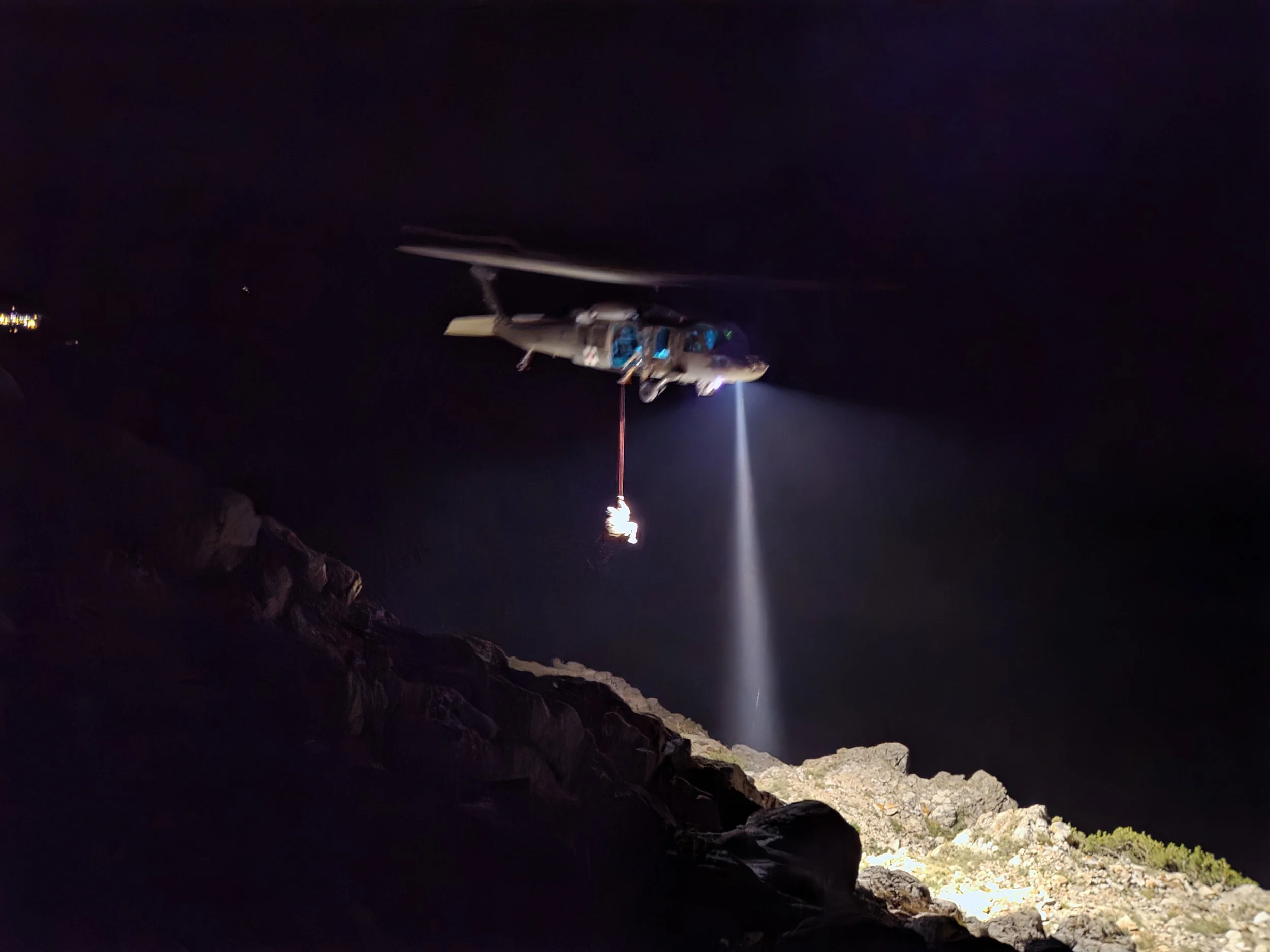
Spartan978 lowers a medic for hoisting of the subject.
All teams then worked slowly and deliberately to extract themselves from the precarious, steep terrain of the Fern Lake Cliffs and make their way back to Base, retrieving the heavy cache of staged equipment along the way.
The operation was terminated at 0700 hours on Sunday morning.
We wish the subject a speedy recovery and are incredibly grateful for the assistance of our MCSO SAR Coordinators, the Army National Guard SPARTAN 978 crew, and the dedicated team at Hot Creek Aviation for providing the resources necessary to complete this critical and dangerous rescue. We also want to applaud the subject for his ability to withstand incredible pain during both lowering operations. Without his fortitude, cooperation, and trust in our team, this may have been a very different outcome.
We also thank YOSAR and the National Park Service for standing by with their longline-capable helicopter, YNP551, for possible deployment the next morning.
IC: Rhoads, Pelichowski // Responders (12): Barker, Campbell, Carlson, Cowan, Haugh (Ops), Lipman, Mayernick, Salay (Ops), Tardy, Thompson C, Wallace, Zila
Volunteer hours: 185.6