August 22-23 26-434 #43
Off-Route Climber in the Mendenhall Couloir Requires Overnight Technical Rescue
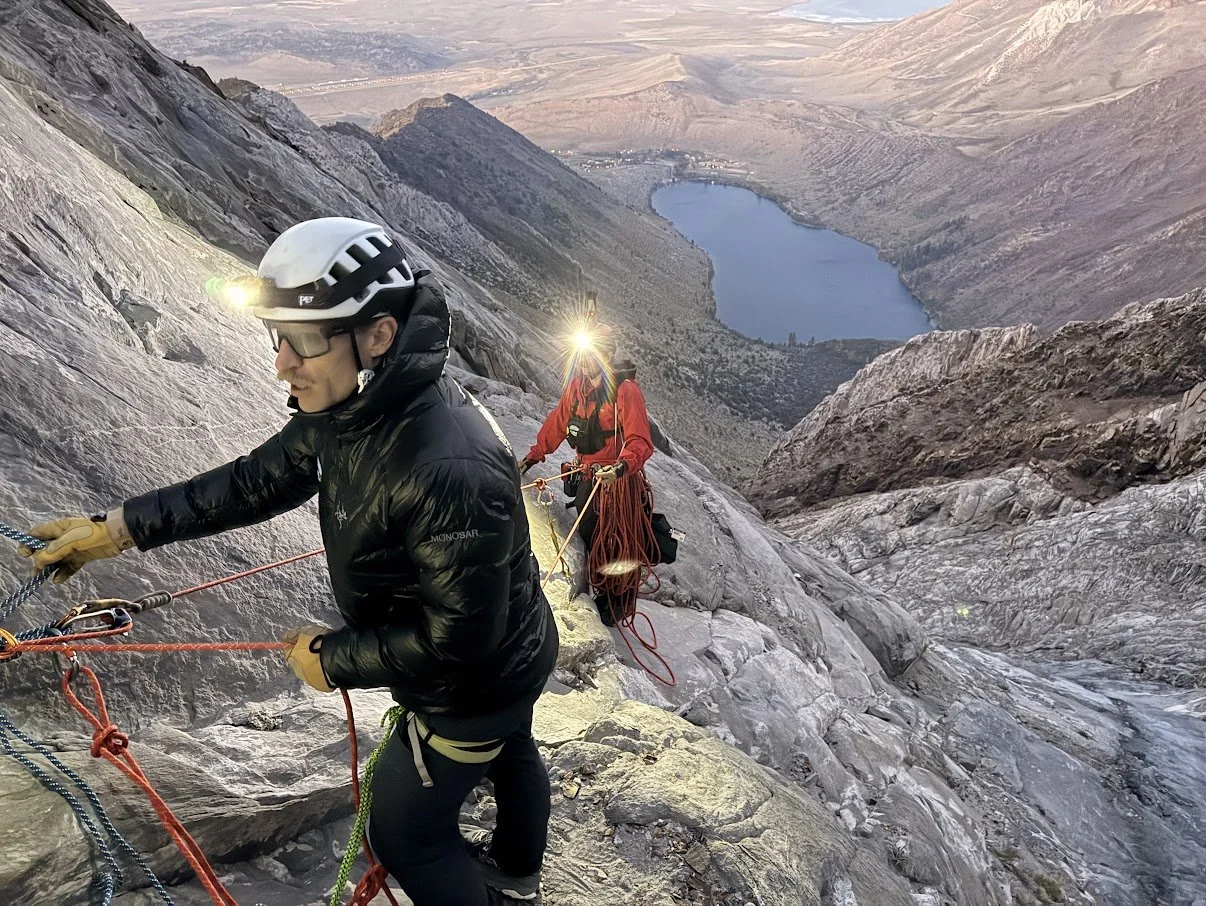
Rescuers begin the technical operation, just before nightfall, to access, secure and extricate the stranded climber.
On Saturday, at 1320 hours, the Team was paged by the Mono County Sheriff's Office (MCSO) for an InReach activation of a climber who had become stranded after getting off route in the Mendenhall Couloir. This classic route is a long, complex alpine gully with loose rock, route-finding, exposure, and significant objective-hazard potential. While these conditions exist when remaining on the route proper, traveling off-route quickly leads to increasingly vertical, unprotectable 5th-class terrain with no viable means of continuing either up or down. With thousands of feet of vertical exposure below, any fall would almost certainly be fatal. The subject followed what they believed to be the established route, making some tricky and committing moves into an incorrect gully. After manueuvring well out of the way of the main gully, the subject stopped on a 6-inch ledge and determined that they were likely off-route and that there was nowhere to continue safely — up or down.
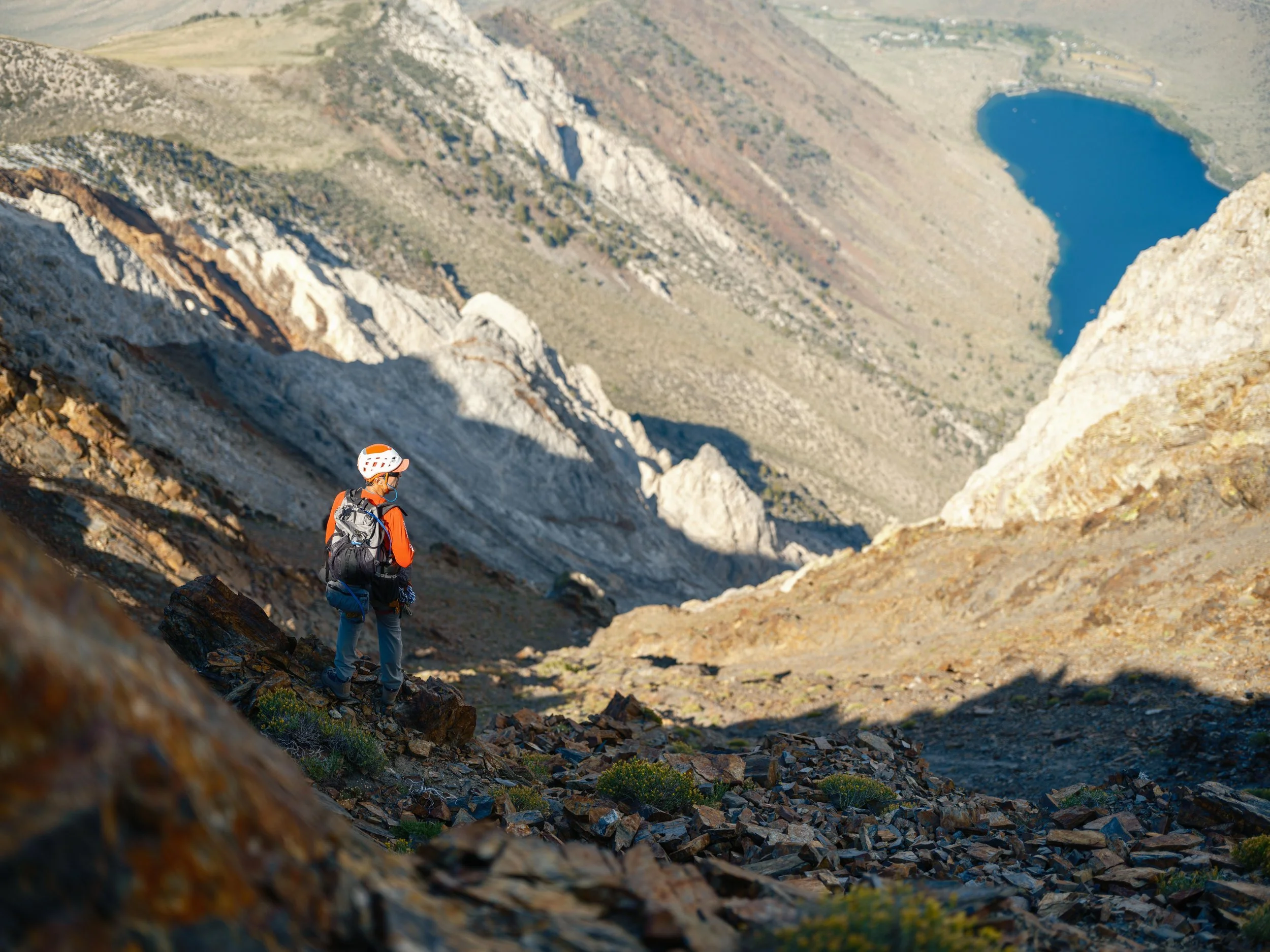
Looking into the Mendenhall Couloir top down. Rescuers will shortly begin to navigate down and into the middle to search for the subject.
Rescue Base was established at Mammoth Airport (MMH). Rescue Operations immediately requested air resources and deployed several different teams from the Mammoth Lakes SAR building, including a technical rigging team and a 6x6 Ranger (OHV) team. The combined tech/OHV team utilized the Team's 6x6 ranger, Ranger Two, to ferry the technical team, Team 1, up Laurel Lakes Road, where they then began working up the several-mile, multi-thousand-foot vertical approach to the summit of Laurel Mountain. This tech team deployed with 1,200' of rope, a rescue bolting kit, victim-protection harness/helmet, anchoring material, and significant PPE. A communications team also deployed to Convict Day Use Area to put eyes on the subject through powerful optics, as well as act as a radio communications relay. Team 3, a second technical rigging team of two including a wilderness EMT, was assembled at MMH, where they awaited CHP H42 from Fresno, who accepted the air resource request.
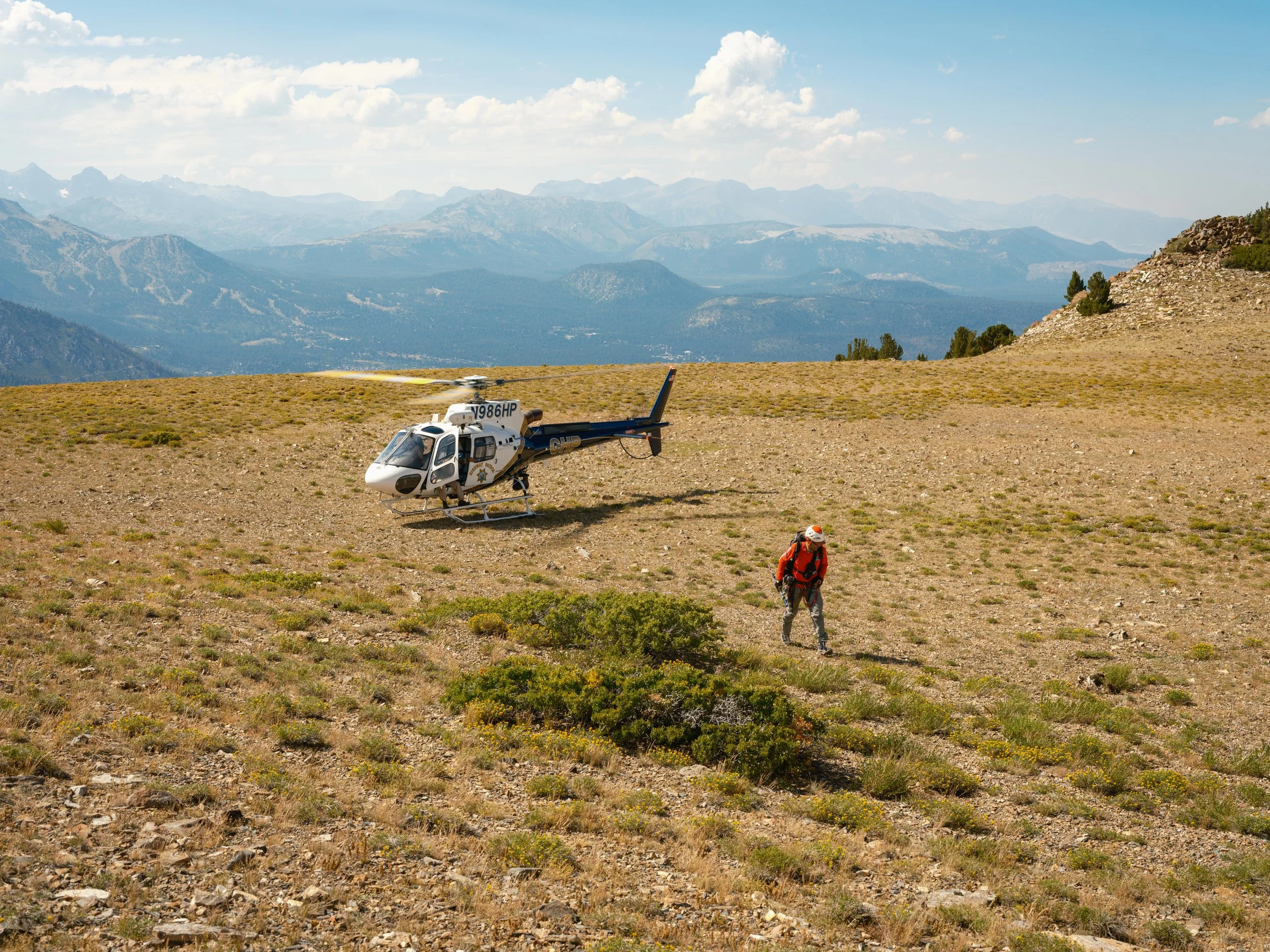
H42 on the saddle.
With winds gusting 40 knots (at ~11,000 feet) and hot conditions in the area, H42's initial assessment after flyover was that a hoist operation was not possible. Team 3 was ferried in one by one to a saddle on the North side of Laurel at 11,000 feet and began to work their way up to the summit. After summiting, Team 3 began moving downhill through the complex terrain of the Mendenhall to locate the subject using guidance from Team 2 and their spotting scope. After significant time navigating and working to locate the subject, Team 3 eventually made verbal and visual contact with them, confirming their location in an extremely dangerous and consequential gully adjacent to the main climbing route. Rescuers observed the subject alternating their stance on each foot, as there was only enough room for one on the small ledge. It was determined that, without intervention, a fatal fall was likely to occur if the subject remained in place overnight.
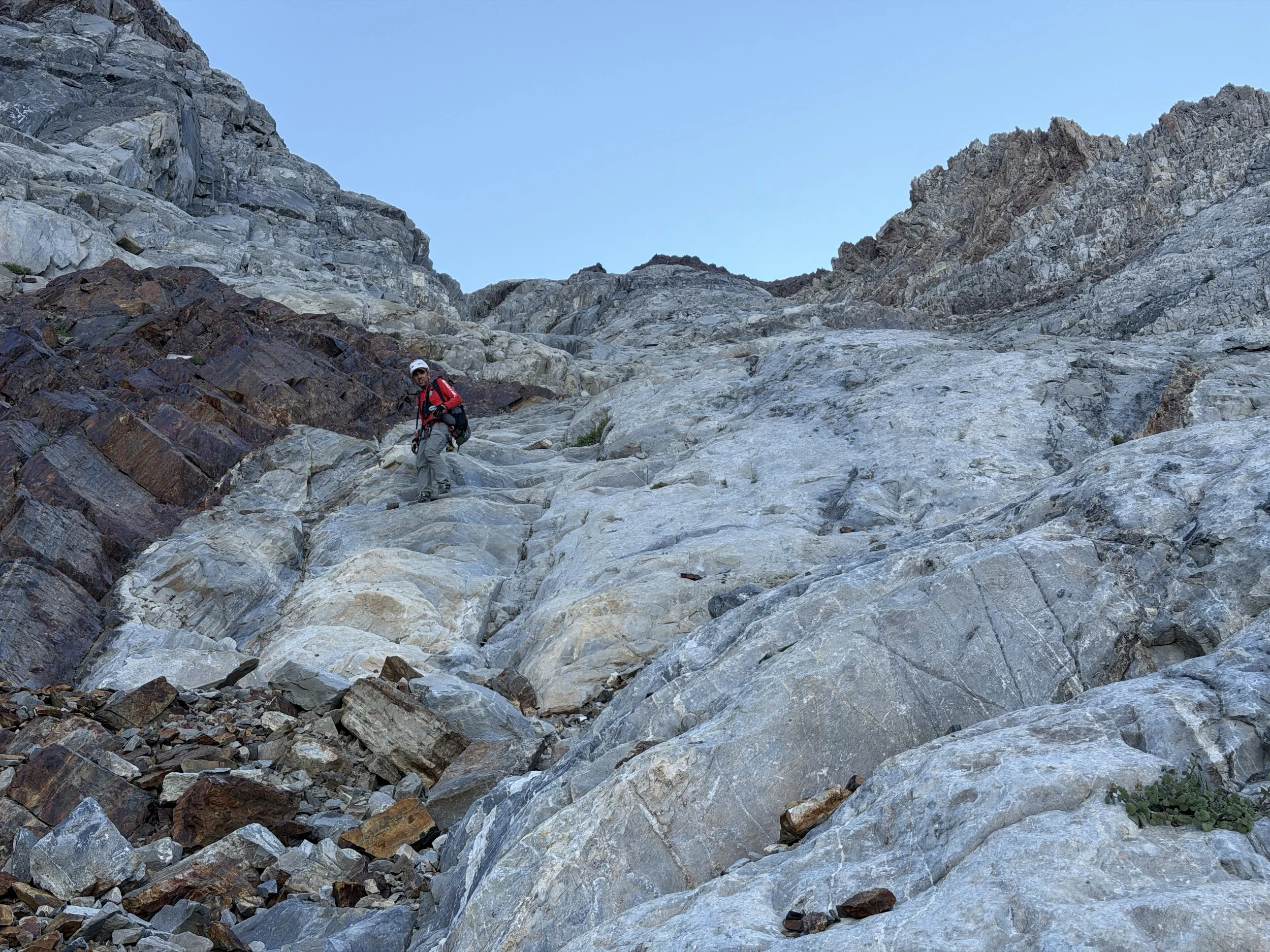
Moving down through the increasingly complex, 3D terrain.
Recognizing the increasingly narrow margin for error, the Team extended its operational timeline and accepted additional exposure to the hazards of the terrain and nighttime conditions in order to reach and secure the subject before a fatal fall occurred.
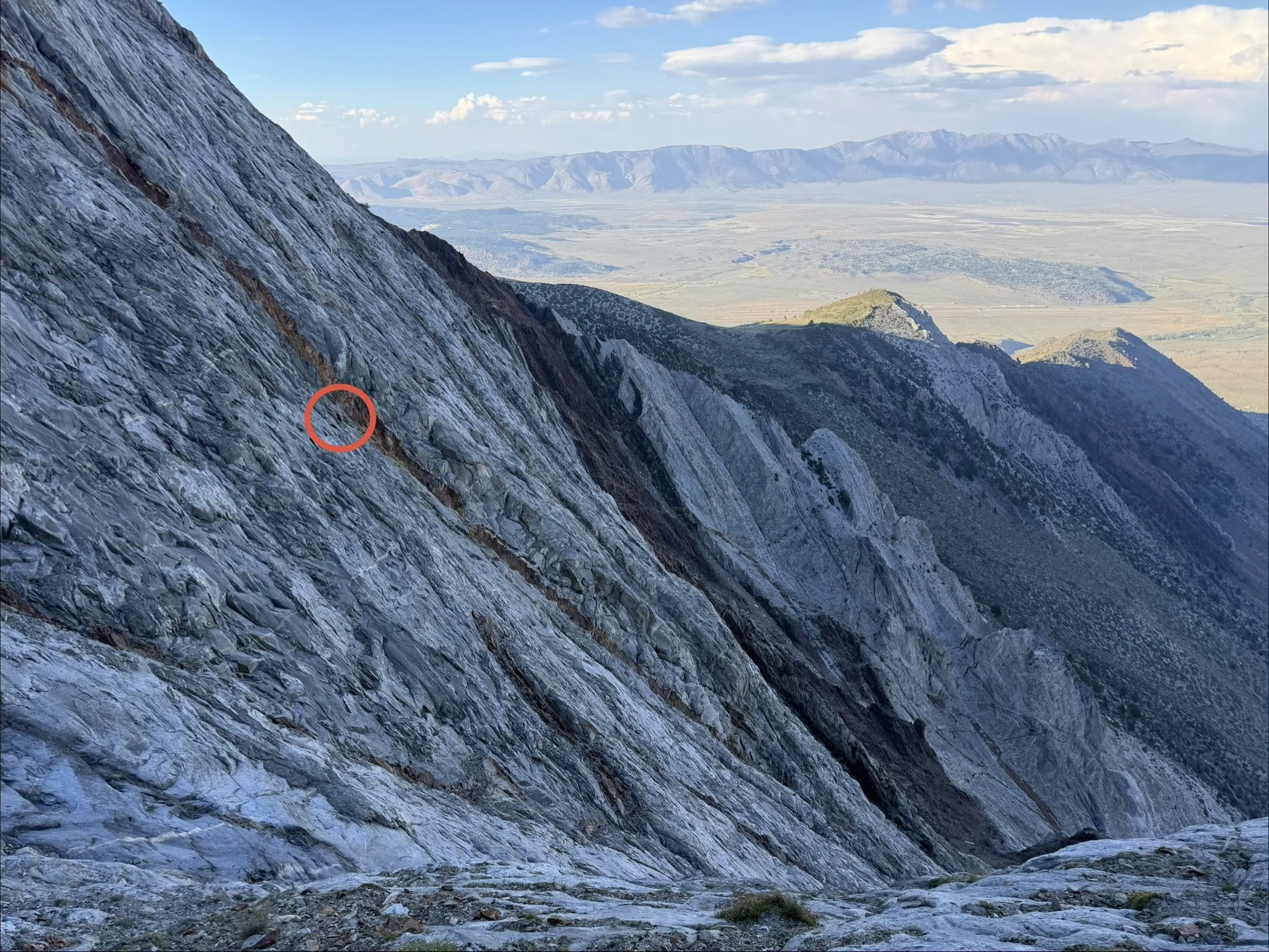
First glimpses of the stranded climber.
After a significant haul of heavy technical equipment 1,200 vertical feet down and into the couloir, Team 1 and Team 3 — a combined group of four technical rescuers — commenced a two-part complex technical rescue to approach, secure, and extract the subject from their precarious location. The operation began just as night fell and continued into the darkness. A 4-piece bolted rescue anchor was constructed utilizing Petzl Coeur Pulse removable bolts. A mix of 8mm cord was established between the bolts to allow for redistribution of force on the anchor as the operation shifted focal points. A 600-foot line was broken into two parts: a 400-foot section for the patient attendant, and a 200-foot line for a second eventual fixed line, both affixed to the anchor. One rescuer, the patient attendant, maneuvered laterally from the anchor point drilling safety bolts as they moved across several hundred feet. Eventually overhead of the subject, they were ultimately lowered above the subject's location, where they were able to affix the subject into the rope system. Both the subject and rescuer then moved as a tandem unit down the precarious off-shoot gully and back near the main route.
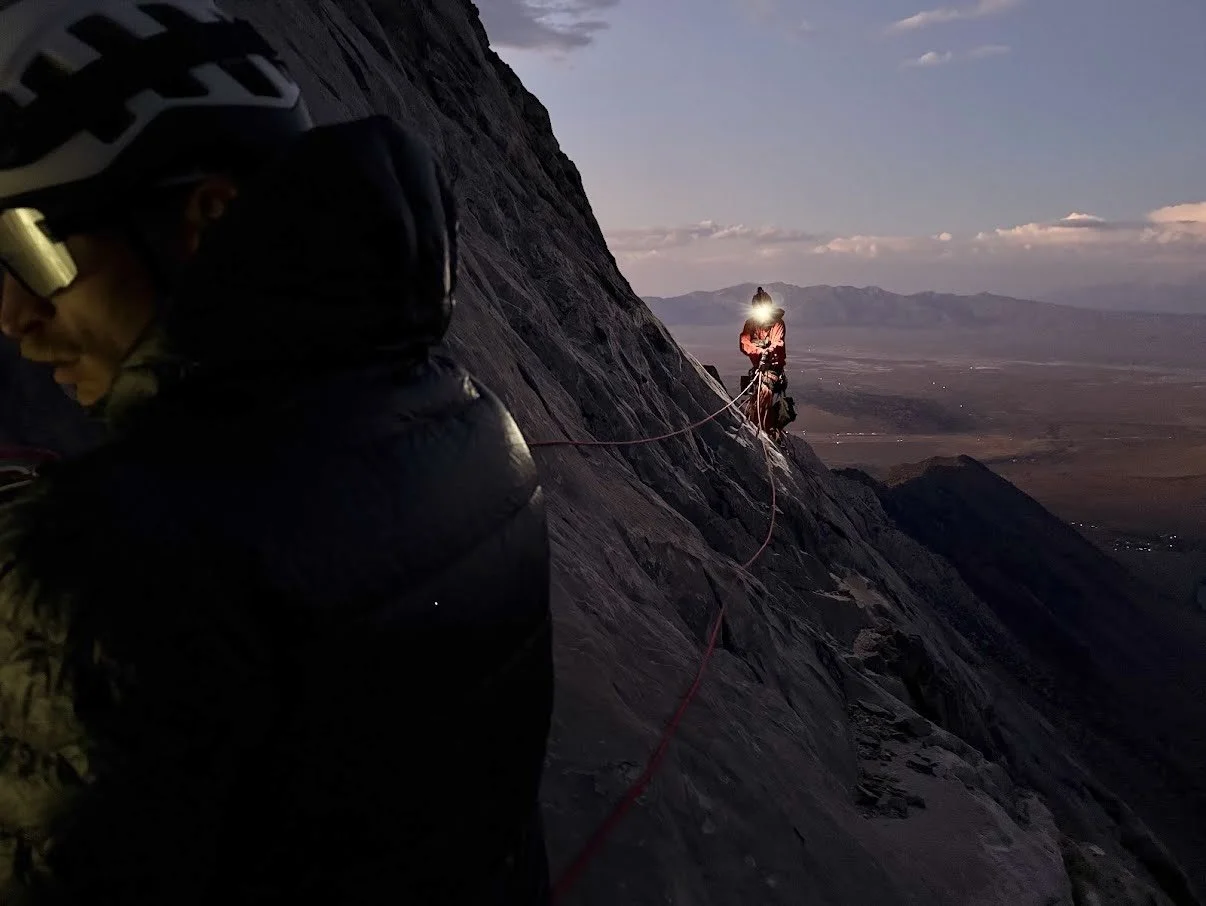
Nightfall settles in during the technical operation.
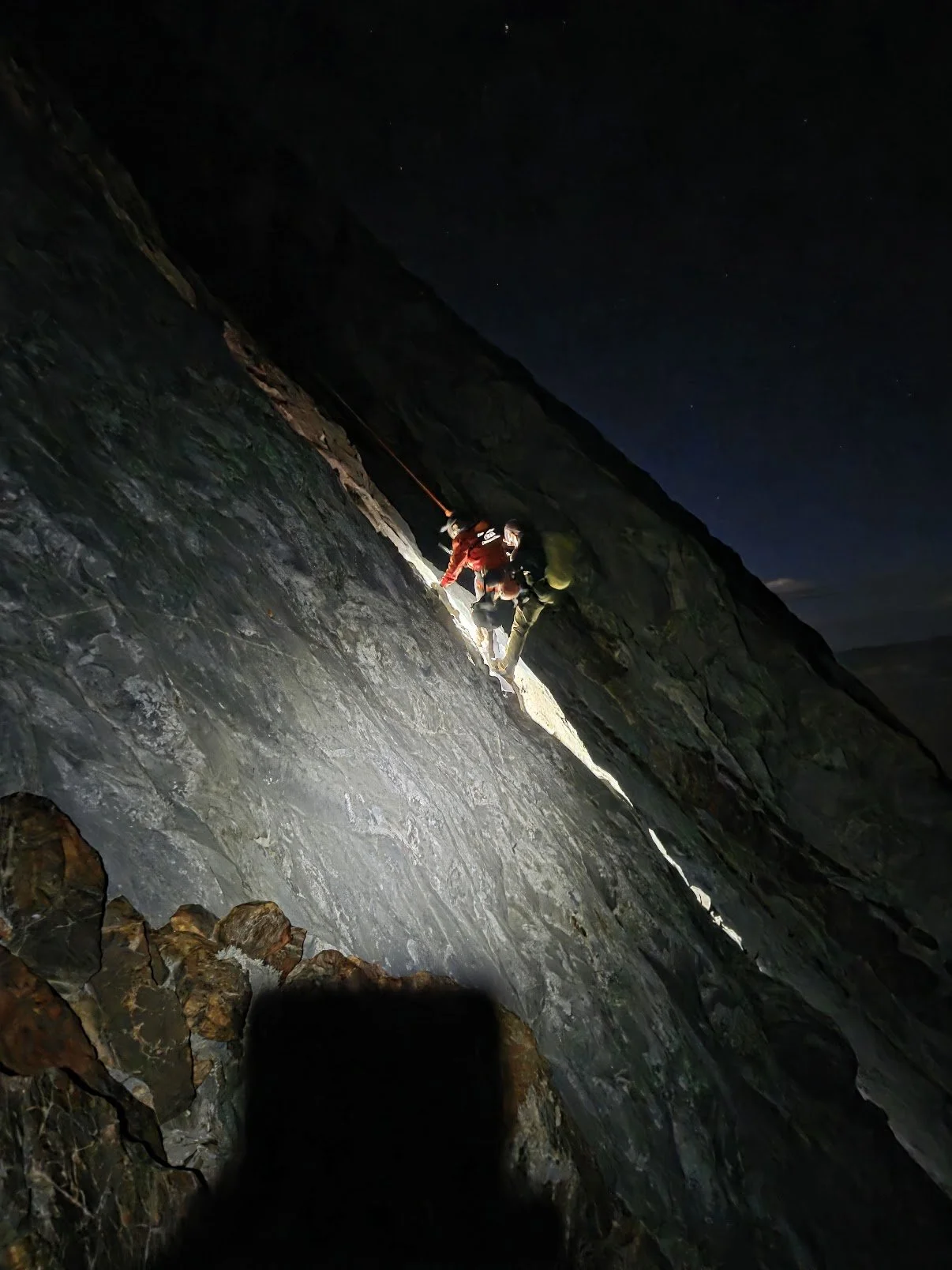
The subject, Rob Martin, after being secured, descends down with a rescuer.
Just as the subject and rescuer reached a large and accommodating ledge, part two of the technical operation went underway. A second line attendant rappelled with the 200-foot line to act as a safety fixed line through the crux of the Mendenhall where the subject and two rescuers were now located. All three rescuers and the subject ascended the fixed line to the anchor location. The subject and initial attendant rescuer detached from the fixed system and began ascending carefully up the regular route. The three remaining rescuers broke down the technical system and began ascending a few minutes later. All rescuers and the subject topped out on the Laurel Mountain ridgeline at 0045 hours Sunday morning.
The group of five descended the South side of Laurel to the Bloody/Laurel Col, then descended the remaining trail to an awaiting 6x6 OHV team, where all were delivered in two separate trips back into town.
The operation was ultimately terminated at 0443 hours Sunday, August 23rd.
The Team commends the subject for their incredible perseverance and determination, as well as their preparedness in their ability to call for help when help was needed.
IC: Rhoads // Responders (14): Ackerman, Anderson, Barker, Beck, Blackman, Bush (Ops), Knight, Lipman, Quiring, Salay (Ops), Thompson C, Thompson M, Wallace, Wojciechowski
Volunteer hours: 171.7